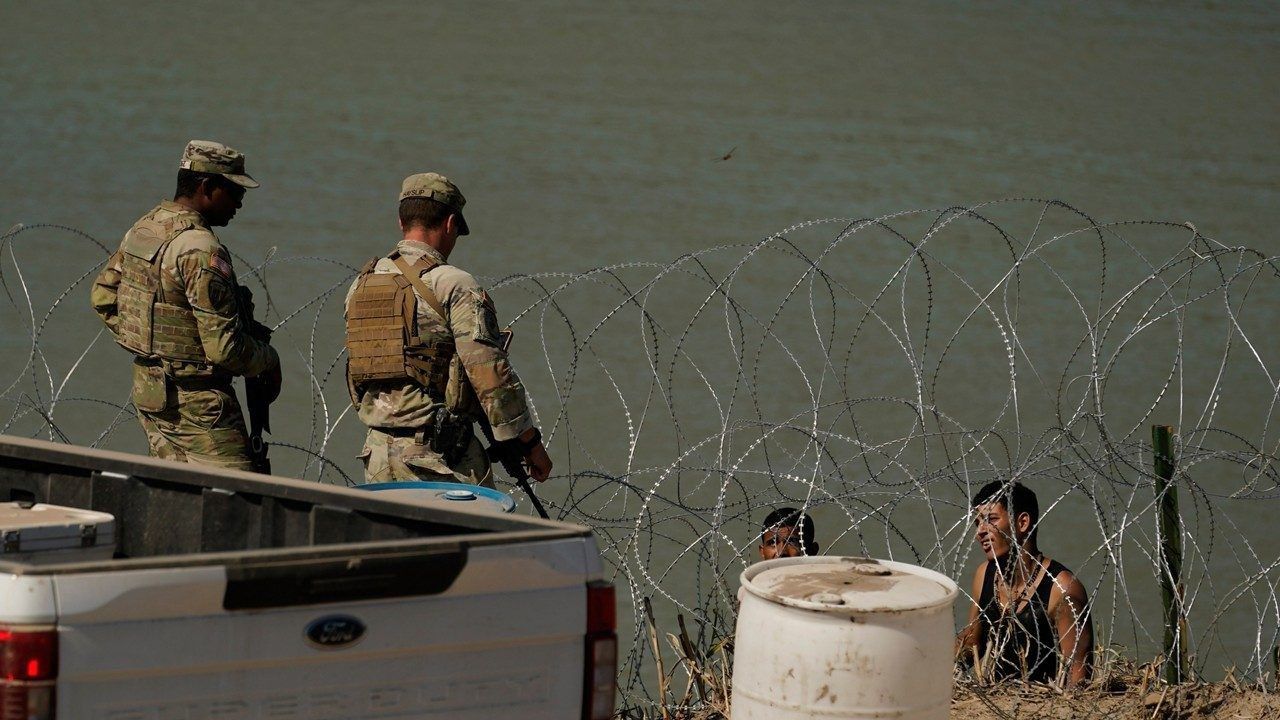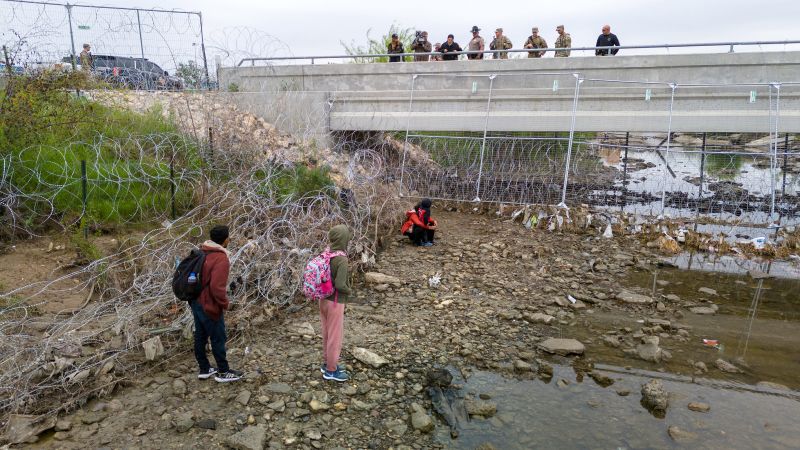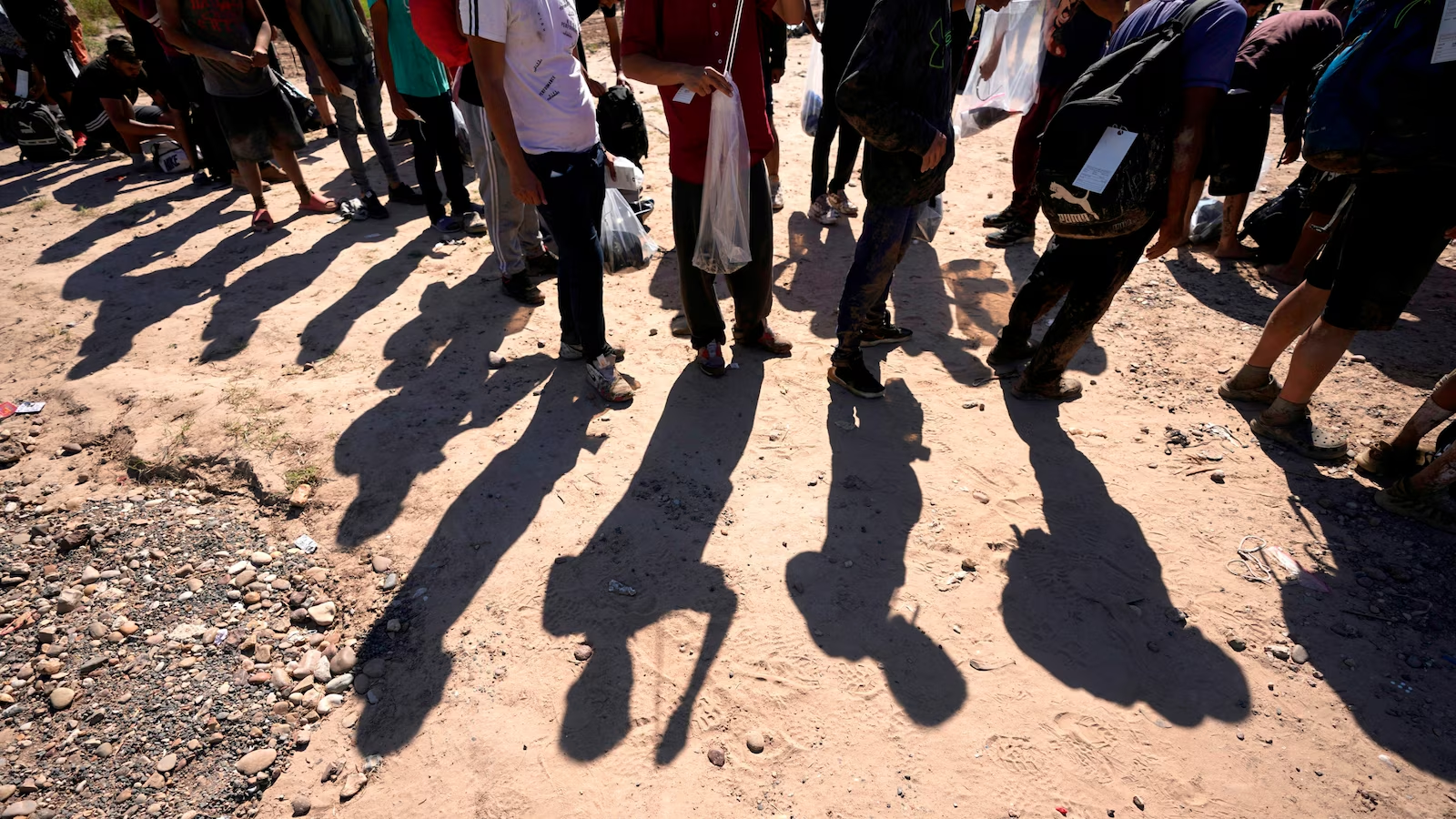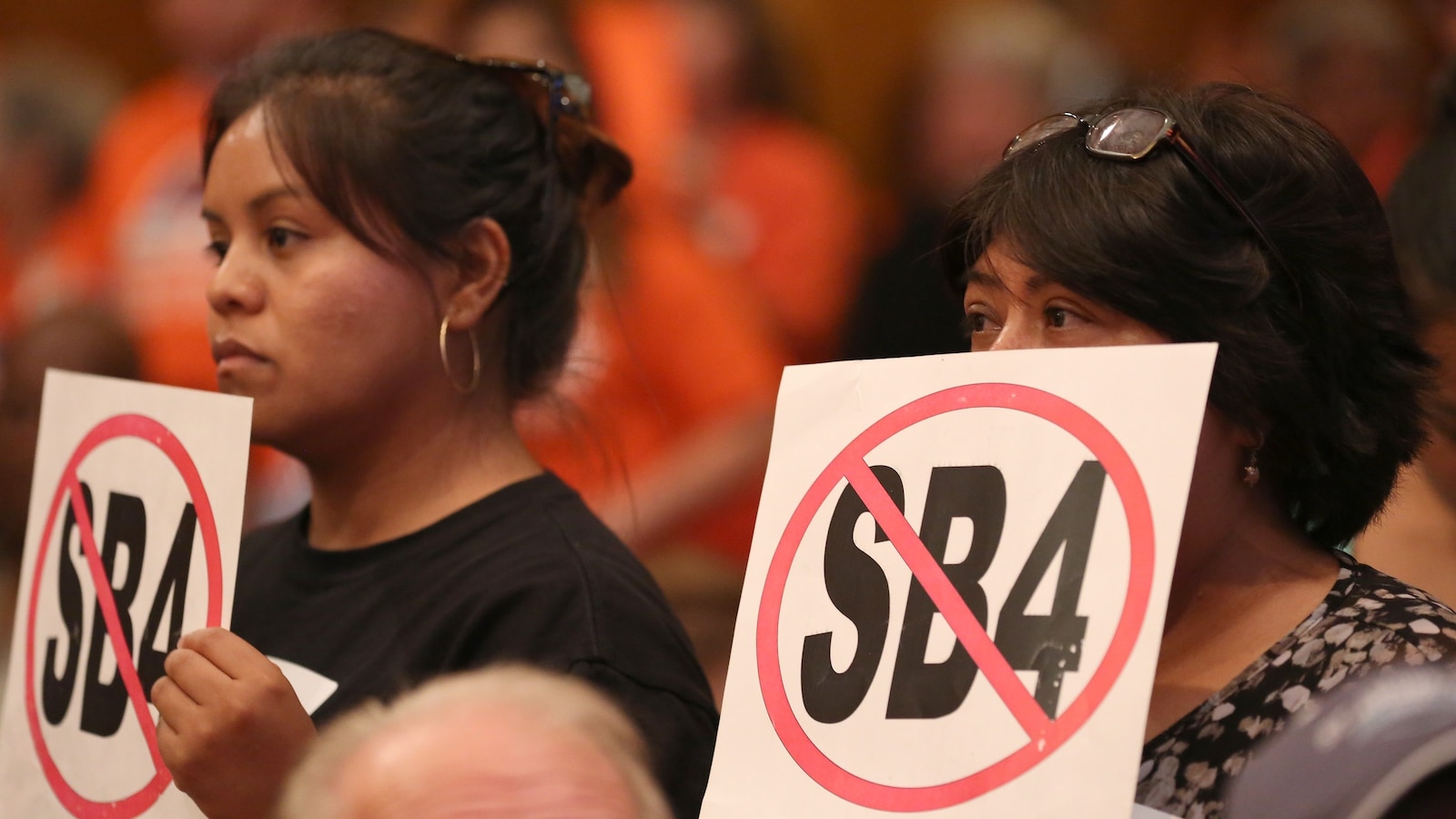
A federal appeals court has upheld the hold on Texas' immigration enforcement law, SB 4, which allows local and state police to arrest individuals suspected of being in the country illegally and empowers local judges to order a migrant to return to Mexico. The court's decision comes after the U.S. Supreme Court briefly allowed the law to go into effect before halting it. The case's ultimate resolution could be decided by the U.S. Supreme Court, and arguments are scheduled for April 3. The law has been challenged by the Biden administration, El Paso County, and immigrant rights groups, who argue that immigration enforcement is the federal government's duty and that SB 4 could lead to racial profiling.

A federal appeals court has upheld the block on Texas law SB 4, which allows state officials to arrest and detain individuals suspected of entering the country illegally, while legal challenges continue. The court expressed concerns that the law likely violates the US Constitution and encroaches on federal immigration enforcement. The decision comes after a back-and-forth legal battle, with the appeals court set to hear arguments on April 3 over whether to uphold the injunction. Texas can appeal the decision to the Supreme Court, but options are limited given the proximity to the upcoming hearing.
Mexico filed an amicus brief with the 5th U.S. Circuit Court of Appeals warning that Texas' Senate Bill 4 would lead to discrimination against the Mexican and Latino communities, create tensions between the U.S. and Mexico, and interfere with Mexico's ability to govern its own people. The law, which allows police to arrest anyone suspected of crossing the border illegally, has caused fear and anxiety among Mexican nationals in Texas, prompting unprecedented levels of anxiety in the community. Mexico also expressed concern about Texas attempting to enforce its own immigration laws that usurp the Biden administration's stance.
A federal appeals court has put Texas' controversial immigration law, Senate Bill 4, back on hold, overturning a previous ruling that had allowed the law to go into effect. The law, which would permit state officials to arrest and detain individuals suspected of entering the country illegally, has been the subject of legal battles and concerns over racial profiling and increased state authority in immigration enforcement. The Supreme Court had earlier cleared the way for the law to be enforced temporarily, but the legal jockeying continues as the 5th Circuit Court of Appeals is set to hear arguments on whether to block the law while considering its constitutionality.
The Biden administration has appealed to the US Supreme Court to intervene and block Texas' strict immigration law, SB 4, which would authorize local and state law enforcement to arrest migrants suspected of crossing into the state illegally. The law remains temporarily blocked until March 13, as Justice Alito issued an administrative stay. The administration argues that immigration law is solely the responsibility of the federal government, while Texas claims it has the right to act under the State War Clause of the Constitution. The law, signed by Gov. Abbott in December, has sparked outcry from immigrant civil rights organizations across the country.
A federal judge has granted a preliminary injunction to temporarily halt the implementation of Texas' SB 4 immigration law, which would allow local and state law enforcement to arrest migrants suspected of entering the state illegally. Texas Governor Greg Abbott plans to appeal the decision, citing the need to protect the state from the border crisis. The judge's ruling questions the law's constitutionality and its potential impact on federal immigration regulation, while advocacy groups celebrate the temporary victory and prepare for continued legal battles.
A federal judge in Austin has temporarily blocked Texas' Senate Bill 4, which would have allowed police to arrest individuals suspected of crossing the Texas-Mexico border illegally. The judge's preliminary injunction prevents the law from being enforced while legal challenges continue. The judge cited potential harm to the federal government and concerns about creating a patchwork of immigration laws across states. The law, signed by Gov. Greg Abbott, aimed to deter illegal border crossings and impose penalties, but has faced lawsuits from the federal government and immigration advocacy organizations.
Texas Governor Greg Abbott has signed a bill that makes entering Texas illegally a state crime, granting local law enforcement the power to arrest migrants and judges the ability to issue removal orders to Mexico. The law, known as SB 4, has sparked fear in the Latino community and has been condemned by civil rights organizations and immigration advocacy groups. The ongoing surge of migration at the US-Mexico border has strained local and federal resources, leading to tensions between Abbott and the Biden administration. Democratic House members argue that the bill oversteps federal powers, while the Republican author maintains its constitutionality. The ACLU has threatened to sue Abbott, and county executives have urged President Biden to intervene.
The Mexican government has "categorically rejected" Texas' proposal to arrest and deport undocumented immigrants to Mexico under Senate Bill 4. Mexico asserts its rejection of any measure that involves the involuntary return of migrants without due process and emphasizes its right to establish its own immigration policies. While the statement does not explicitly state whether Mexico will refuse to accept migrants removed from Texas under SB 4, it has ordered its consulates in Texas to provide information to Mexican citizens about their rights and the details of the bill. The bill, which has passed both chambers of the Texas Legislature, would make it a state crime to enter Texas illegally from Mexico and empower state and local authorities to deport undocumented immigrants.
The Texas House of Representatives is considering SB 4, a bill that would create one of the strictest immigration laws in the US. If passed, the bill would authorize officers to arrest migrants suspected of unlawfully crossing into Texas and create new state crimes for illegal entry or re-entry. It also allows judges to order some migrants to return to the country they crossed from instead of prosecution. Critics fear the bill would lead to racial profiling, violate constitutional and international protections, and potentially separate families. The bill may also prompt a challenge to a 2012 Supreme Court decision on immigration enforcement.