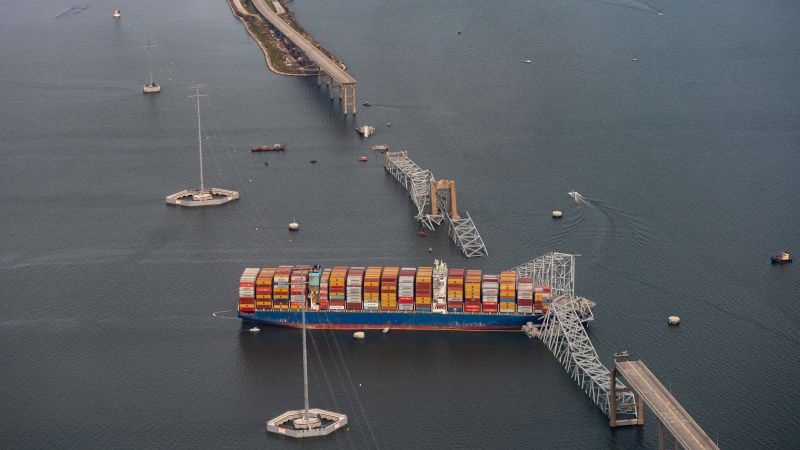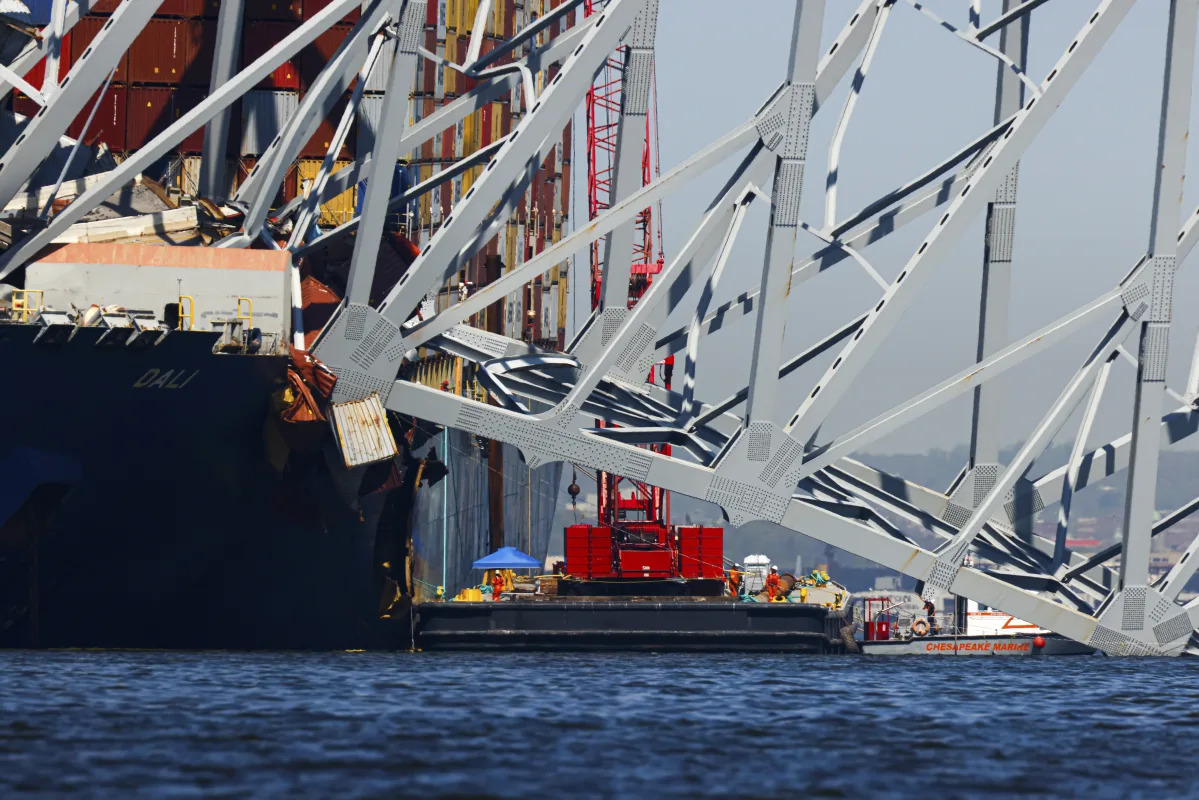
Salvage crews in Baltimore are focusing on removing thousands of tons of debris from the collapsed Francis Scott Key Bridge off the Dali cargo ship's deck before refloating the ship and guiding it back into the Port of Baltimore. Six roadwork crew members died in the collapse, with two bodies still unaccounted for. Efforts to rebuild the bridge are underway, with discussions about funding and reopening the port's main channel ongoing. Financial assistance is being provided to unemployed port workers and others affected by the collapse.
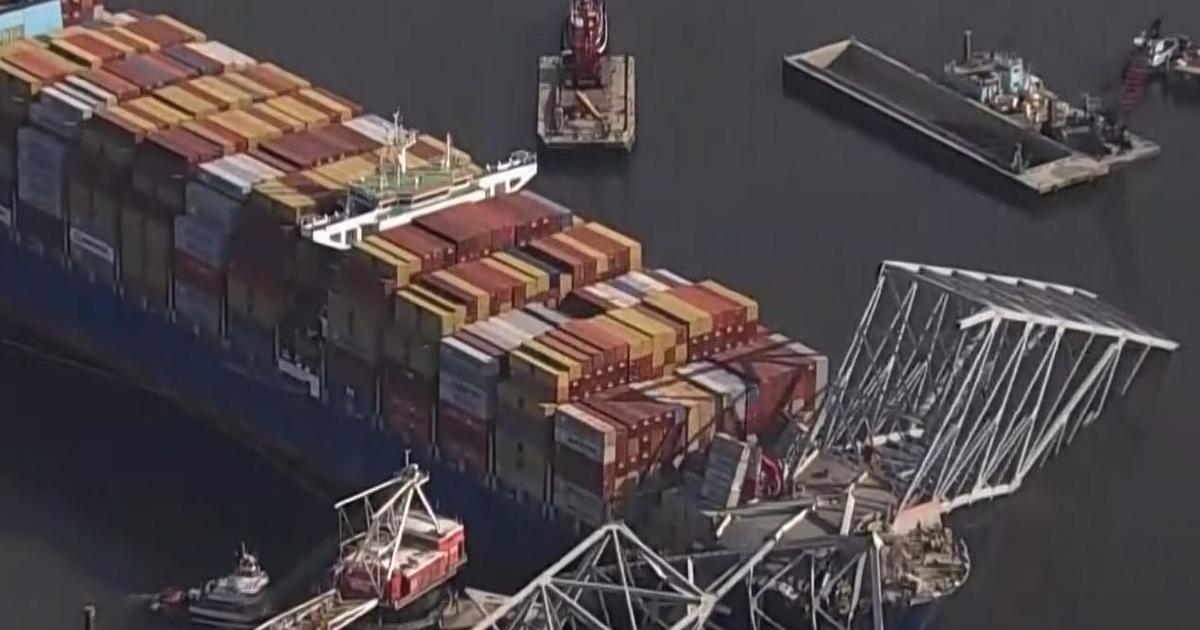
A fourth body has been recovered from the Key Bridge collapse site, with two workers still missing and presumed dead. Salvage operations are underway to remove debris from the river, including a damaged cargo ship. Divers continue to face challenges due to poor visibility and hazardous conditions. Baltimore City is taking legal action against entities responsible for the collapse, while efforts to support the impacted families and workers are ongoing.
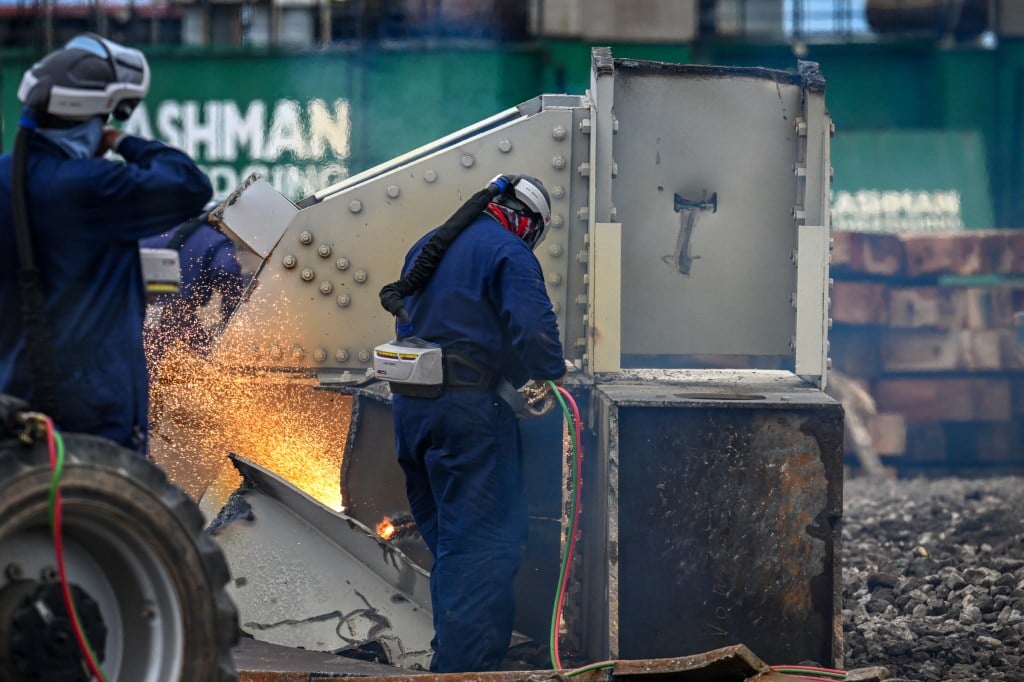
Tradepoint Atlantic in Sparrows Point, Maryland, has been tasked with processing the 50,000 tons of steel wreckage from the collapsed Francis Scott Key Bridge for recycling. The salvage operation involves cutting the bridge into manageable pieces, which are then transported to a recycling center. The process is part of a larger effort to clear the Patapsco River of debris and refloat the cargo ship that caused the wreckage, with authorities aiming to open limited access channels by the end of April and fully reopen the federal channel by the end of May.
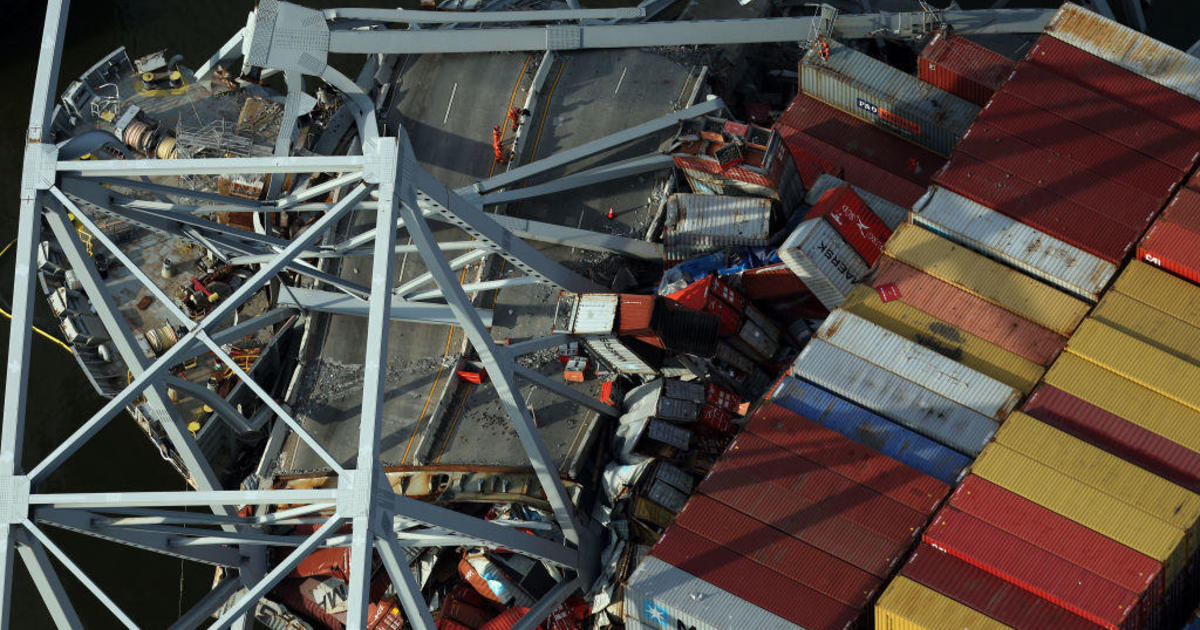
Salvage operations continue on the collapsed Key Bridge in Baltimore as dozens of containers are being removed from the cargo ship Dali to free it, with the aim to reopen the main shipping channel by the end of May. Recovery efforts also continue at the site, with the priority being the safe and efficient removal of debris and wreckage from the federal channel and waterway, while funeral services will be held for two of the construction workers who died in the bridge collapse.
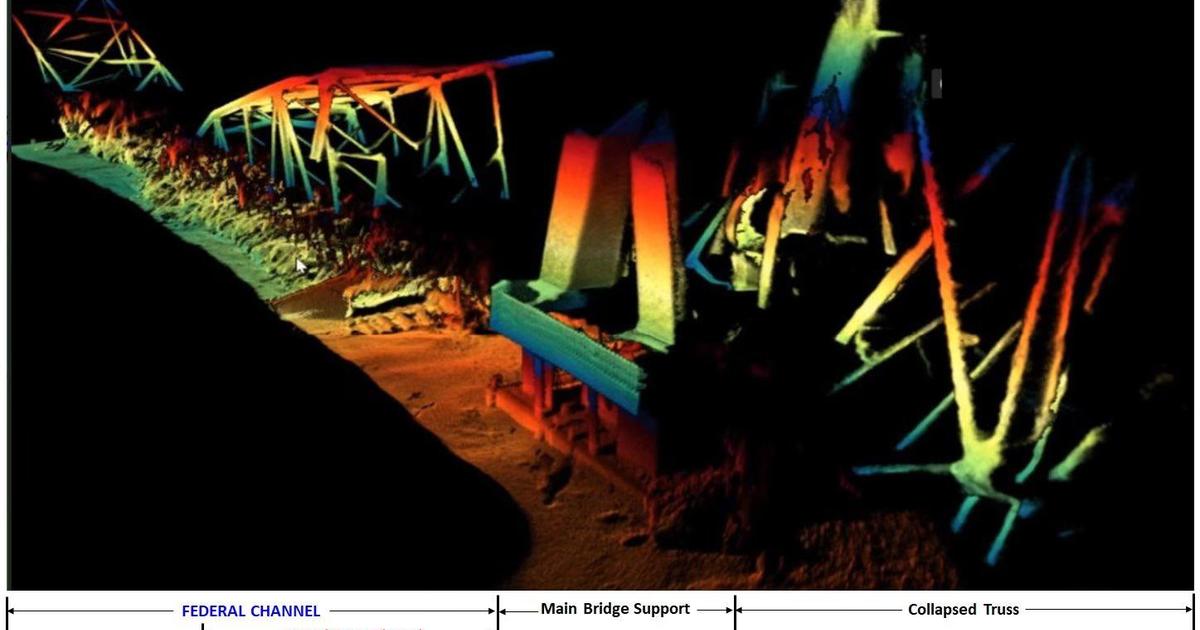
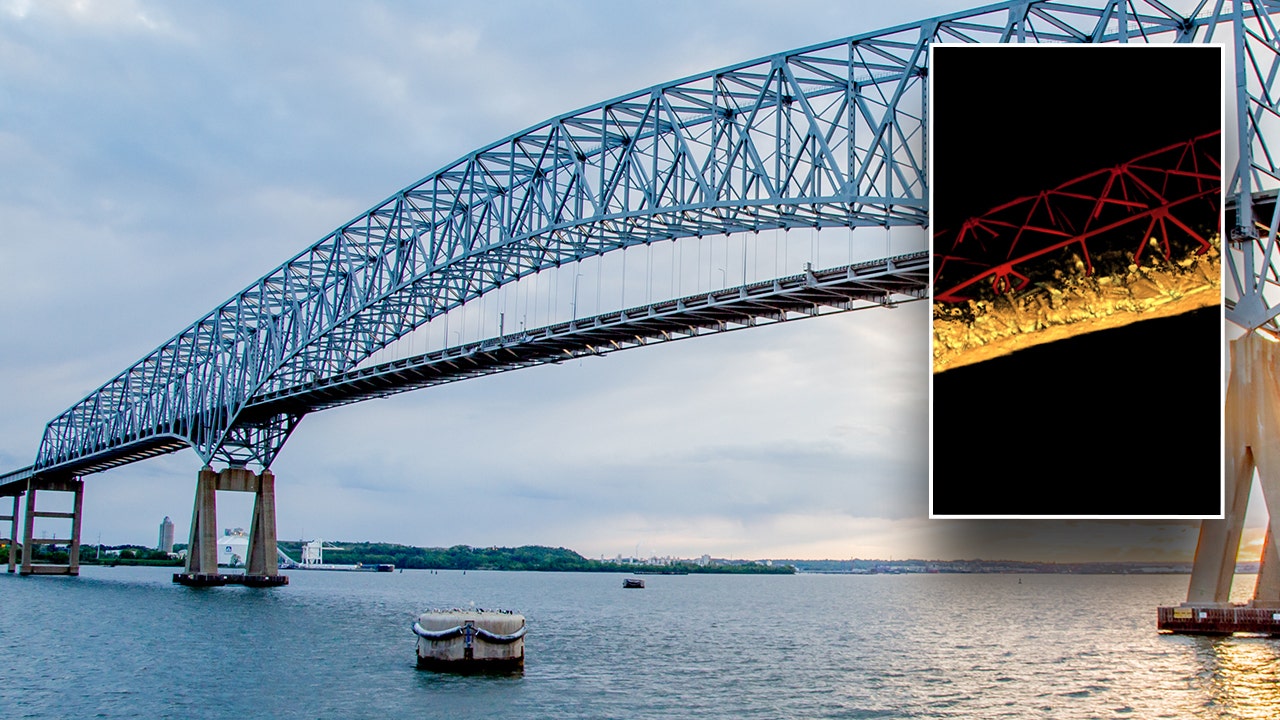
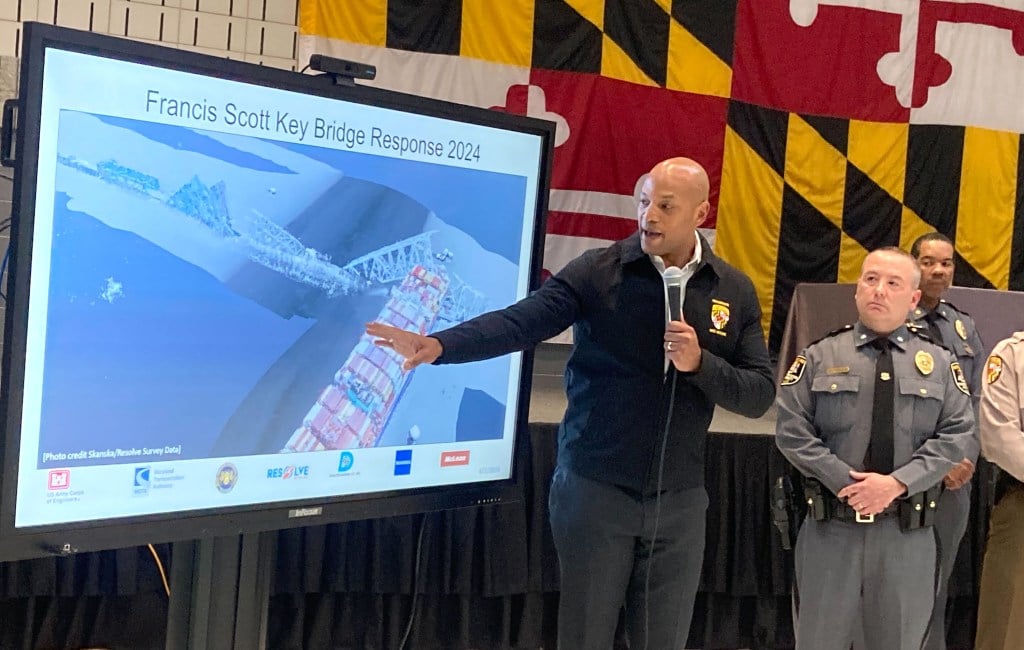
Sonar imaging reveals wreckage of the collapsed Francis Scott Key Bridge in the deepest part of the Baltimore shipping channel, hindering marine access to the Port of Baltimore. Salvage efforts led by the U.S. Army Corps of Engineers aim to clear the wreckage by the end of April to create limited access channels for larger ships. Recovery operations continue as three bodies remain unrecovered, with authorities believing they may be trapped in the wreckage.
Underwater 3D images released by the U.S. Navy show the mangled remains of the Francis Scott Key Bridge at the bottom of the Patapsco River in Baltimore, Maryland, following a cargo ship collision. Salvage operations are hindered by murky water and mud, limiting visibility for divers, and rough weather has slowed debris removal. Two bodies have been recovered, two survivors rescued, and four others are presumed dead. A second temporary channel has been opened, but the challenging salvage operation ahead is underscored by the difficult conditions and the need for detailed verbal guidance for divers due to poor visibility.
Salvage operations to remove the wreckage of the Francis Scott Key Bridge from the Patapsco River have been complicated by the bridge sinking into the riverbed and adverse weather conditions, including lightning. Divers have found the wreckage extending below the mud line, making it challenging to plan the removal process. The search for four missing bodies has been postponed due to dangerous conditions, and temporary channels for smaller vessels have been established to navigate around the crash site. Legislation has been proposed to provide economic relief to workers and businesses impacted by the bridge collapse and port closure.
Crews are working to remove the first portion of the Baltimore bridge wreckage to open a temporary channel for vessels around the collapse site, aiding in the search for missing victims and reopening a critical port. The cargo ship involved in the collision has significant bridge debris hanging from its bow, and the economic impact of the collapse has affected thousands of dock workers. Cleanup efforts are underway, including isolating a natural gas pipeline, and small businesses affected by the collapse can apply for federal disaster loans. Diving operations for the missing victims have been paused due to unsafe conditions, and salvage operations will need to clear debris before divers can resume their search.
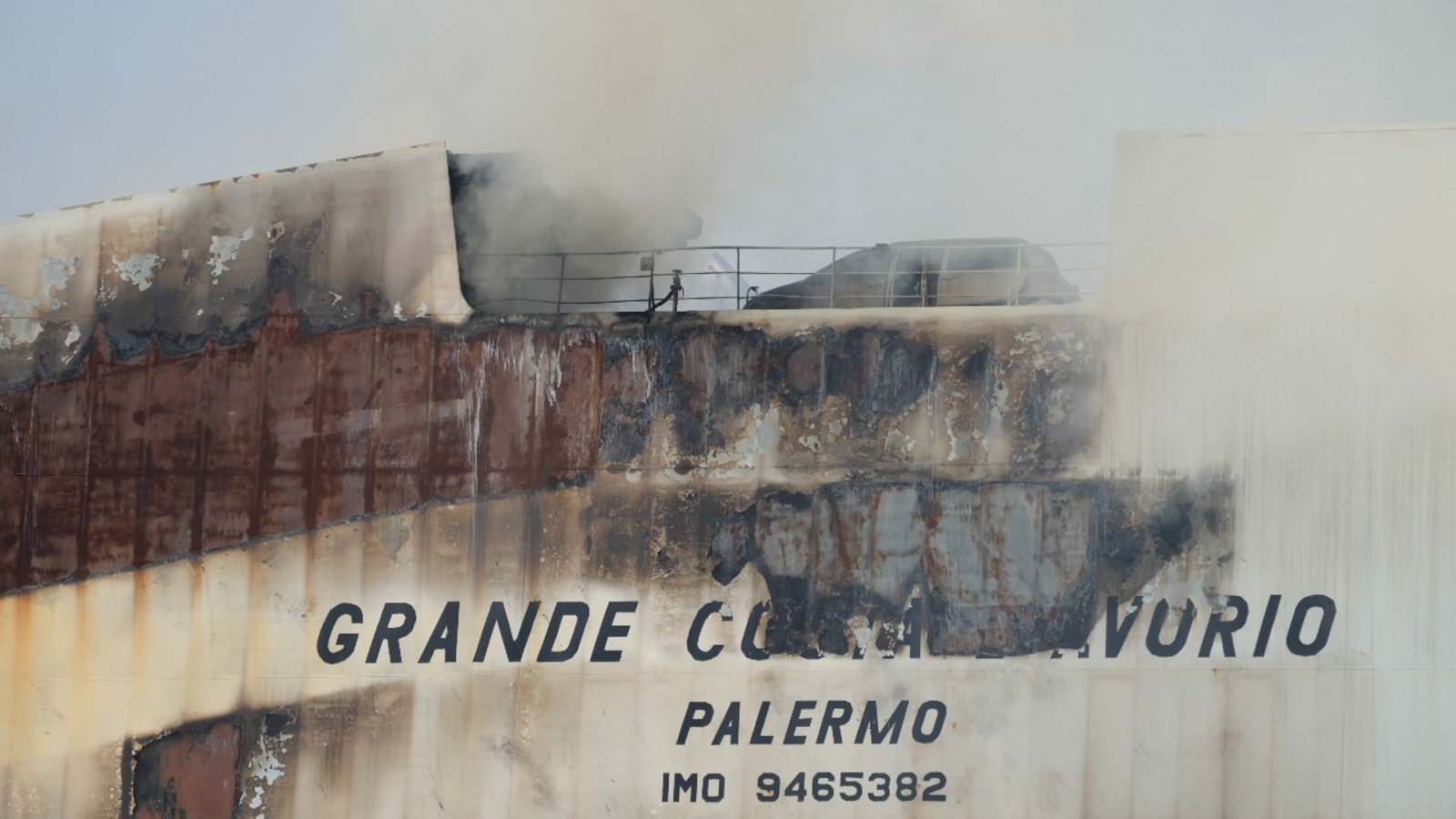
The fire aboard the Italian cargo ship Grande Costa D'Avorio at Port Newark has been extinguished, and the Coast Guard is now investigating the cause and preparing to dismantle the ship. Two Newark firefighters lost their lives while battling the fire, and concerns have been raised by the Newark firefighters' union regarding aging equipment, inadequate staffing levels, and 80 unfilled firefighter positions in the city. Governor Phil Murphy has acknowledged the need for increased staffing but has not committed to providing state resources.
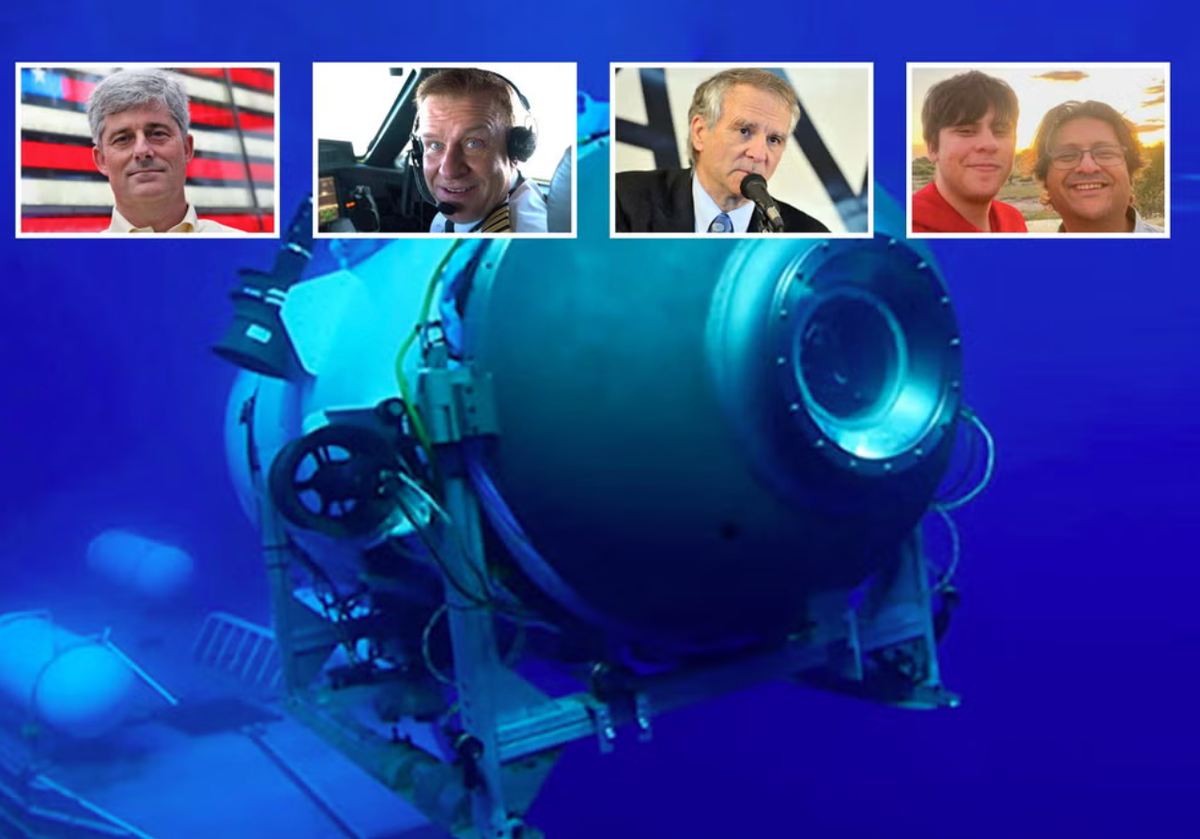
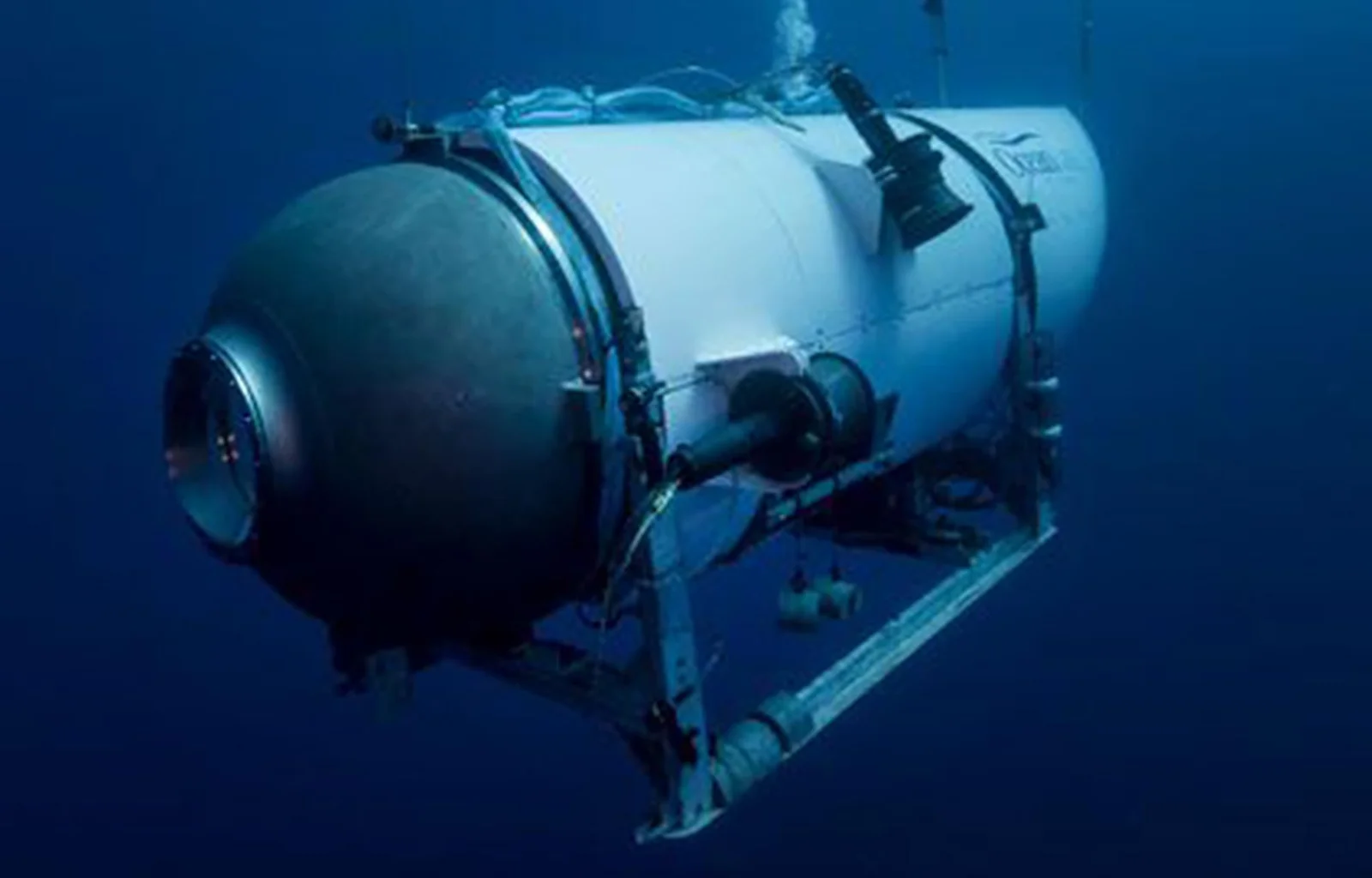
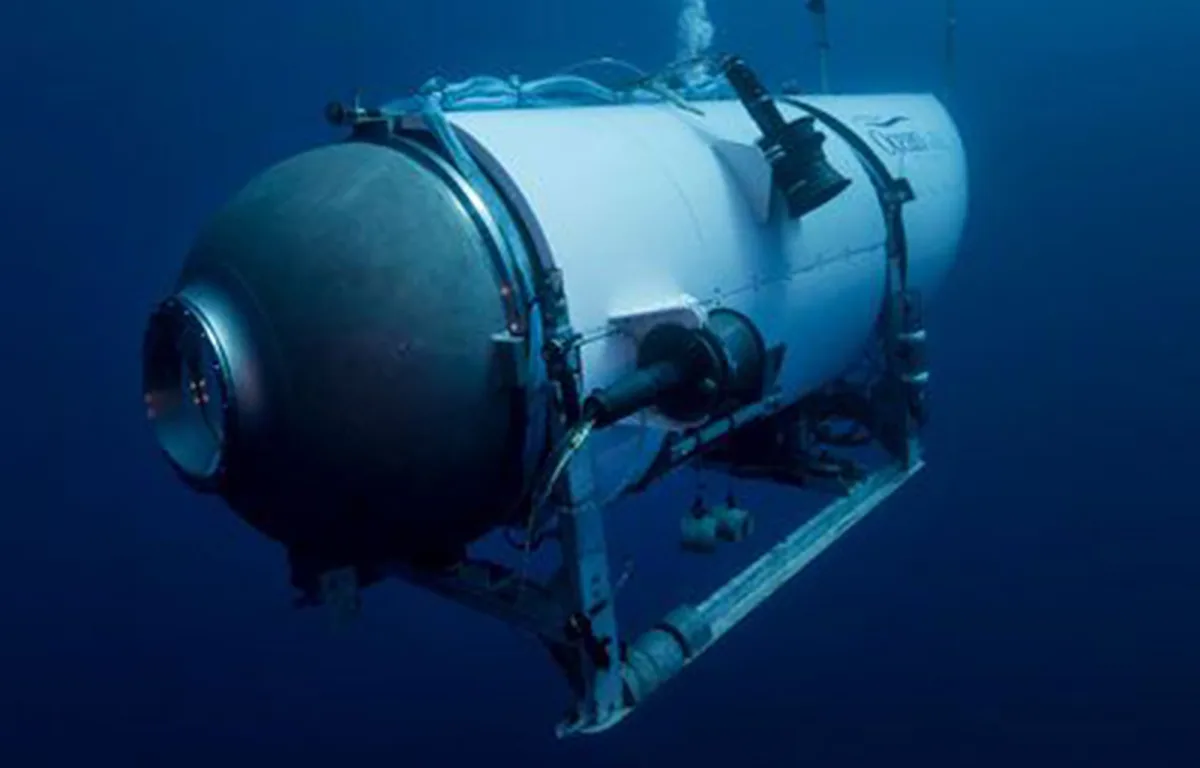
Investigators from multiple countries are collaborating on the probe into the implosion of the Titan submersible near the Titanic wreck, while efforts to involve a remote-operated submarine capable of reaching the site are underway. All planned expeditions to the Titanic wreck have been called off following the tragedy, and experts believe future expeditions may be grounded indefinitely. A former Navy doctor revealed that the victims would have died instantly and painlessly in the catastrophic implosion. The US Navy has discontinued the use of a large salvage system in the recovery efforts. A friend of Hamish Harding's wife worked behind the scenes to involve a remote-operated vehicle in the search, while the owners of the submersible may seek to limit liability under 1851 legislation. James Cameron knew about the implosion before it was publicly announced, and a former passenger revealed a previous malfunction of the Titan submersible.
The US Coast Guard is leading an investigation into the implosion of the Titan submersible that was carrying five people to the Titanic, with assistance from Canada, France, and the UK. The investigation will determine the cause of the implosion, and the Coast Guard board can make recommendations for civil or criminal sanctions. The Flyaway Deep Ocean Salvage System, which had the capability of lifting an intact Titan back to the surface, will not be used. The Canadian Transportation Safety Board is also conducting a safety investigation and will share information with other agencies. The deep-sea investigations promise to be long and painstaking, complicated by the fact that the world of deep-sea exploration is not well-regulated.
The US Coast Guard is leading an investigation into the loss of the Titan submersible that was carrying five people to the Titanic to determine what caused it to implode. The salvage operations are ongoing, and they have mapped the accident site. The convening of a Marine Board of Investigation is the highest level of investigation conducted by the US Coast Guard. The Flyaway Deep Ocean Salvage System had the capability of lifting an intact Titan back to the surface, but the Navy won't be using it. The Transportation Safety Board of Canada has also begun an investigation into the loss of the submersible.
The US Coast Guard is leading an investigation into the implosion of the Titan submersible that was carrying five people to the Titanic, with assistance from Canada, France, and the UK. The Marine Board of Investigation is the highest level of investigation conducted by the US Coast Guard. The Navy has discontinued the use of the Flyaway Deep Ocean Salvage System, which had the capability of lifting an intact Titan back to the surface. The investigation is complicated by the fact that the world of deep-sea exploration is not well-regulated.