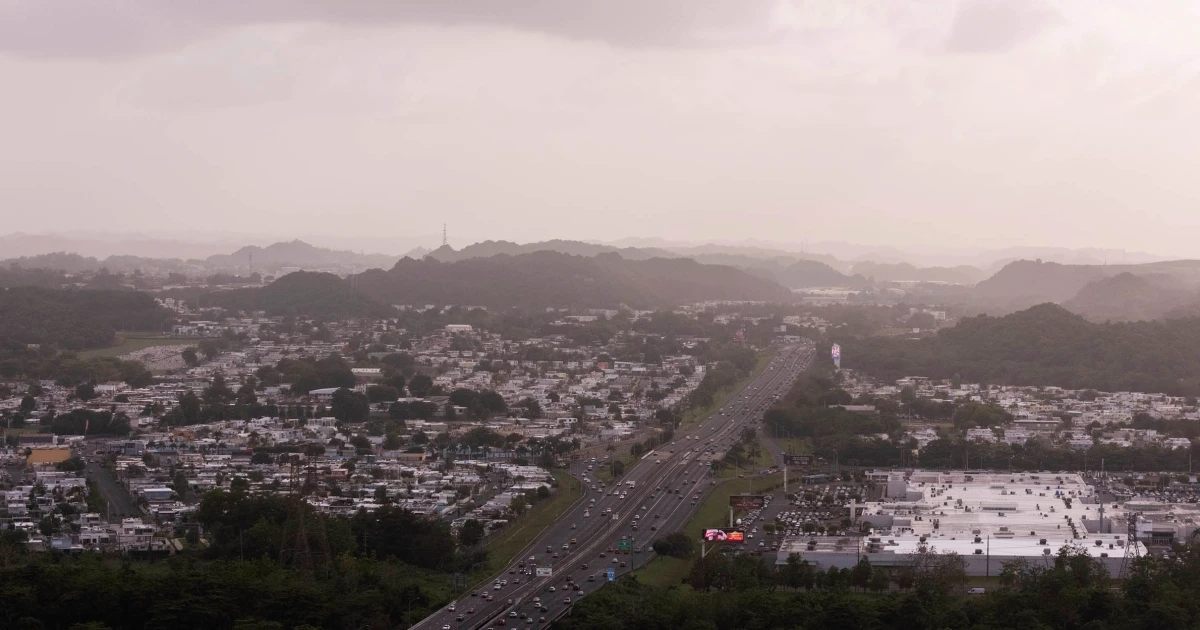
A large Sahara dust cloud is covering the Caribbean and heading towards the U.S., causing hazy skies and health warnings, with the highest concentration this year and potential impacts on air quality and sunlight.
A study published in the Proceedings of the National Academy of Sciences reveals that blowing mineral dust from the Sahara Desert mixed with sea salt aerosol forms mineral dust-sea spray aerosol (MDSA), which is activated by sunlight to produce an abundance of chlorine atoms. These chlorine atoms oxidize atmospheric methane and tropospheric ozone, potentially explaining the accelerating increase in atmospheric methane. The study suggests that global atmospheric chlorine concentrations may be roughly 40% higher than previously estimated, which could shift our understanding of methane emissions sources. Further research is needed to understand the MDSA mechanism in other parts of the world.