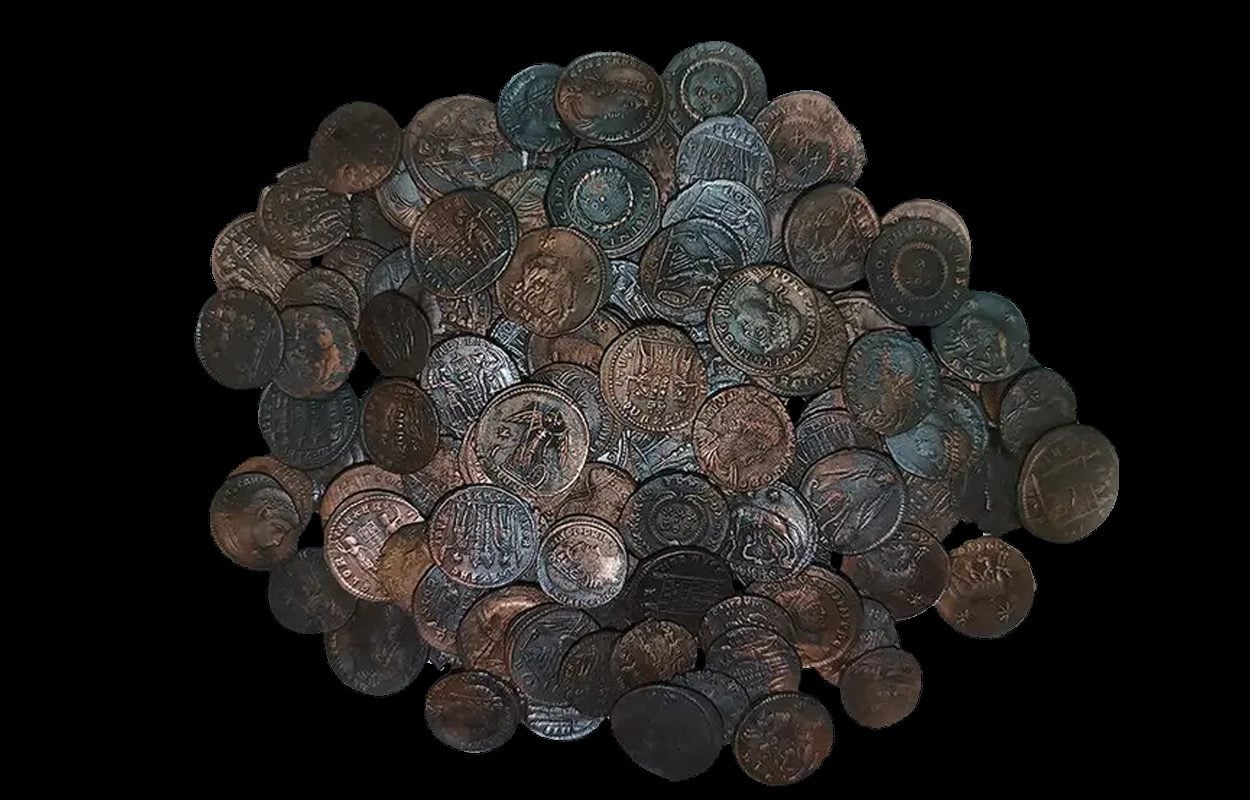
A metal detectorist in north Wales discovered up to 15,000 Roman coins in two clay pots, potentially the largest hoard ever found in Wales, which is now being analyzed by the National Museum Cardiff. The find, believed to date from Roman times, could significantly impact Welsh archaeological history and involves legal procedures for treasure reporting and ownership.

Tens of thousands of Roman bronze coins, dating back to the fourth century, have been discovered off the coast of Sardinia. The coins, known as follis, were found in exceptional condition and are believed to number between 30,000 and 50,000. The discovery suggests the presence of nearby shipwrecks, and archaeologists have hailed it as one of the most significant coin finds in recent times. A similar discovery was made in the UK in 2013.
Divers near the coast of Sardinia have discovered between 30,000 and 50,000 Roman coins dating from the early 4th century AD. The coins, mainly bronze follis, were found in an exceptional state of conservation. The discovery is considered one of the most important numismatic finds in recent years and highlights the rich archaeological heritage hidden in the depths of the seas. The Italian Ministry of Culture plans to restore and conserve the coins to gain further insights into the historical context.