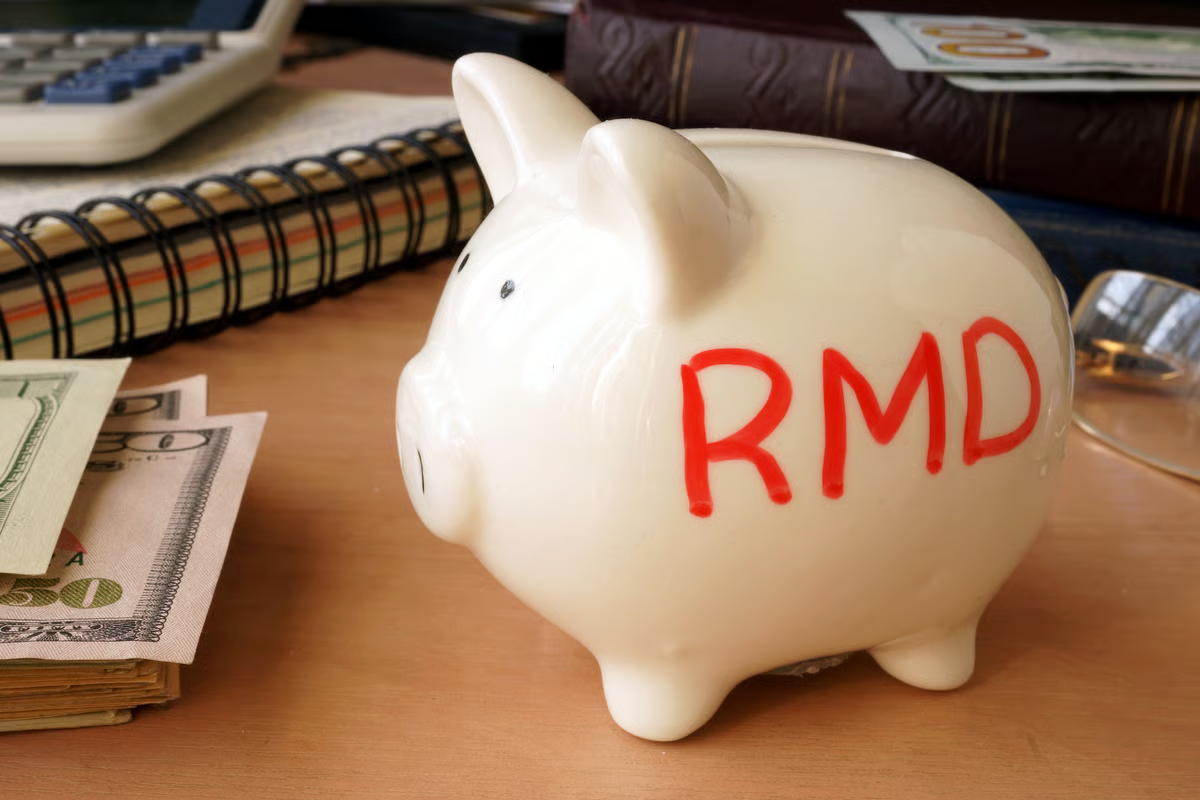
Many elderly Vanguard clients are failing to take required minimum distributions (RMDs) from their retirement accounts in 2024, leading to potential tax penalties of up to 25%. Vanguard recommends automating withdrawals and consolidating accounts to prevent missed RMDs and avoid unnecessary taxes.
The article explains upcoming changes to required minimum distribution (RMD) rules for retirees in 2026, including the age at which RMDs start, the elimination of RMDs for Roth 401(k) plans, and penalties for failing to take RMDs on time, emphasizing the importance of understanding these rules for retirement planning.
Many investors, especially self-directed ones with small balances, miss their required minimum distributions (RMDs) from IRAs, leading to potential tax penalties totaling up to $1.7 billion annually. Vanguard estimates that 6.7% of IRA holders aged 73+ missed RMDs in 2024, with larger account holders facing higher penalties. Automating RMDs and consolidating accounts can help prevent these costly mistakes.
Many Americans missed their required minimum distributions (RMDs) in 2024, resulting in significant penalties that could total around $1.7 billion nationally. The main issue appears to be a lack of awareness and education about RMD obligations, which are mandatory withdrawals from retirement accounts starting at age 73. Experts emphasize the importance of understanding these rules and utilizing available tools like automated withdrawals to avoid costly penalties, and highlight the role of family members and financial professionals in ensuring compliance.
Inherited IRA owners, especially non-spouses, should be aware of complex IRS rules like the 10-year rule and RMD requirements to avoid costly penalties and taxes. Proper planning involves understanding these rules, managing tax implications over the distribution period, and adjusting investments to match personal goals and risk tolerance to maximize the inheritance.
As the deadline for 2024 required minimum distributions (RMDs) approaches, individuals aged 73 and older must avoid common mistakes to prevent penalties. Key errors include not taking the full RMD, failing to withdraw from each 401(k) separately, mistakenly taking Roth RMDs, and not utilizing qualified charitable distributions (QCDs) to reduce taxable income. Consulting a tax professional can help navigate these complexities and ensure compliance before the year-end deadline.
Retirees must start taking required minimum distributions (RMDs) from pretax retirement accounts at age 73, with the first deadline on April 1 of the year after turning 73. Delaying the first RMD can result in two withdrawals in one year, potentially increasing adjusted gross income and triggering higher taxes or Medicare premiums. Financial experts advise careful planning to manage tax implications and consider income projections for future years.
A 73-year-old individual inquires about contributing to an IRA and rolling over IRA funds to a 401(k). They can continue contributing to an IRA if they have earned income, and a reverse rollover from an IRA to a 401(k) offers advantages such as loan provisions and asset protection. However, rules and provisions vary by company, and considerations include RMDs, backdoor Roth conversions, and investment options. It's important to compare plans before making any decisions.
Seniors who turned 72 last year must take their first required minimum distribution (RMD) from their retirement accounts by April 1, 2023, or face a 50% penalty on the amount not distributed. The RMD is a required annual withdrawal that is taxed as ordinary income and is calculated by dividing the tax-deferred retirement account balance as of Dec. 31 of the preceding year by a life expectancy factor that corresponds with the account holder's age in the IRS Uniform Lifetime Table. Automating the withdrawal can avoid penalties for forgetting to take it or miscalculating the amount required. The RMD can also have repercussions on Medicare premiums and trigger additional taxes, such as taxation of Social Security benefits or Medicare Part B premium surcharges. There are ways to reduce tax liability, such as taking advantage of the Qualified Charitable Distribution or reinvesting the funds into a non-retirement account.