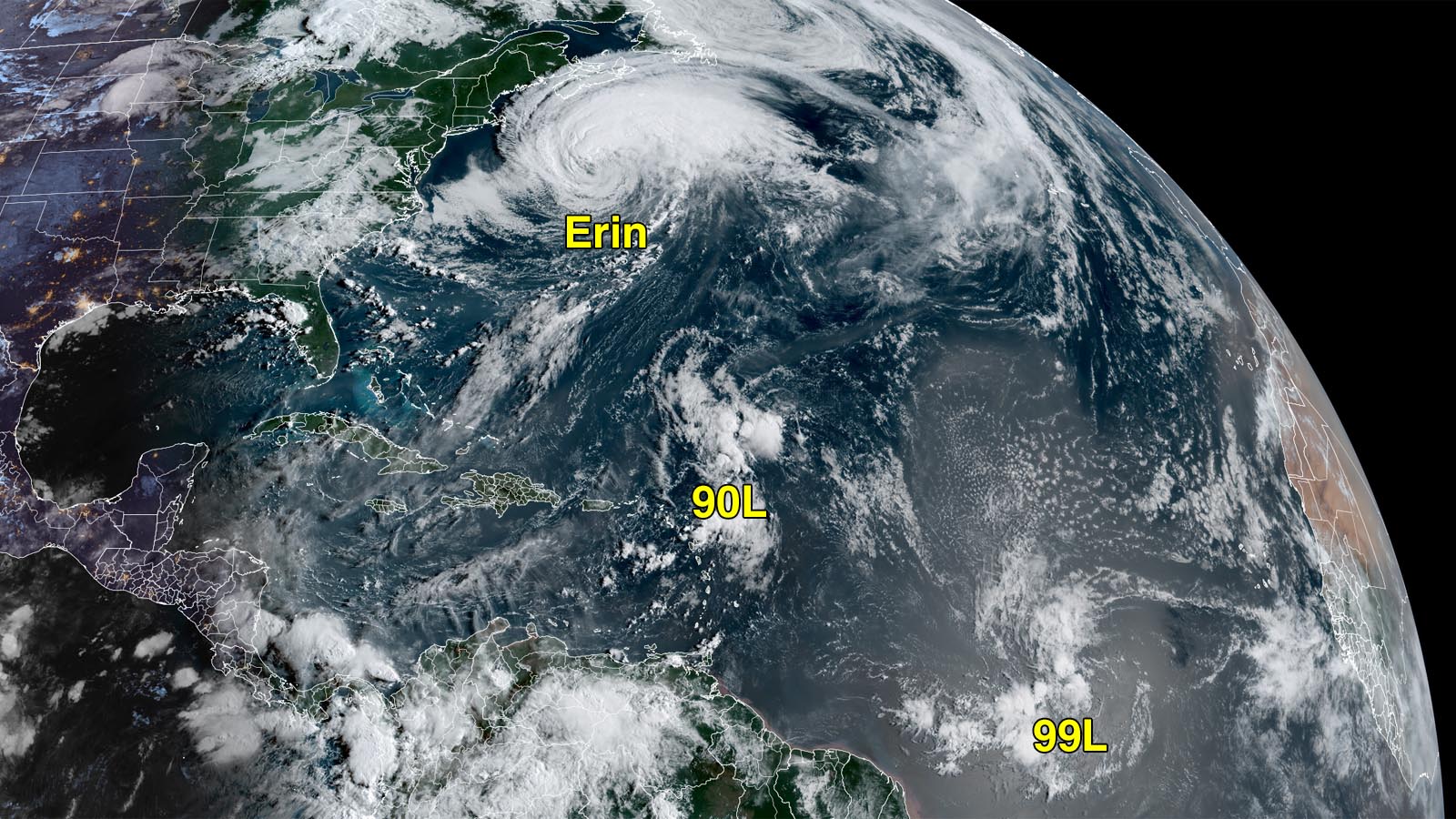
Hurricane Erin, a large Category 1 storm, is moving northeast in the Atlantic, causing rip currents and coastal flooding along the U.S. East Coast, Bermuda, and Atlantic Canada, while transitioning into a post-tropical cyclone. New systems, including Invest 90L and 99L, are developing in the Atlantic, with 90L likely to become a tropical storm and potentially impact Bermuda.
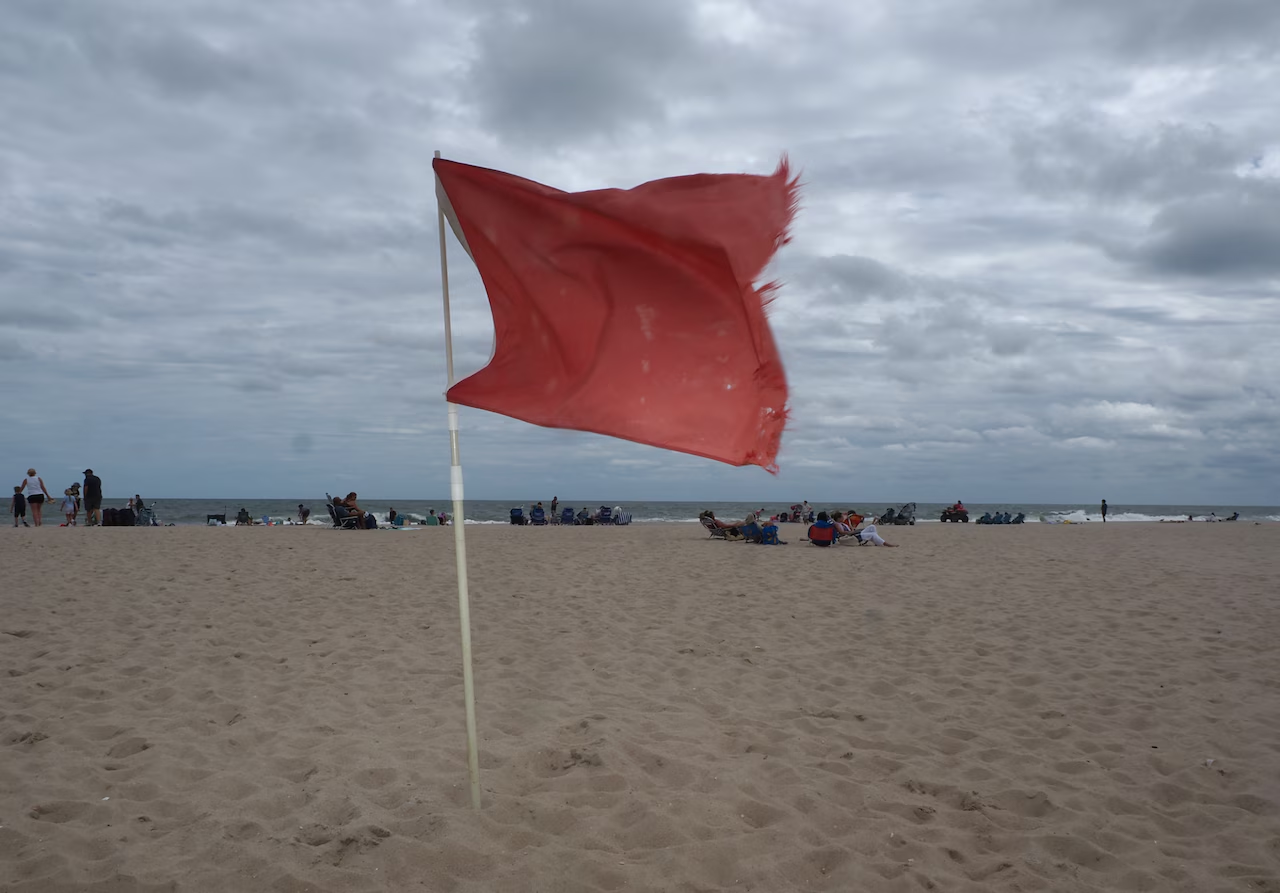
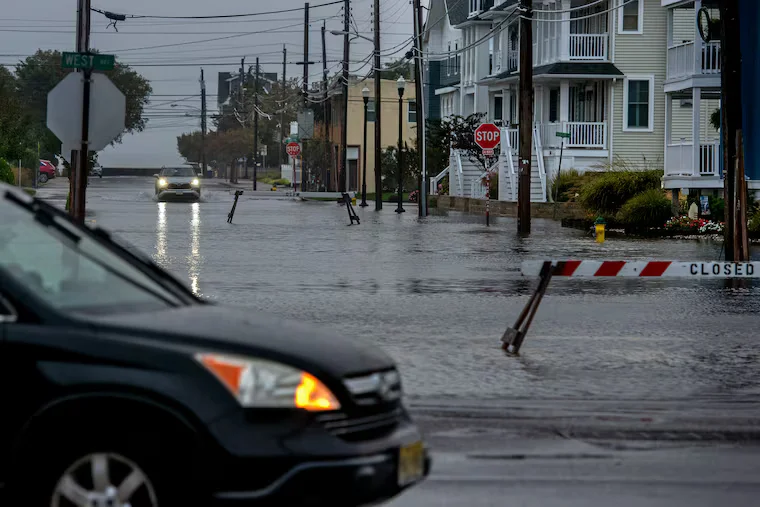
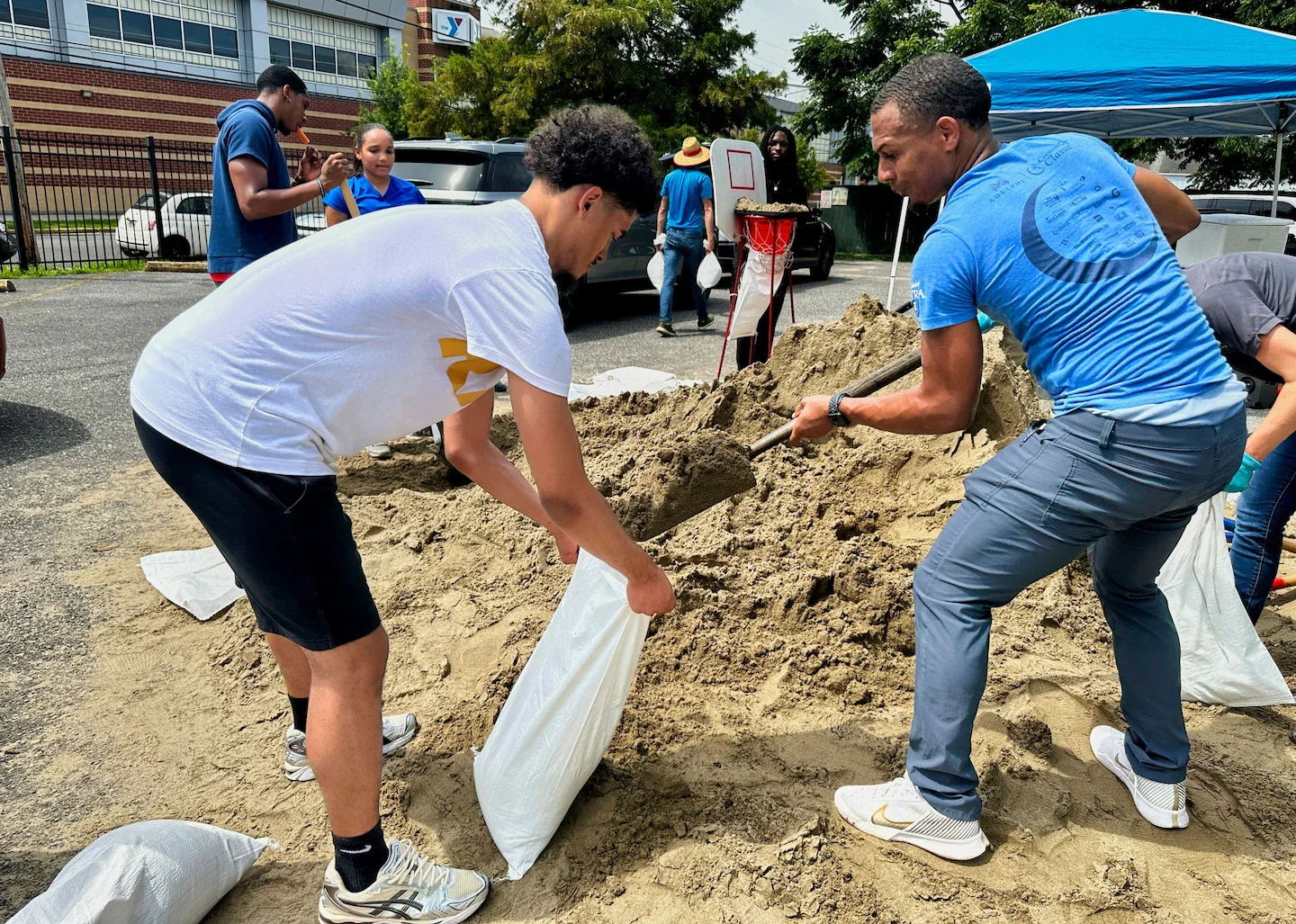
Governor Murphy declared a state of emergency in New Jersey due to Hurricane Erin, which is causing dangerous rip currents, high surf, and potential coastal flooding across the state, leading to beach closures and safety warnings.
Hurricane Erin is causing dangerous surf conditions, high waves, and rip currents along the US East Coast, particularly affecting North Carolina and Virginia, with warnings of potential flooding and road closures, although it has not yet made landfall.
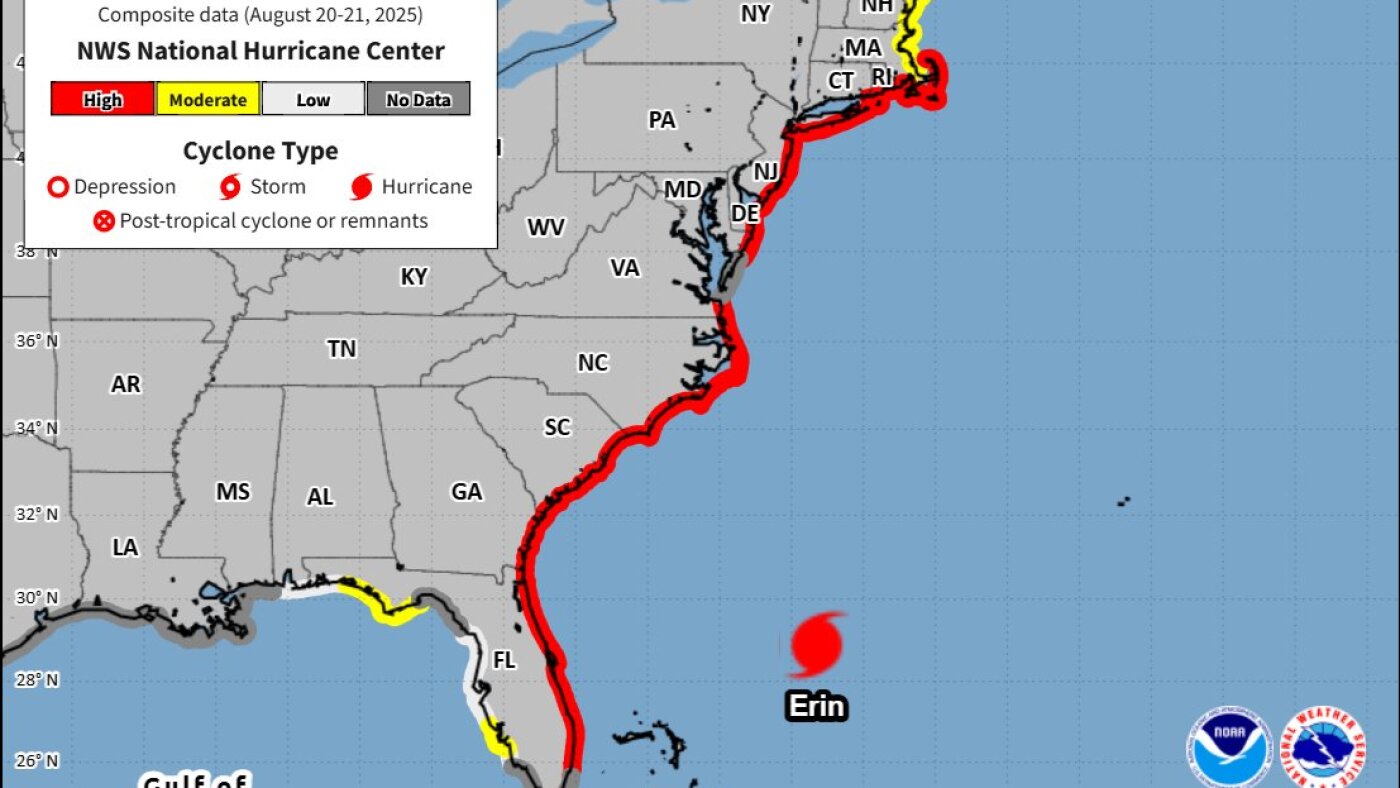
Federal forecasters warn the public to stay away from East Coast beaches due to Hurricane Erin, which is causing dangerous waves, rip currents, and flooding risks from Florida to Massachusetts, with evacuations and storm warnings in effect in parts of North Carolina and Virginia.
Hurricane Erin, a powerful Category 3 storm, is causing dangerous surf, rip currents, and coastal flooding along the US East Coast, especially in North Carolina's Outer Banks, while a new tropical system may develop behind it, amid an active hurricane season fueled by warm Atlantic waters.
Hurricane Erin, a Category 3 storm in the Atlantic, has prompted the closure of beaches in New Jersey and Delaware due to dangerous rip currents, which have already caused at least one death, as the storm affects the East Coast despite moving away from it.
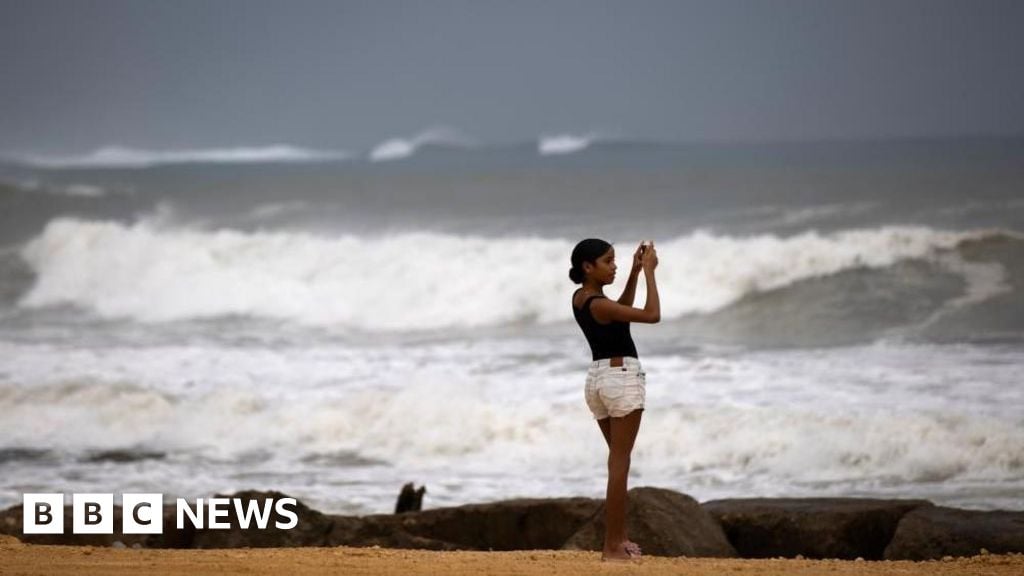
Hurricane Erin is growing larger and its rip currents pose a significant danger to the East Coast, even when the storm is far offshore, with risks of strong waves and beach hazards from Florida to Canada.
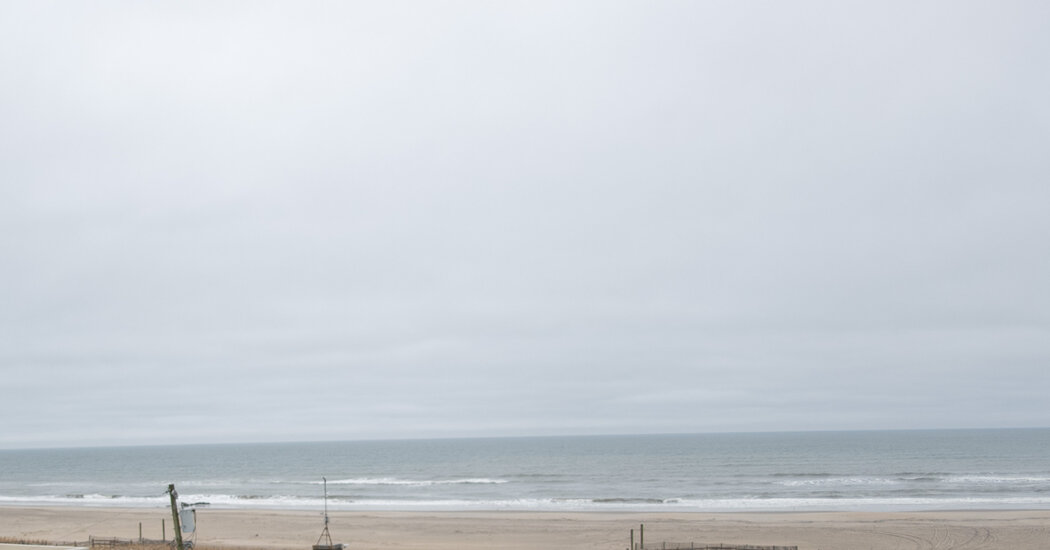
Hurricane Erin, currently a distant threat, is stirring up dangerous surf and coastal flooding along the Jersey Shore due to strong onshore winds and weather conditions, with advisories in effect and waves reaching up to eight feet, impacting beach activities and local businesses.
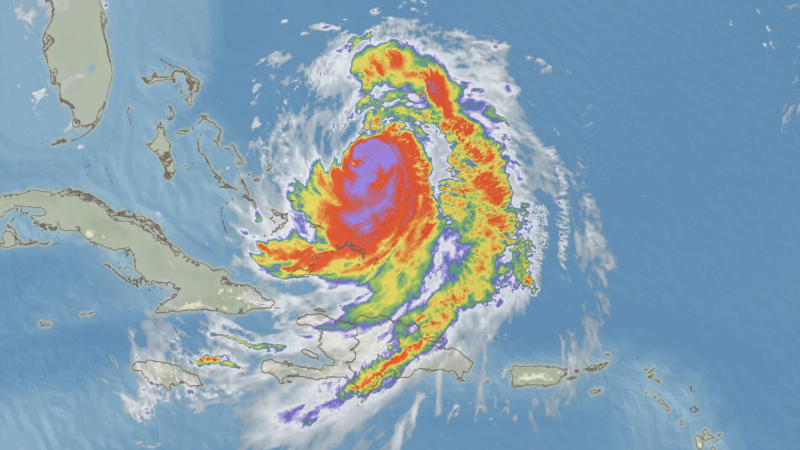
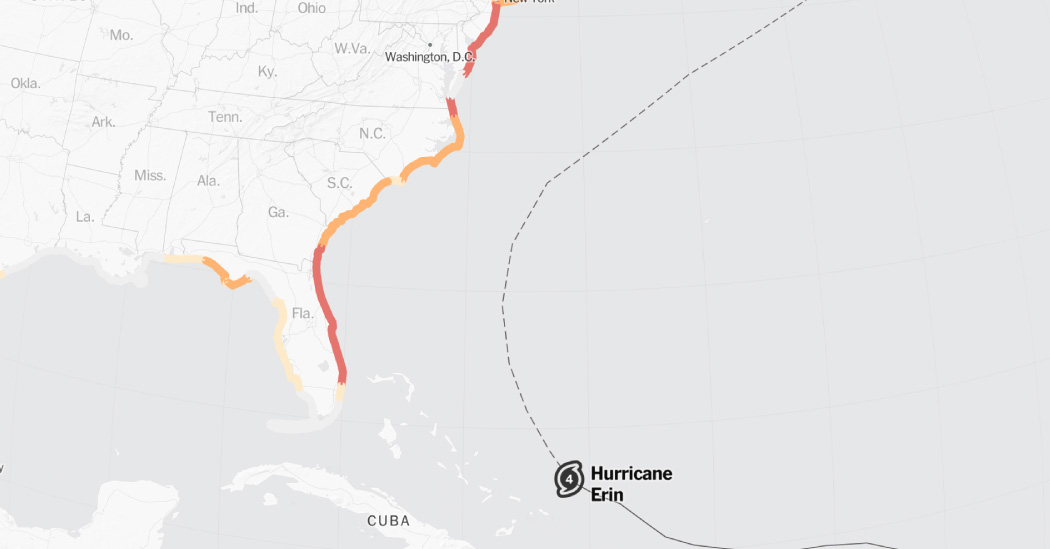
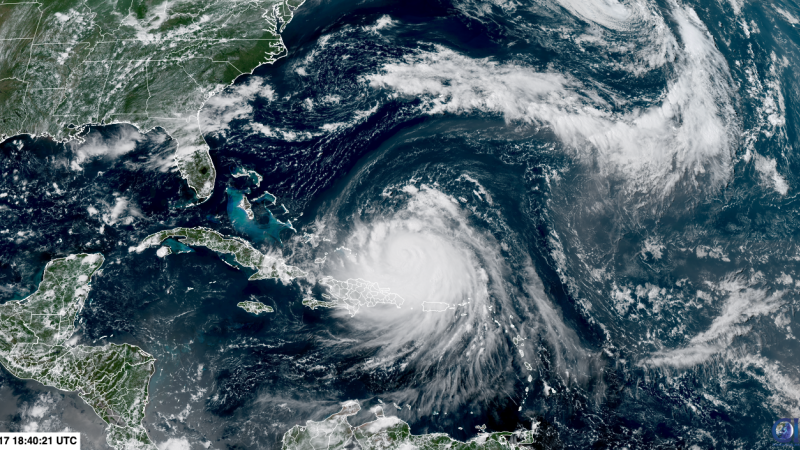
Hurricane Erin has intensified to a Category 4 storm, threatening the US East Coast with dangerous surf, rip currents, and heavy rainfall, while affecting the Bahamas and prompting evacuations and safety warnings.
Hurricane Erin, a powerful Category 4 storm, is affecting the Atlantic with large swells and dangerous rip currents along the US East Coast and Bermuda, causing coastal flooding, evacuations, and warnings despite remaining offshore.
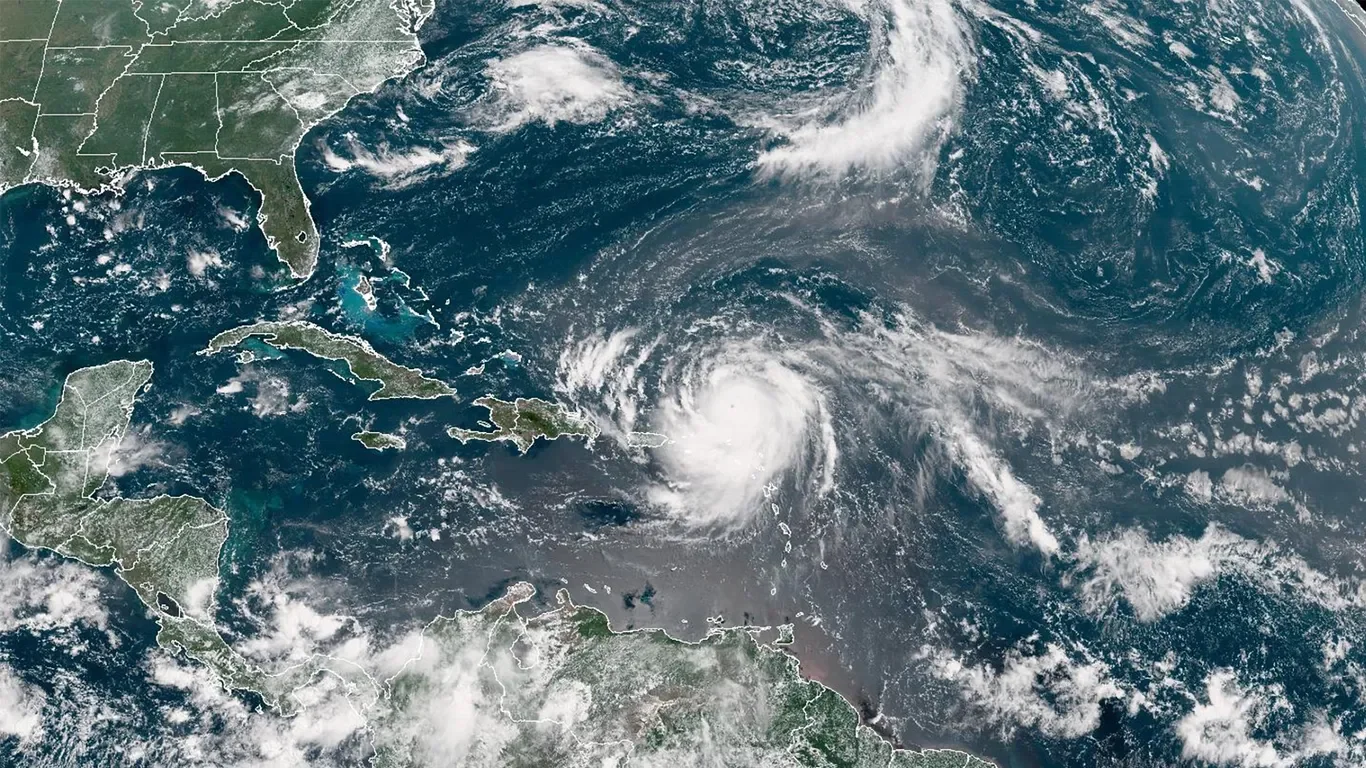
Hurricane Erin has strengthened to a Category 5 storm with winds near 160 mph, threatening the East Coast, Bahamas, and Atlantic Canada with heavy rainfall, dangerous surf, and rip currents, prompting warnings and flood watches in affected areas.
Tropical Storm Erin is strengthening in the Atlantic, with potential to become a hurricane and pass near Bermuda, causing high surf and rip currents along the US East Coast and Caribbean, while a separate system may impact northeast Mexico and Texas.
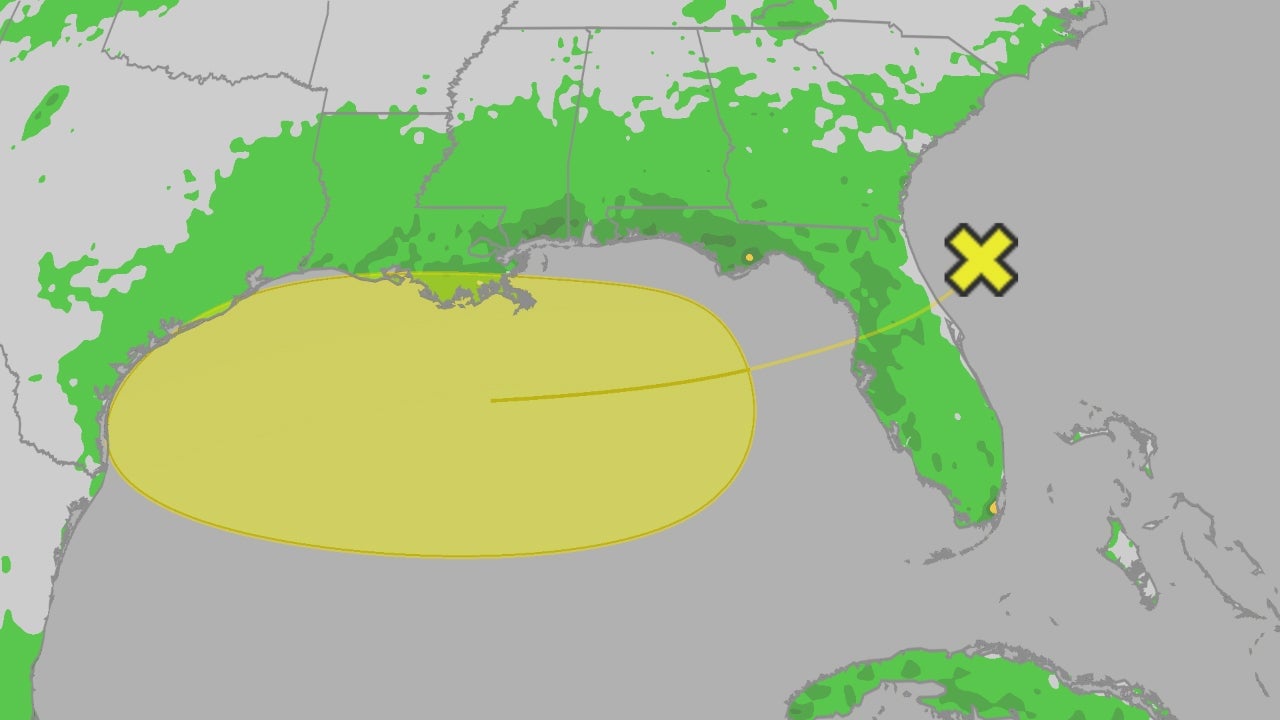
A tropical disturbance is expected to bring heavy rain and potential thunderstorms to Florida and the northern Gulf Coast over the next few days, with a small chance of developing into a tropical depression, while also increasing rip current risks at beaches.
Residents along the Gulf Coast are preparing for heavy rains and potential flooding as a weak tropical disturbance approaches southern Louisiana, with rainfall totals of 3-8 inches, while the system remains unlikely to strengthen into a named storm due to land interaction and wind shear. Rip currents are also a concern at beaches from Panama City westward.
Chase Childers, a former pro baseball player and police officer, died while attempting to rescue swimmers caught in a rip current off Pawleys Island, South Carolina. He was the only swimmer missing after entering the water to help a group in distress and was recovered dead after a search. The incident highlights the dangers of rip currents, which are a common hazard along U.S. coasts, prompting local authorities to consider safety measures.