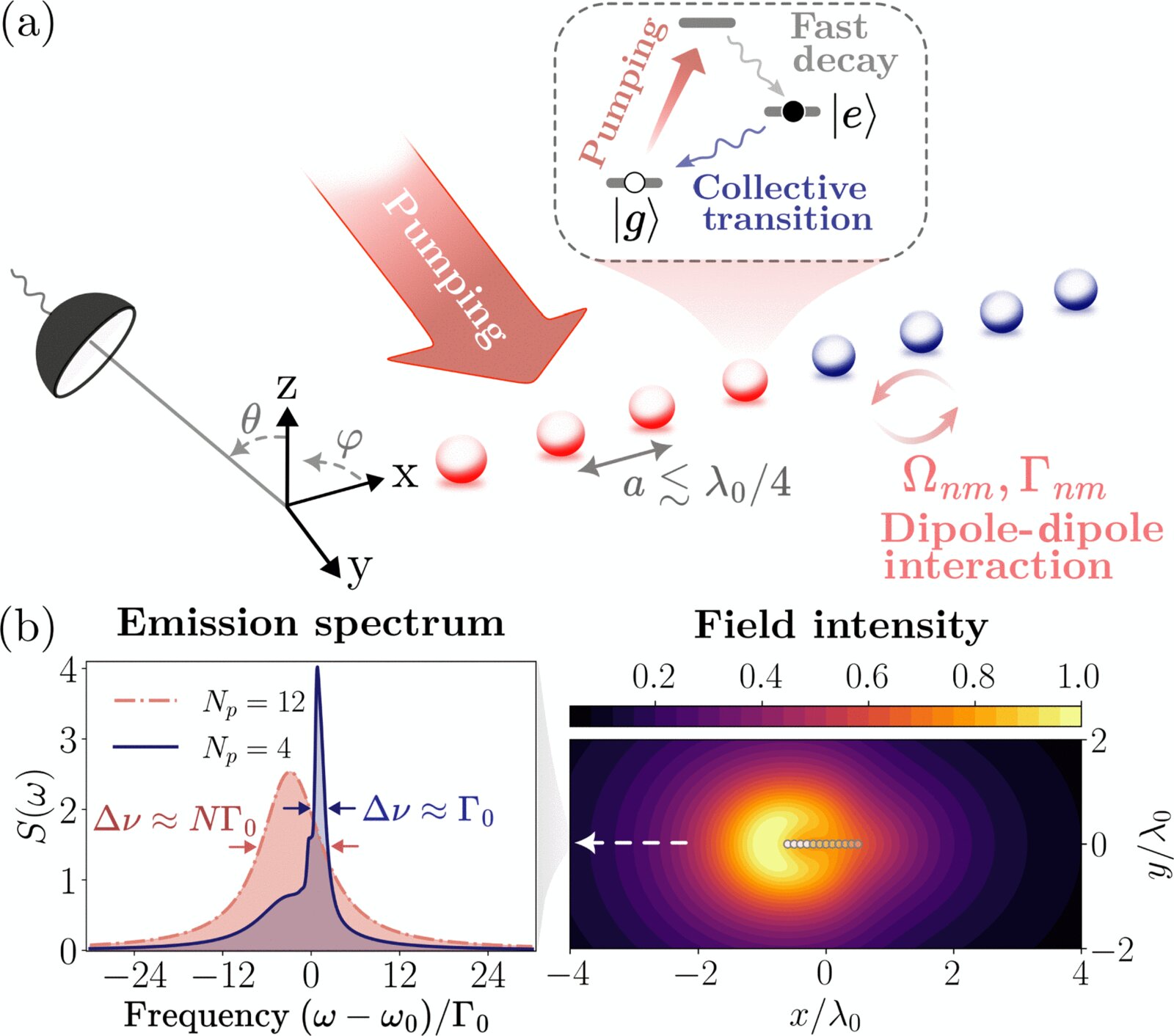
Physicists have proposed a new type of laser that operates without mirrors, using synchronized quantum emitters to produce a narrow, directional light beam, potentially revolutionizing ultra-compact light sources for nanophotonics and quantum sensing.
Researchers at Los Alamos National Laboratory have developed a low-cost and reliable technique to produce circularly polarized light, a specific type of photon crucial for quantum data exchange and encryption. By stacking two atomically thin materials, the team was able to "twist" photons in a predictable manner, eliminating the need for external magnetic fields or complex nanoscale structures. This breakthrough could pave the way for more accessible and efficient quantum communication technologies.
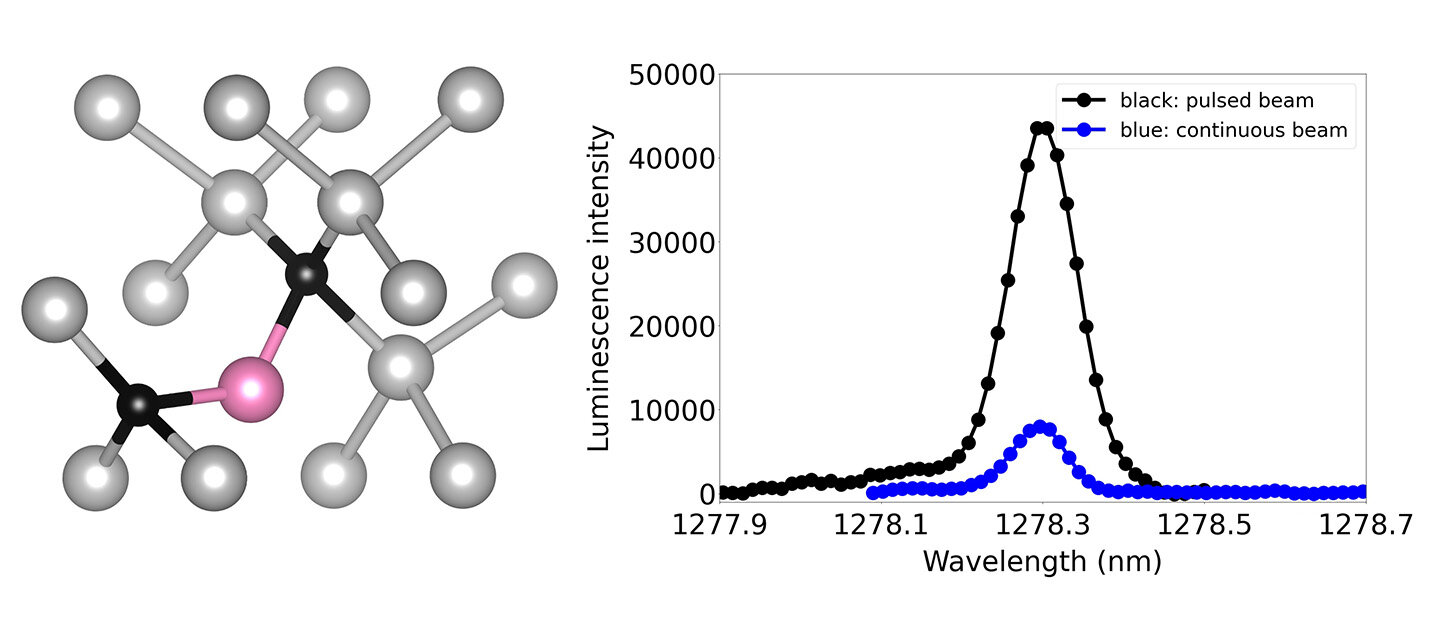
Researchers have made progress in the development of a quantum internet by improving the creation of quantum emitters, also known as color centers, which are crucial for transmitting quantum information. Using pulsed ion beams instead of continuous beams, scientists at Lawrence Berkeley National Laboratory have found a more efficient method for producing color centers in silicon. The team's work aims to identify the best quantum defect emitters for quantum information processing and to produce them with precision. The findings also suggest potential applications for color centers as radiation sensors.
Researchers at the University of Washington have discovered atomic “breathing” or mechanical vibration between atom layers, which could help encode and transmit quantum information. They also created an integrated device that manipulates these atomic vibrations and light emissions, advancing quantum technology development. The researchers plan to build a waveguide and scale up the system to control multiple emitters and their associated phonon states, enabling the quantum emitters to “talk” to each other, a step toward building a solid base for quantum circuitry.
Researchers at the University of Washington have discovered that they can detect atomic "breathing" by observing the type of light emitted by atoms when stimulated by a laser. This atomic "breath" could help encode and transmit quantum information. The team also developed a device that could serve as a new type of building block for quantum technologies. The device involves only a small number of atoms and can control multiple emitters and their associated phonon states, enabling quantum emitters to "talk" to each other, a step toward building a solid base for quantum circuitry.