The article highlights a successful year for the GCC compiler and GNU ecosystem in 2025, featuring new language front-ends like ALGOL 68 and COBOL, ongoing improvements in Rust support, performance optimizations, support for AMD Zen 6, and various releases including Bash 5.3, Emacs 30.1, and Coreutils 9.8, along with discussions on deprecating the GNU Gold linker and expanding CPU architecture support.

GNOME's end-of-year code stats reveal that 44.8% of core apps are written in C, with significant portions in Vala, JavaScript, and Rust, especially in community apps where Rust is more prominent. C dominates the core components, but Rust is gaining popularity in community projects.
The article argues that Ruby is not a serious or modern programming language due to its slow performance, lack of advanced tools for responsible coding, and its reliance on the outdated Ruby on Rails framework, which has kept it relevant mainly through legacy code and nostalgia rather than technical superiority.
Originally Published 3 months ago — by Hacker News
The article discusses the mixed opinions among Python developers regarding type hints, highlighting their benefits for safety and documentation in large codebases, while also criticizing their complexity and the way they can clutter high-usage code. It compares Python's optional type hints to the evolution of TypeScript and other languages, emphasizing that while they are useful, they are not a core part of Python's philosophy, and their implementation can sometimes lead to messiness and complexity. Overall, the article reflects on the ongoing debate about static versus dynamic typing in programming languages.
Originally Published 4 months ago — by Hacker News
The article discusses the limited popularity of Python's async features despite being available for over a decade, attributing it to the maturity of alternative solutions like green threads, the complexity and bugs associated with async/await, and the preference for more explicit concurrency models in other languages like Go and Erlang. It highlights the challenges and subjective opinions around async programming, comparing it to green threads and other models, and emphasizes that while async has its uses, it is often seen as complex and less natural compared to traditional threading or green thread approaches.
Perl, once a dominant and versatile programming language used in web development and bioinformatics, has fallen out of favor, leading to a decline in humility among programmers who no longer code in it.
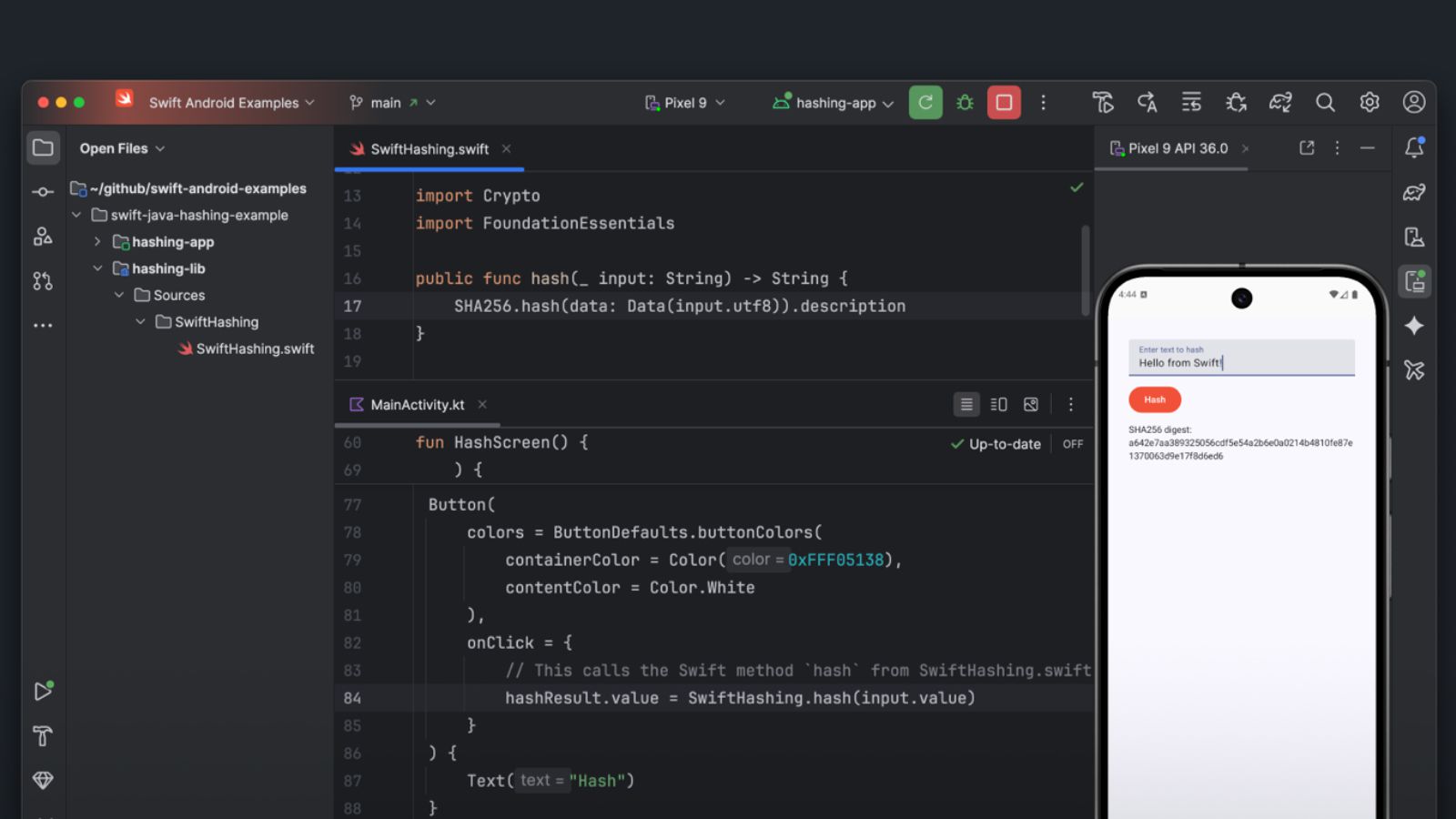
Apple's Swift programming language is expanding to support Android app development through the creation of an 'Android Working Group,' aiming to establish official support, improve compatibility, and develop best practices for Swift on Android, despite existing third-party tools and prior interest from Google.
French AI startup Mistral has launched Mistral Code, an AI-powered coding client for enterprise developers, supporting over 80 programming languages and integrating various models for code autocomplete, search, and chat assistance. It aims to compete with existing tools like GitHub Copilot and is currently in private beta for JetBrains and VS Code, with customers including Capgemini and SNCF. Mistral plans ongoing improvements and contributions to open source.
The US Cybersecurity and Infrastructure Security Agency (CISA) and the FBI are urging software developers to transition from memory-unsafe languages like C and C++ to safer alternatives such as Rust, Java, and Python, due to the high risk of security vulnerabilities. Despite the push, the transition is challenging due to the complexity of converting existing codebases, potential performance slowdowns, and the cost of new tools. While CISA emphasizes the long-term security benefits, the shift is expected to be slow, with significant changes unlikely before the 2030s.
Rust has addressed a critical vulnerability, CVE-2024-24576, that could lead to command injections on Windows machines due to improper escaping of arguments when invoking batch files. The fix, included in version 1.77.2, mitigates the issue by improving the escaping code and ensuring the Command API returns an InvalidInput error when it can't safely escape arguments. The vulnerability, dubbed BatBadBut, affects multiple technologies, including Erlang, Go, Python, and Ruby, with Node.js and PHP working on patches and Java not planning to address it.
As AI and low-code tools continue to advance, the role of programming languages in software development is evolving. While AI can assist in generating code and speeding up tasks, developers still need to stay updated with new trends and technologies. Learning to effectively communicate with AI assistants and conducting thorough code reviews are essential skills. The industry may see a shift in demand for developer roles, with a potential decrease in junior positions. Future-proofing by embracing AI-assisted development and acquiring additional skills such as low-code technologies and effective communication will be crucial for developers.
AI surveillance start-up Flock has installed car-tracking cameras on public roads in South Carolina without permission, NASA's Voyager 1 is experiencing communication issues, the Ingenuity helicopter on Mars is still operational but limited to watching sand and dust, Venn Stone's Interfacing Linux offers tips for content creators, and the US National Security Agency has released a list of alternative programming languages with better memory-safety features.
Interpreters for Zork, the popular 1977 text adventure game, have recently surfaced online for classic 1980s machines. Zork is not a PDP-10 executable but a virtual machine executable, run by an interpreter written for the PDP-10. The game was compiled into "Z-machine" program files called ZIP, and while the compiler has not been released, the language and ZIP specifications have allowed for the creation of custom ZIP compilers. Additionally, there are other types of interpreters, such as programming languages that are interpreted directly from source code.
Computer scientists at the University of Massachusetts Amherst have developed an open-source Python profiler called Scalene, which identifies inefficiencies in Python code and suggests ways to optimize it using AI. Python is known for being slower than other programming languages, but Scalene helps programmers troubleshoot and streamline their code for higher performance. The tool has already been downloaded over 750,000 times since its release and won a Best Paper Award at the USENIX Conference on Operating System Design and Implementation.