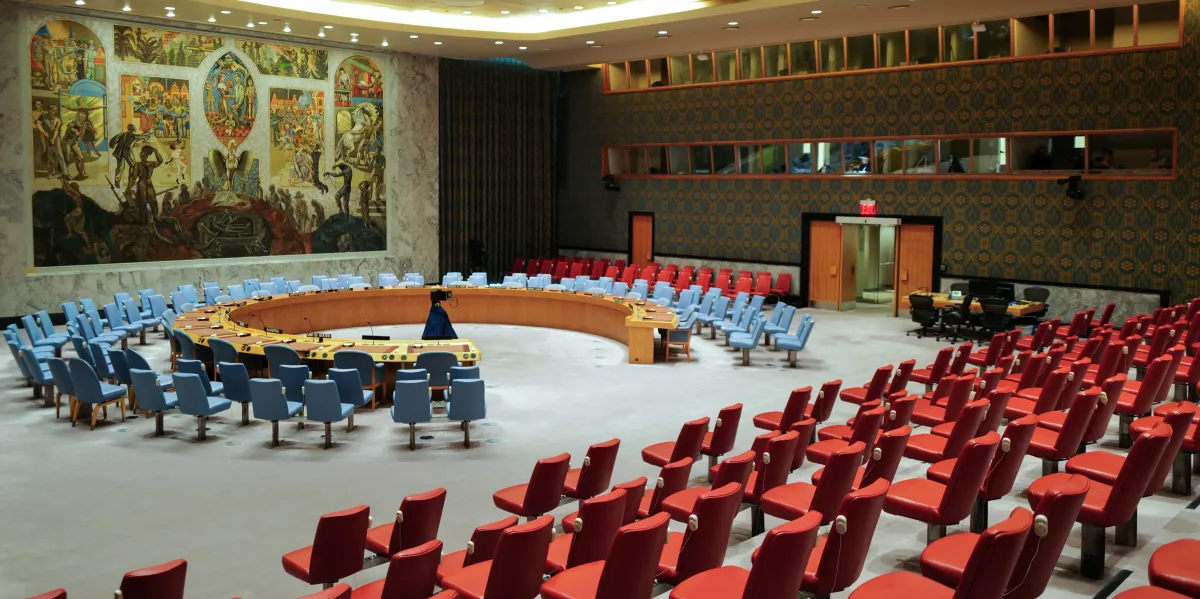
Leaked State Department cables obtained by The Intercept reveal the U.S. is lobbying nations, including Ecuador and Malta, to reject Palestinian statehood at the United Nations Security Council, in contradiction to the Biden administration's pledge to support a two-state solution. The cables detail pressure being applied to Security Council members and include justifications for the opposition, citing the risk of inflaming tensions and potential backlash. Ecuador, in cooperation with the U.S., is instructed to lobby other Security Council members to reject the proposal. The U.S. position is that the Palestinian state should be based on bilateral agreements between Israelis and Palestinians, and it does not believe the UN can create the state by fiat.
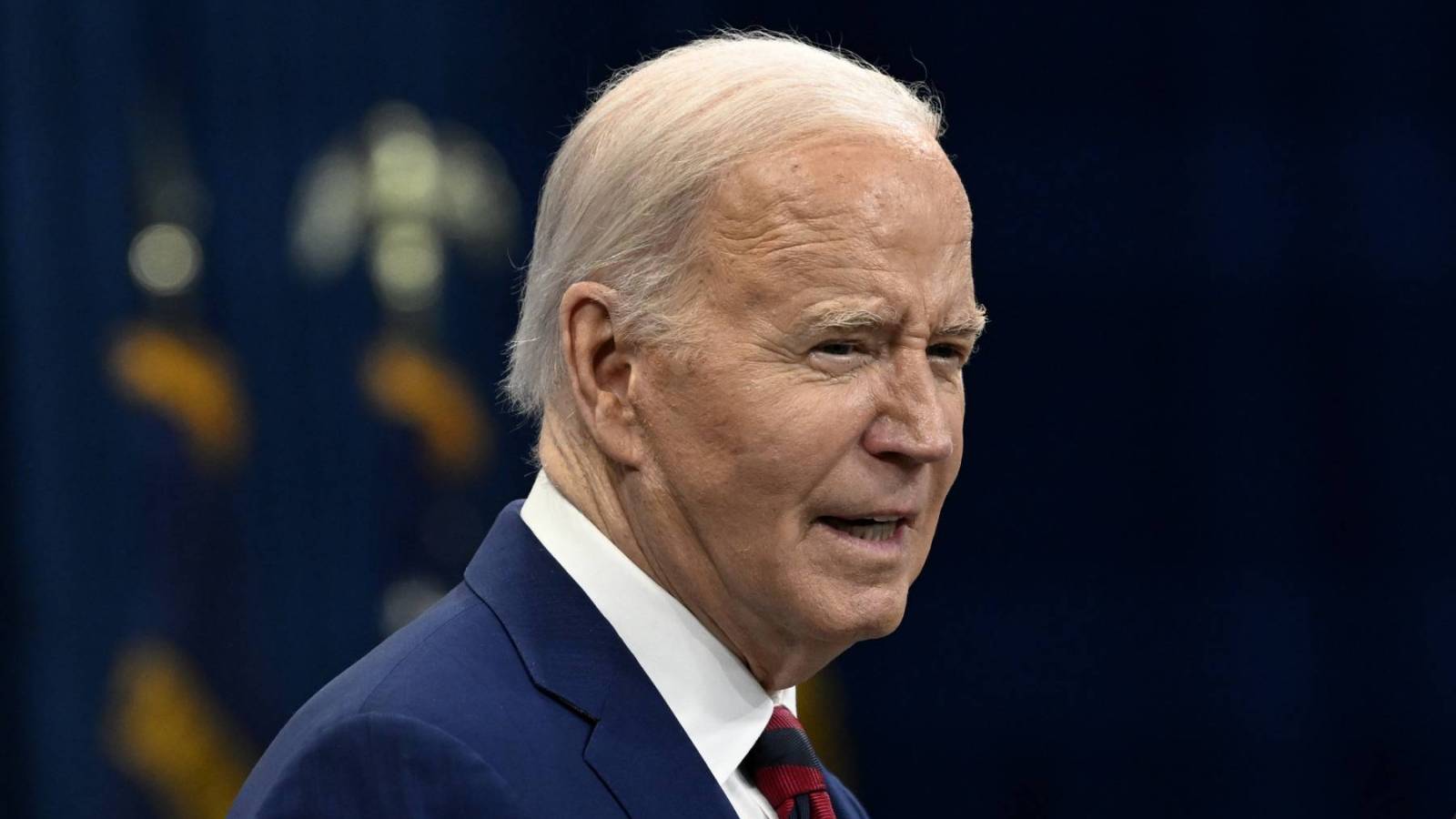
President Biden's call for Israel to improve humanitarian conditions in Gaza and support a ceasefire has drawn criticism from frustrated Democrats who believe he did not go far enough, while Republicans accuse him of going too far. Democrats are pressuring Biden to take a stronger stance on the humanitarian crisis in Gaza and to be more vocal about U.S. expectations for the campaign. Meanwhile, some Republicans believe Biden's shift in tactic is to aid his reelection chances and are opposed to placing pressure on Israel with respect to Gaza. The White House has not specified how U.S. policy would change if Israel does not meet Biden's demands, and there are differing opinions on whether the U.S. has untapped leverage in influencing Israeli military behavior.
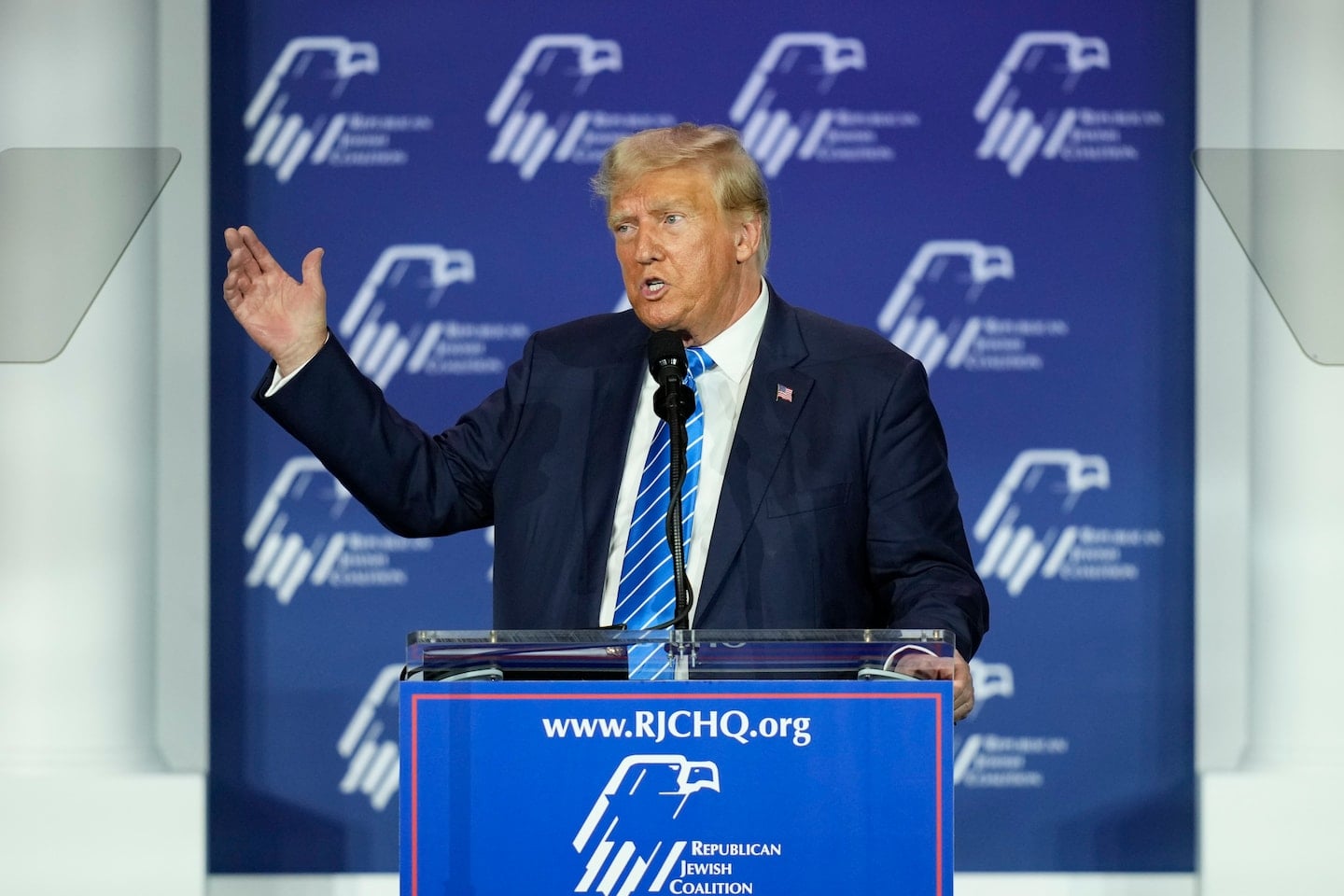
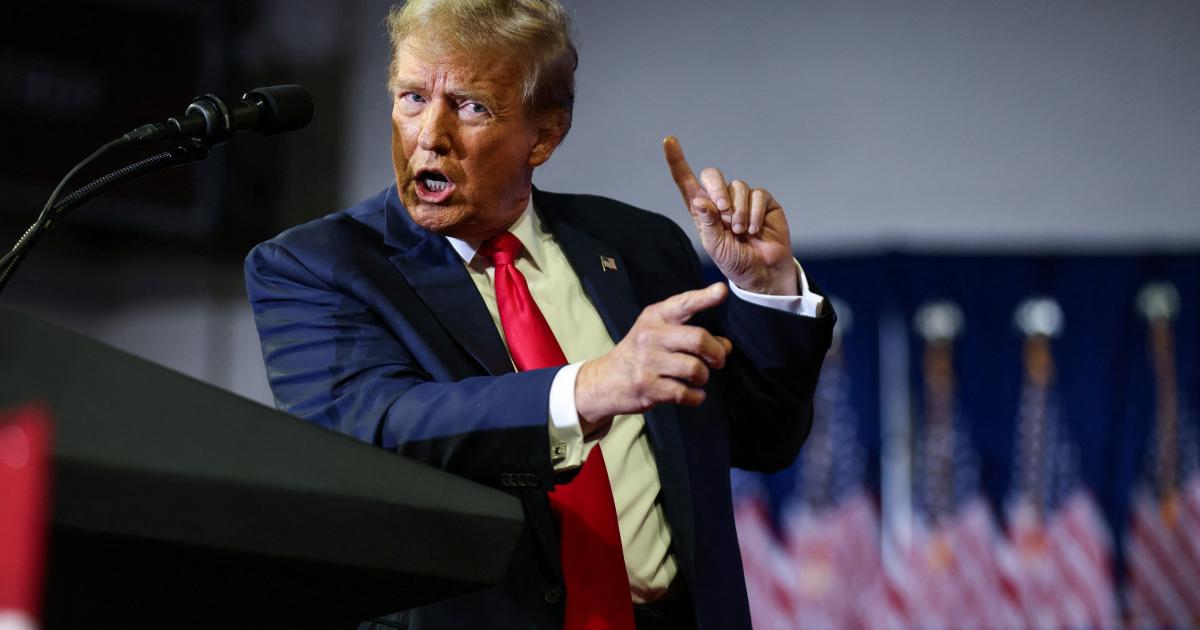
Former President Donald Trump criticized Israel's handling of the war in Gaza, expressing concerns about optics and advising Israeli Prime Minister Benjamin Netanyahu to "get it over with" and "get back to normalcy." Trump has found himself at odds with the Republican Party's loyalty to Israel, while also criticizing President Biden's handling of the conflict. Republicans in Congress have been rallying around Netanyahu and the Jewish state, with tensions escalating as Biden pushes for an immediate cease-fire and specific steps to address civilian harm and humanitarian suffering.
President Biden's meeting with Muslim American leaders to discuss Gaza was tense and sparsely attended, with only six invitees showing up. Tensions rose as attendees expressed concerns about the situation in Gaza, with one doctor showing Biden photos of malnourished Palestinian children and another walking out in protest. The event, originally planned as a Ramadan celebration, was repurposed into a listening session, reflecting criticism of Biden's support for Israel during the Gaza invasion. The meeting occurred amid warnings of widespread famine in northern Gaza and condemnation of an Israeli airstrike that killed aid workers.
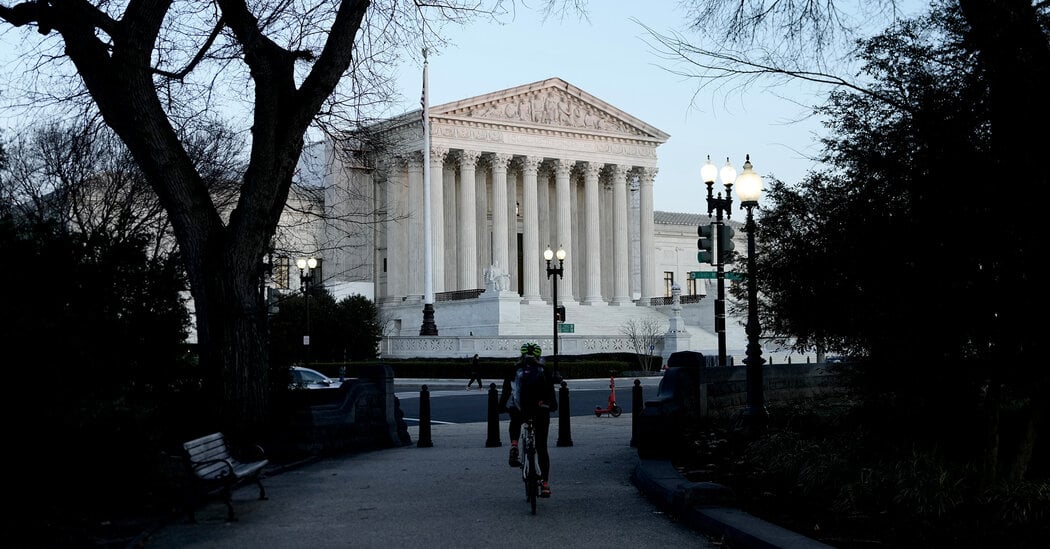
A potential answer on Trump's eligibility has emerged as a legal memo suggests that he could be barred from holding public office again, while Kamala Harris calls for a Gaza cease-fire amid escalating violence between Israel and Hamas.
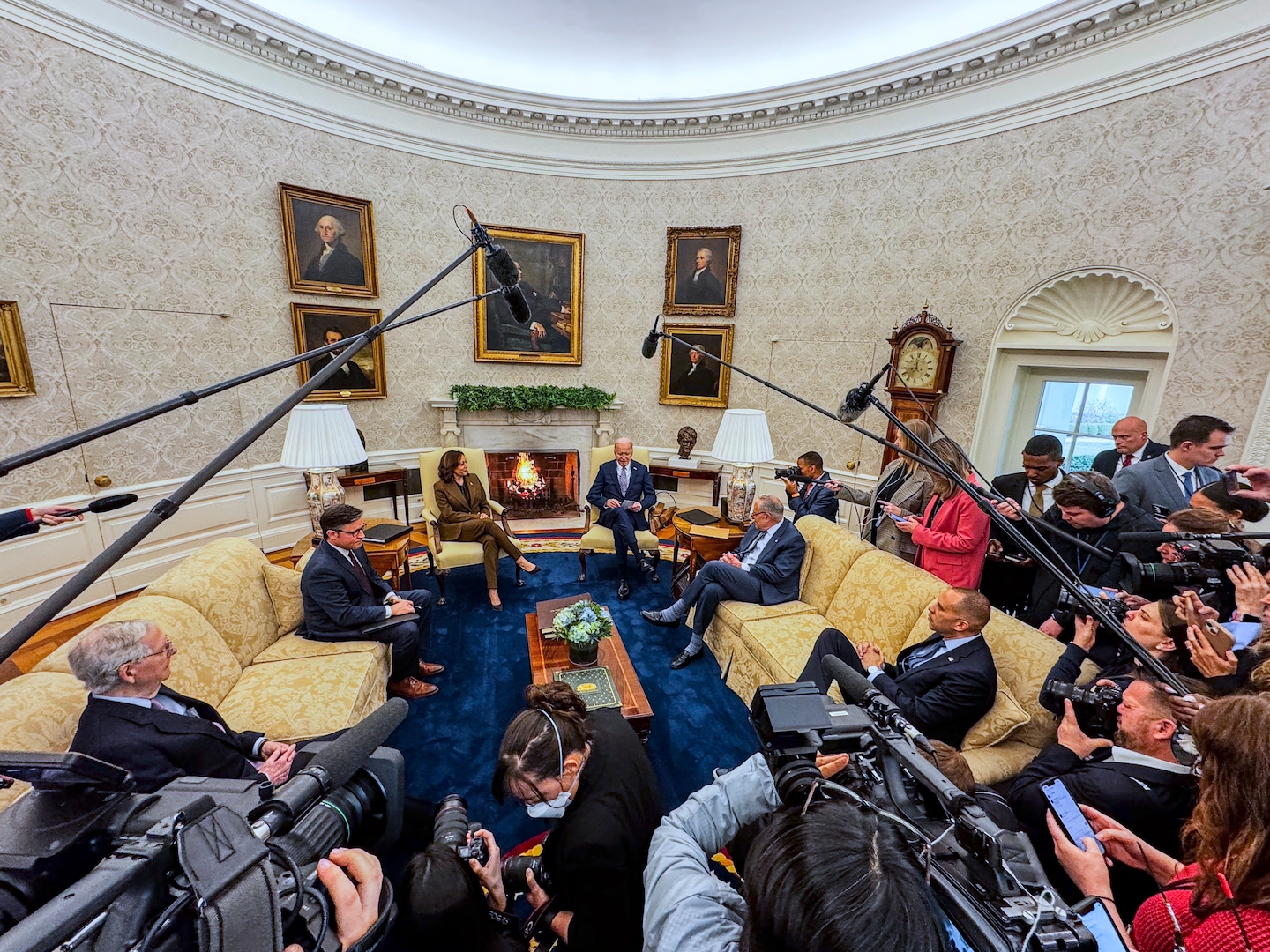
President Biden met with congressional leaders to address the looming federal shutdown and the urgent need for funding for Ukraine. Without a spending deal, vital services and assistance programs in the U.S. could be affected, while Ukraine faces a critical shortage of munitions in its conflict with Russia. Congressional negotiations have stalled over funding for various programs, including food assistance, and a potential government shutdown looms as the deadline approaches.
U.S. Senate Majority Leader Chuck Schumer and four other Democratic senators visited Ukraine to meet with President Zelenskyy amid a standoff in Washington over military aid. The visit comes as President Biden announced new sanctions against Russia. Schumer outlined four objectives for the visit, including demonstrating U.S. support for Ukraine and urging Congress to deliver aid. The senators participated in a ceremony to honor Ukrainian heroes and discussed the urgent need for weapons. The visit aims to emphasize the consequences of abandoning allies and to push for congressional action on aid for Ukraine.
Former U.S. President Donald Trump's recent comments about NATO have sparked concern among global leaders, highlighting the potential challenges of a "Trump 2.0" presidency. With a history of dissatisfaction with NATO and a tendency to cozy up to authoritarian leaders, a second Trump term could lead to a more tumultuous and aggressive U.S. foreign policy, with potential impacts on alliances, adversaries, and the global order. The geopolitical environment has changed since Trump's first term, and a second term could see a more disordered world, with U.S. rivals and adversaries poised to thrive while traditional U.S. allies may suffer. The article explores potential strategies for coping with a second Trump administration and the implications for international relations.
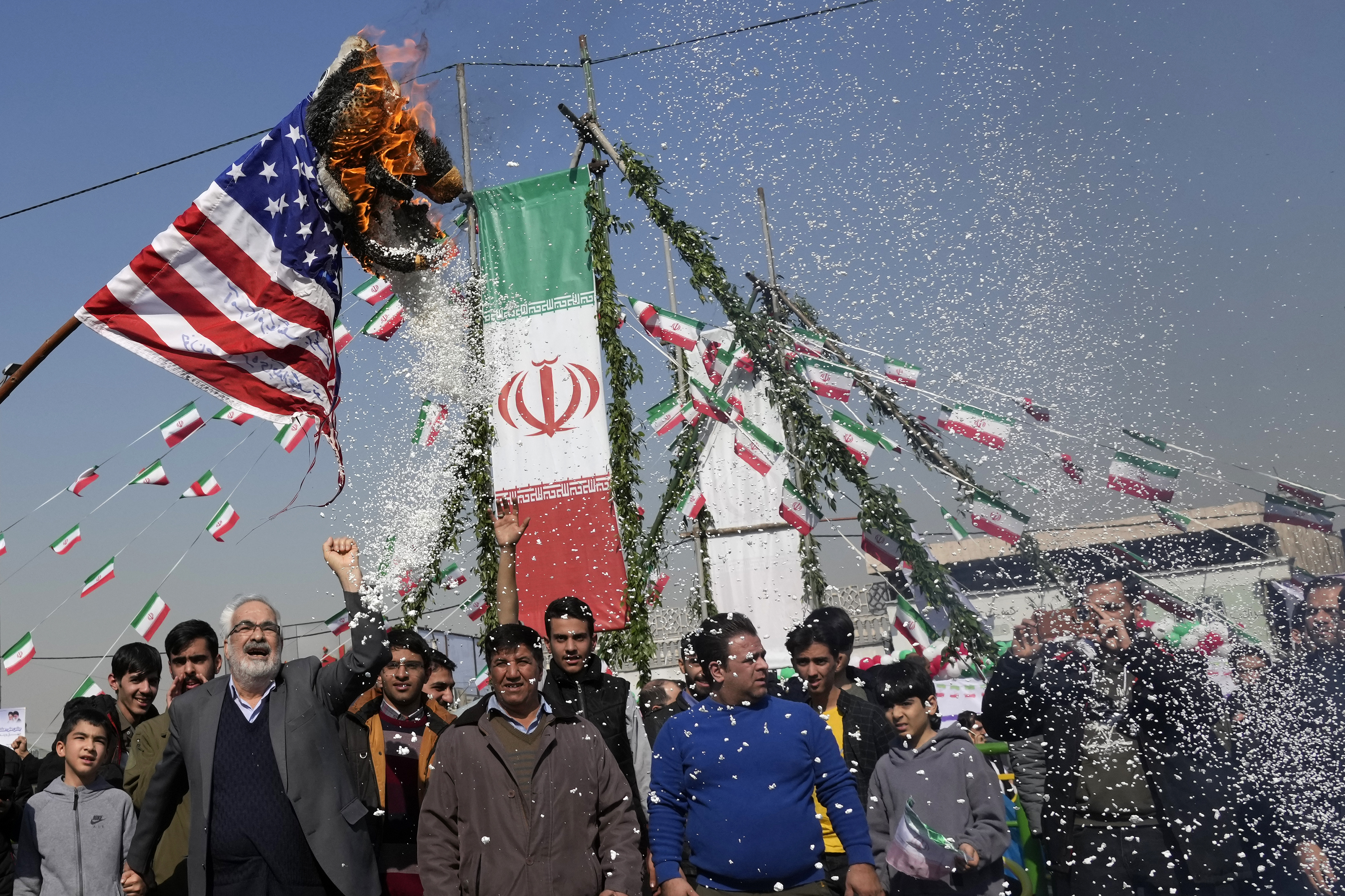
The White House is pressuring House members to pass a national security supplemental by arguing that not doing so would aid Iran, which supports Russia in its war on Ukraine and has ties to Hamas. The administration's memo aims to shame House Republicans into supporting the aid package, while also criticizing former President Donald Trump and Senate Republicans. Despite general support in the House, passage of the supplemental is not guaranteed, and Speaker Mike Johnson has expressed concerns about its lack of funding for border security.
President Biden's frustrations with Israeli Prime Minister Netanyahu over the Gaza conflict are seen as meaningless by analysts unless they result in concrete action. Despite expressing anger behind closed doors, Biden has not exerted pressure on Israel to end its military offensive in Gaza, leading to criticism from experts. The US has continued to support Israel with military aid and weapons transfers, despite concerns about alleged war crimes and the risk of genocide in Gaza, prompting calls for the administration to take decisive action to prevent further escalation.
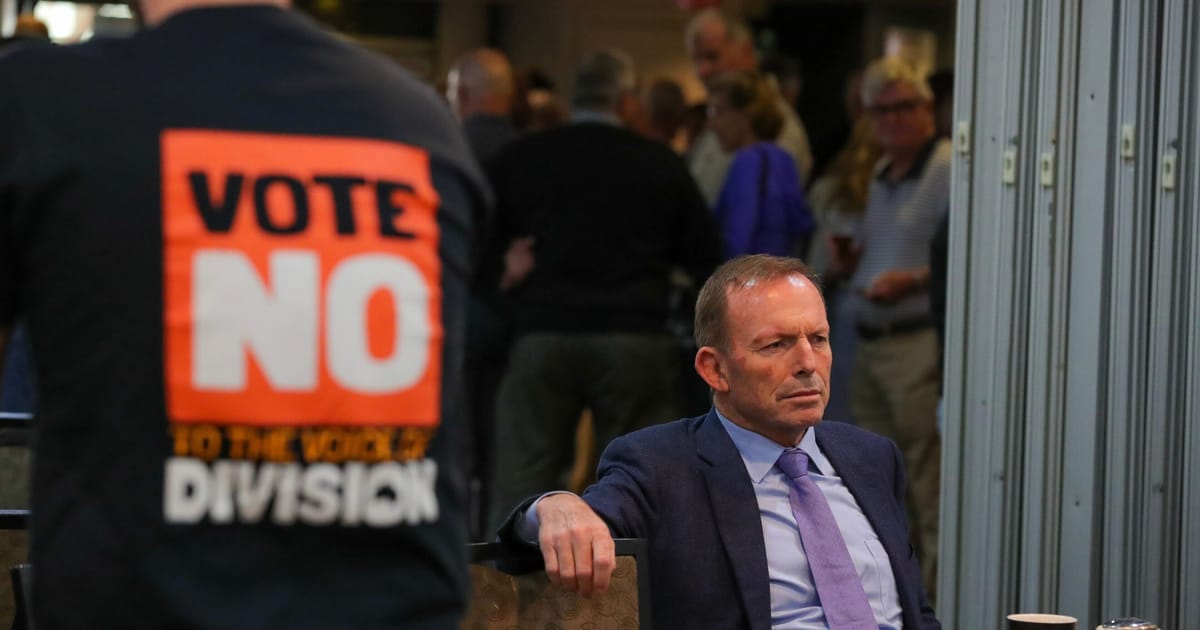
Former Australian Prime Minister Tony Abbott criticizes Republicans for blocking Ukraine aid, calling their actions "shameful." Meanwhile, the UK and Switzerland have struck a groundbreaking financial services deal, with UK finance minister Jeremy Hunt emphasizing its potential to enhance choice and competition. In UK politics, Labour's shift towards "Bidenomics" is discussed, while the Tories' efforts to attract Middle East investment, including concerns over the potential sale of the Telegraph to a UAE-backed fund, are also highlighted.
The Senate GOP blocked a comprehensive national security and border reform package, which included over $60 billion in aid for Ukraine and $14 billion for Israel, leading to uncertainty about the future of aid for Ukraine and Israel. The bill faced opposition from both Republicans and Democrats, with concerns about its impact on the border crisis and immigration. The Senate will proceed to another vote on the national security aid without the border reforms, as lawmakers express the need to address funding for Ukraine, Israel, and other national security priorities.
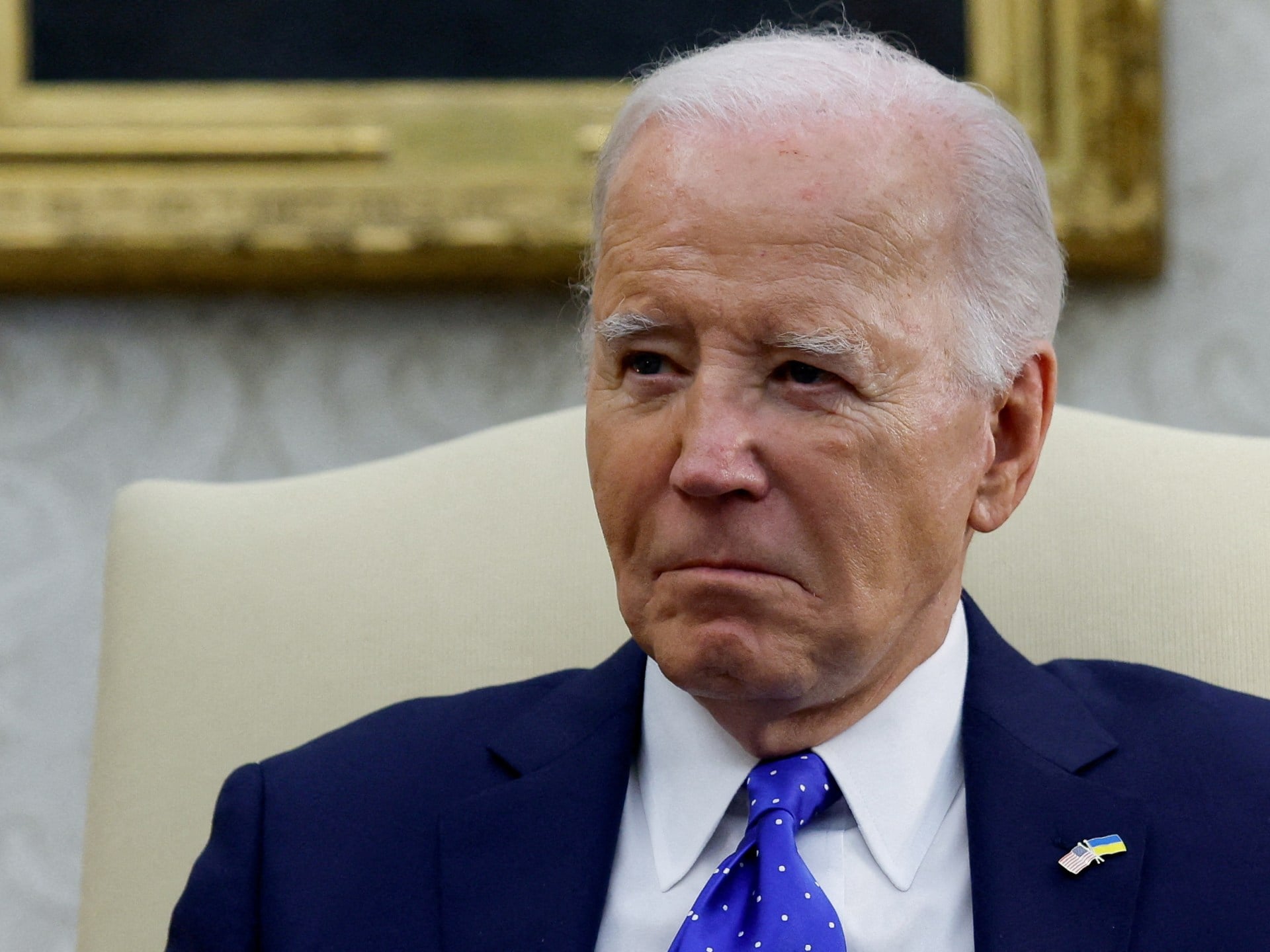
During a press conference, President Biden stumbled and forgot the name of Hamas when asked about ongoing hostage negotiations between the group and Israel. He was discussing a border security bill and was reminded by a reporter of the terror group's name. This incident adds to a series of gaffes made by Biden, including mistakenly referring to French president Emmanuel Macron as Francois Mitterrand and making a comment about having a "code to blow up the world." Meanwhile, Hamas has delivered a response to a proposed ceasefire deal for Gaza, involving the release of hostages, and the United States believes an agreement is still possible.
Former President Donald Trump suggested he would consider imposing a tariff upward of 60% on all Chinese imports if reelected, amid high tensions between the US and China. He also expressed belief that China would attempt to interfere in the 2024 presidential election, while praising Chinese leader Xi Jinping as a "very good friend." Trump did not commit to intervening if China tried taking over Taiwan, citing concerns about jeopardizing his negotiating ability with China.
Former President Donald Trump suggested he would consider imposing a tariff upward of 60% on all Chinese imports if reelected, amid high economic tensions between the US and China. He also expressed belief that China would attempt to interfere in the 2024 presidential election and refrained from committing to intervene if China tried taking over Taiwan, citing concerns about jeopardizing his negotiating ability with China.