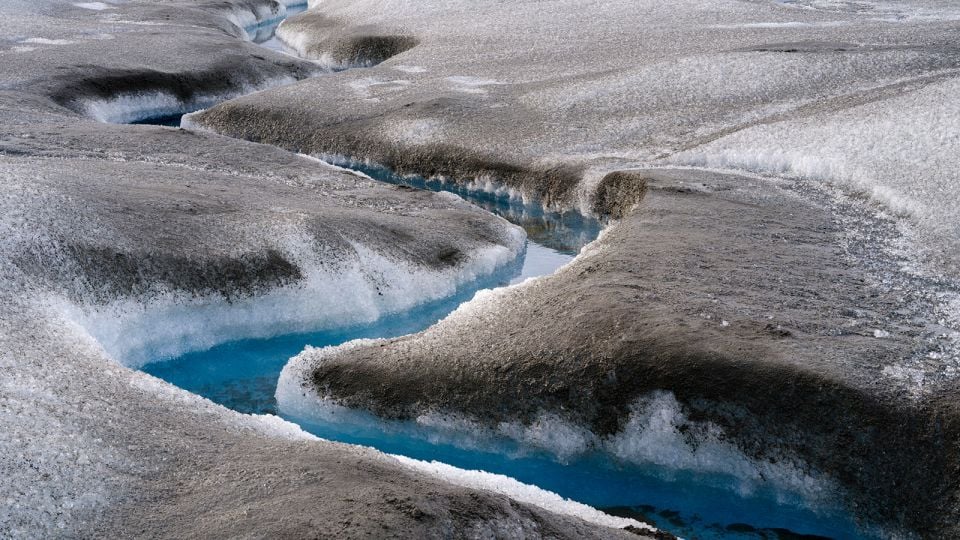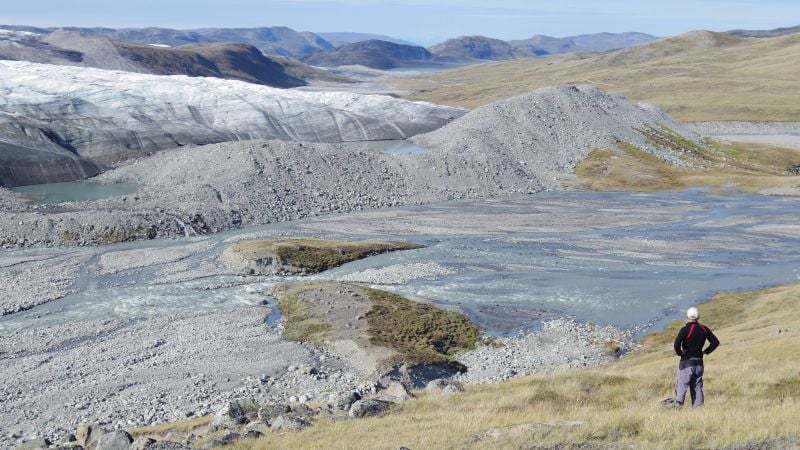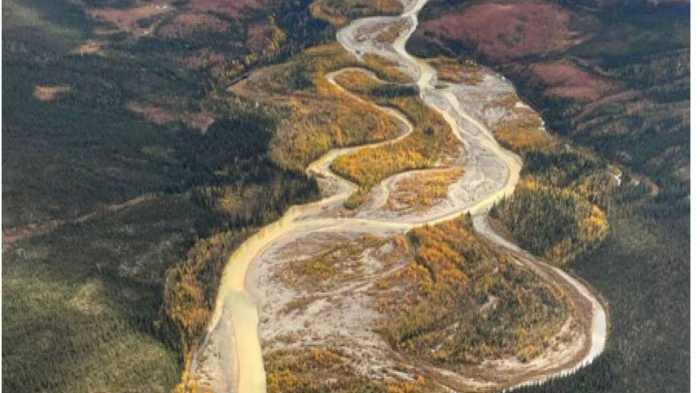
The Arctic is experiencing its warmest year on record, with significant melting of permafrost and sea ice, leading to environmental changes such as rivers turning orange from leached metals and the 'Atlantification' of the region, which threaten global climate patterns and ecosystems, amid concerns over reduced monitoring due to funding cuts.
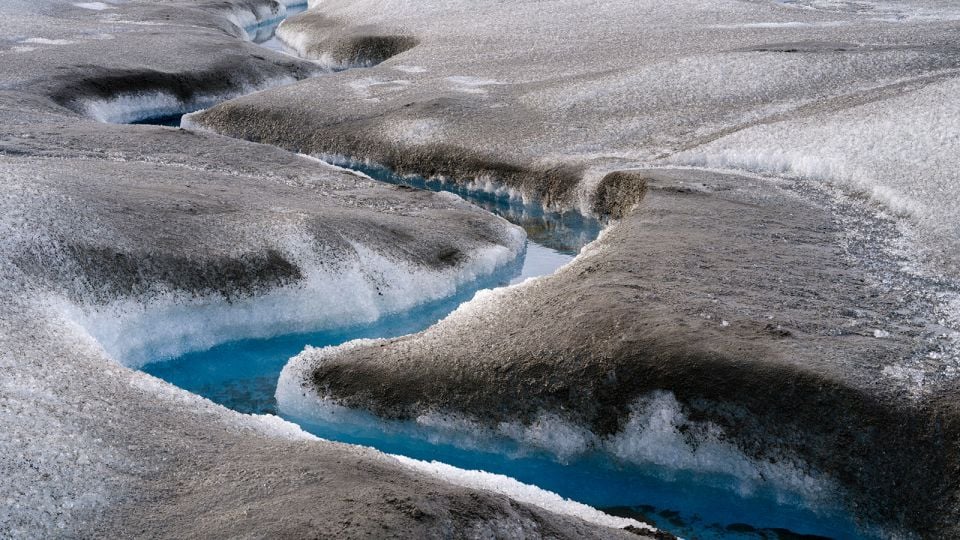
A study shows that Greenland has lost a significant amount of ice in the past three decades, leading to a doubling of vegetation and quadrupling of wetlands. This ice loss is driven by warmer air temperatures, which in turn causes permafrost melt, releasing carbon dioxide and methane. The resulting feedback loop leads to further ice loss and "greening" of Greenland, with serious consequences for climate change, sea level rise, and indigenous communities relying on natural ecosystems for survival.
A study shows that Greenland has lost a significant amount of ice in the past three decades, leading to a doubling of vegetation and quadrupling of wetlands. This ice loss is driven by warmer air temperatures, which in turn causes permafrost melt, releasing carbon dioxide and methane. The resulting feedback loop leads to further ice loss and "greening" of Greenland, contributing to more global warming and sea level rise. These changes are particularly problematic for indigenous populations and pose significant challenges for the future.
A study shows that Greenland has lost an area of ice 36 times the size of New York City in the past three decades, leading to significant vegetation growth and wetland expansion. Warmer temperatures have driven ice loss, causing permafrost melt and releasing carbon dioxide and methane, contributing to further global warming. The loss of ice is creating a feedback loop, with serious consequences for climate change and sea level rise. This trend poses challenges for indigenous populations relying on natural ecosystems for survival and contributes substantially to global sea level rise.