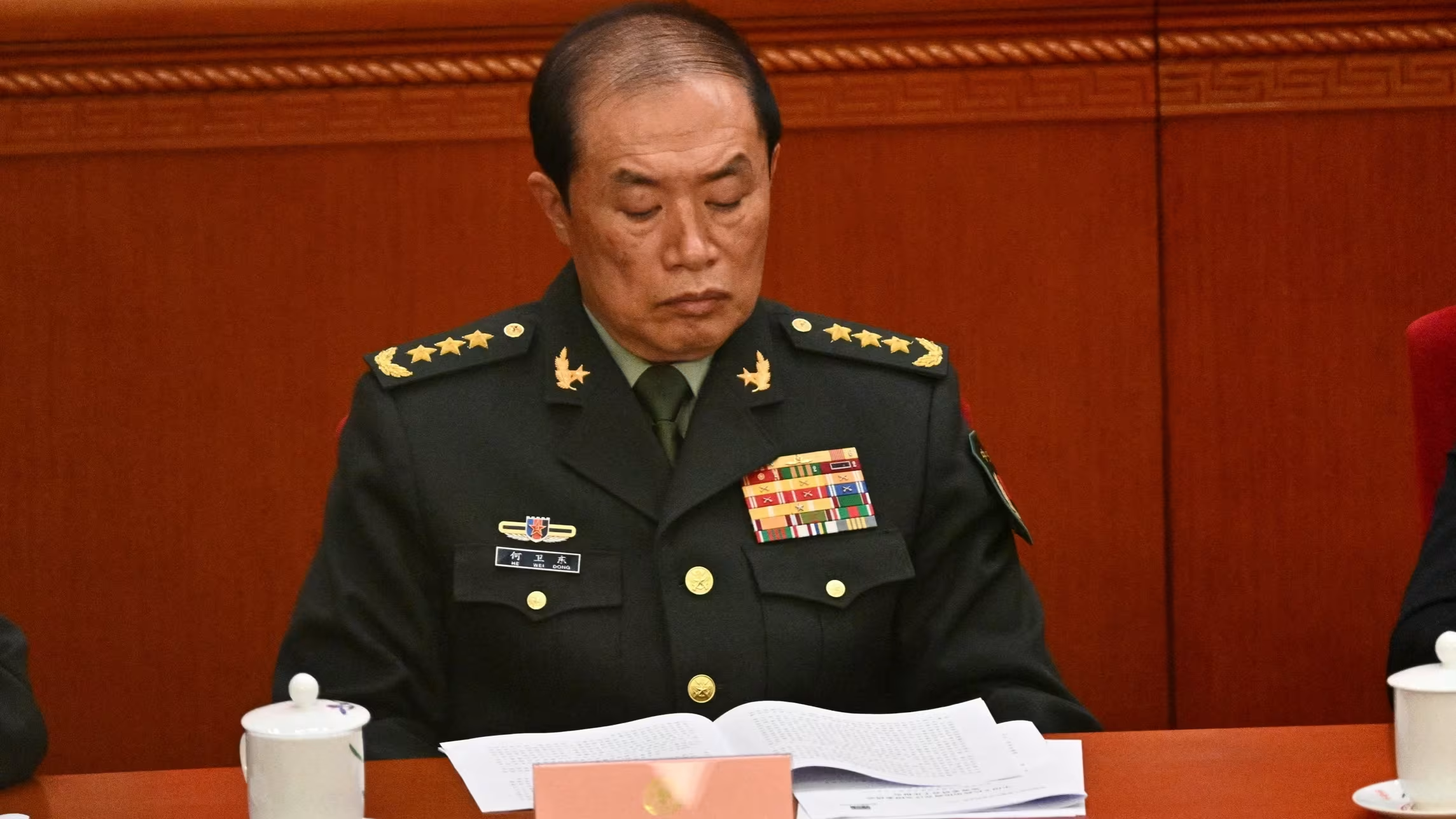
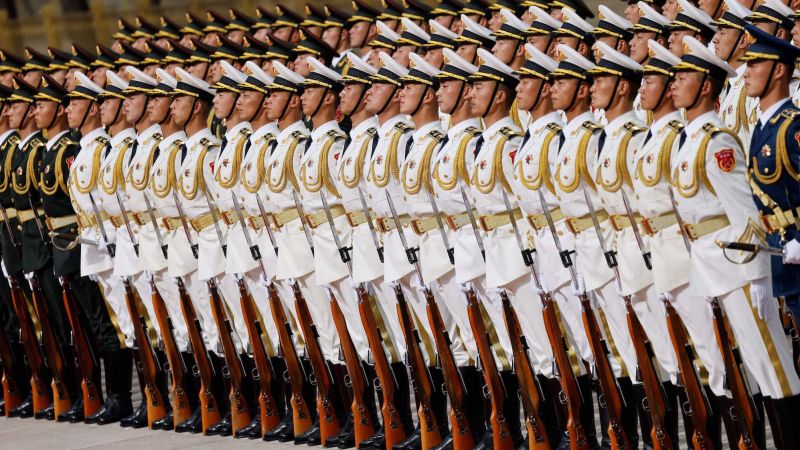
China has dismissed nine top commanders in the People's Liberation Army as part of a major military purge, signaling a significant shake-up within the country's military leadership.
China's recent purge of nine senior military officers, including those from the strategic Rocket Force, has exposed significant corruption within the People's Liberation Army (PLA) and could weaken the military's capabilities. This crackdown is part of President Xi Jinping's broader anti-corruption campaign and raises concerns about the oversight of China's military investments. The upheaval comes at a time of growing geopolitical tensions and may deter the PLA from engaging in major conflicts in the near term. Analysts suggest that the root causes of corruption, such as low officer pay and opaque military spending, remain unaddressed, indicating that these issues may persist despite ongoing efforts to combat them.
China's People's Liberation Army has established Base 37, a new facility aimed at enhancing its space domain awareness capabilities. The base, operated by the PLA Strategic Support Force, will focus on improving missile early warning capabilities and tracking and analyzing foreign space objects. It is expected to enhance China's domestic space object catalog accuracy and may integrate data from space-based missile early warning satellites. While the base does not currently operate on-orbit systems, it plays a crucial role in integrating and analyzing related data. The establishment of Base 37 has implications for the U.S., including potential opportunities for cooperation in space domain awareness and challenges related to Chinese distrust of U.S. on-orbit operations.
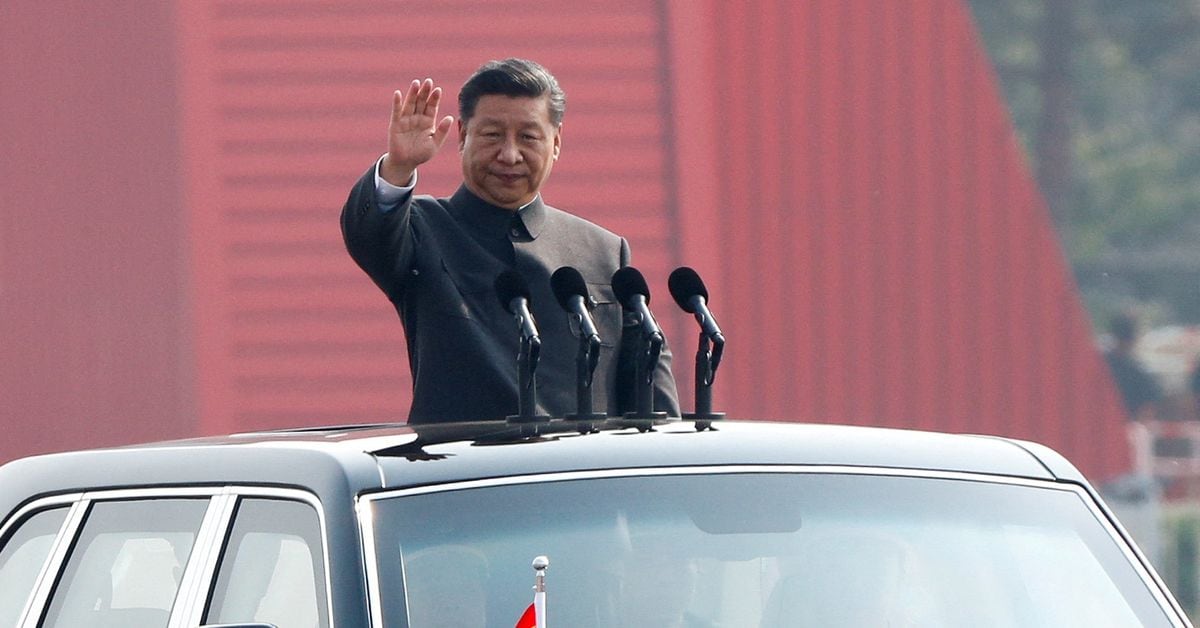
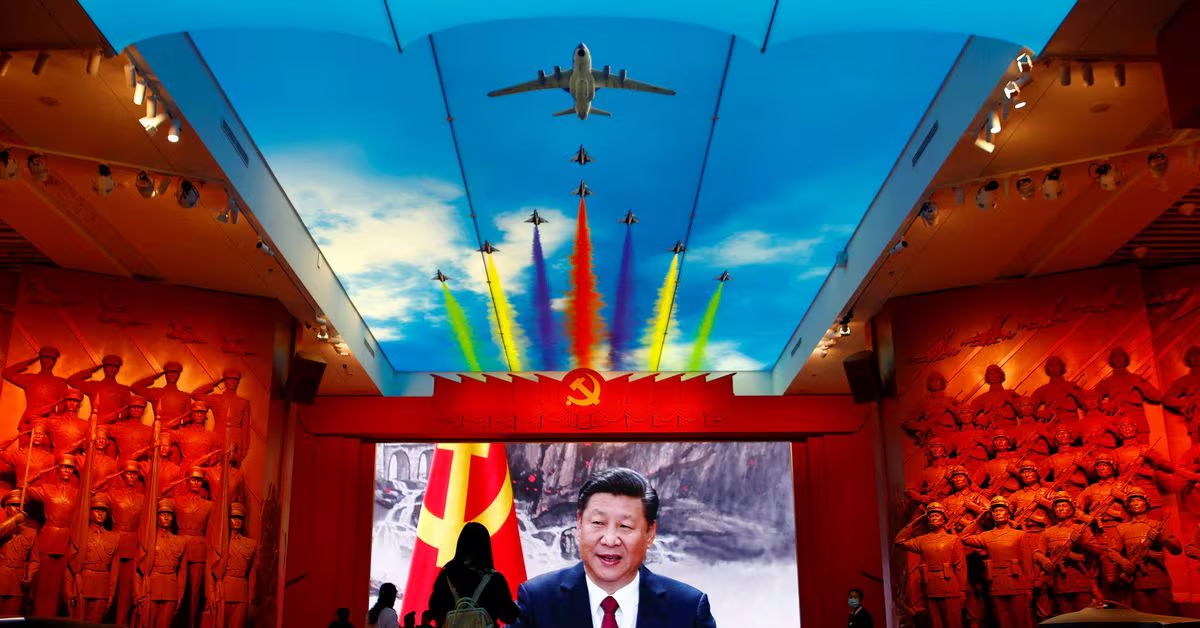
Chinese President Xi Jinping has called for the acceleration of military modernization and combat readiness as the People's Liberation Army (PLA) marks its 96th anniversary. China has been ramping up military drills and maneuvers, showcasing its military might amid perceived external threats. Analysts suggest that China's actions are more of a political message than a military one, reflecting its perception of increased threats from the United States and its allies. China is also expanding its long-range capabilities, including the deployment of aircraft carriers and the development of advanced jet engines.
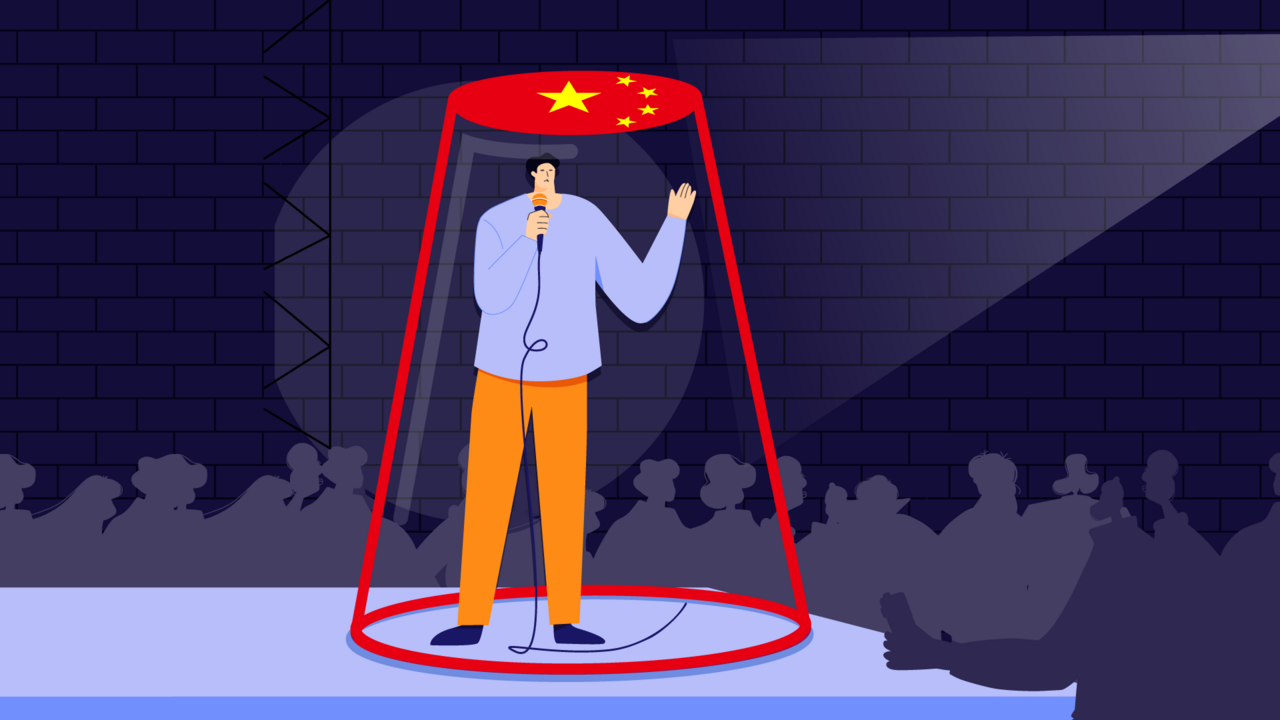
Chinese comedian Li Haoshi was punished and his production company fined roughly $2 million for making a joke about the People's Liberation Army, marking a new crackdown on stand-up comedy in China. The joke compared the army to dogs and referenced the official army slogan, which is seen as a direct insult to President Xi Jinping. The punishment is part of a tightening of restrictions on freedom of expression in recent years, and comedians are now required to abide by laws and maintain ethical values. Stand-up comedy has recently become popular in China, but now Beijing has designated comedians as actors of official propaganda.
A Chinese stand-up comedian, Li Haoshi, has cost his entertainment firm more than $2 million in fines after using a phrase associated with the People’s Liberation Army (PLA) during his comedy show in Beijing. The comedian's joke was deemed to have "seriously insulted" the military and "caused bad social impact." The incident highlights the delicate line comedians must tread in highly censored China, where politics is rarely a laughing matter, and the stark consequences for those in the entertainment industry who are deemed to step out of line.