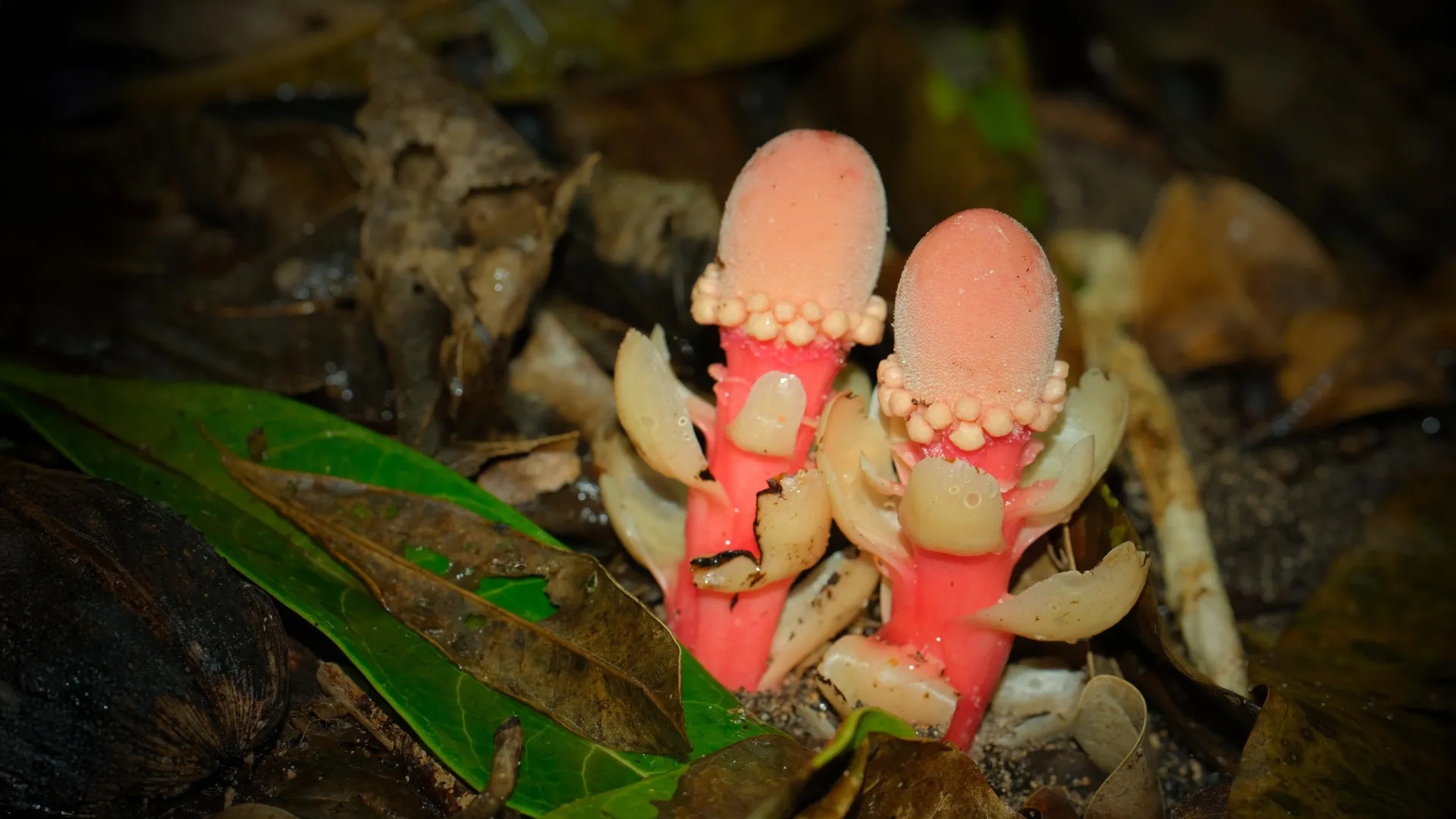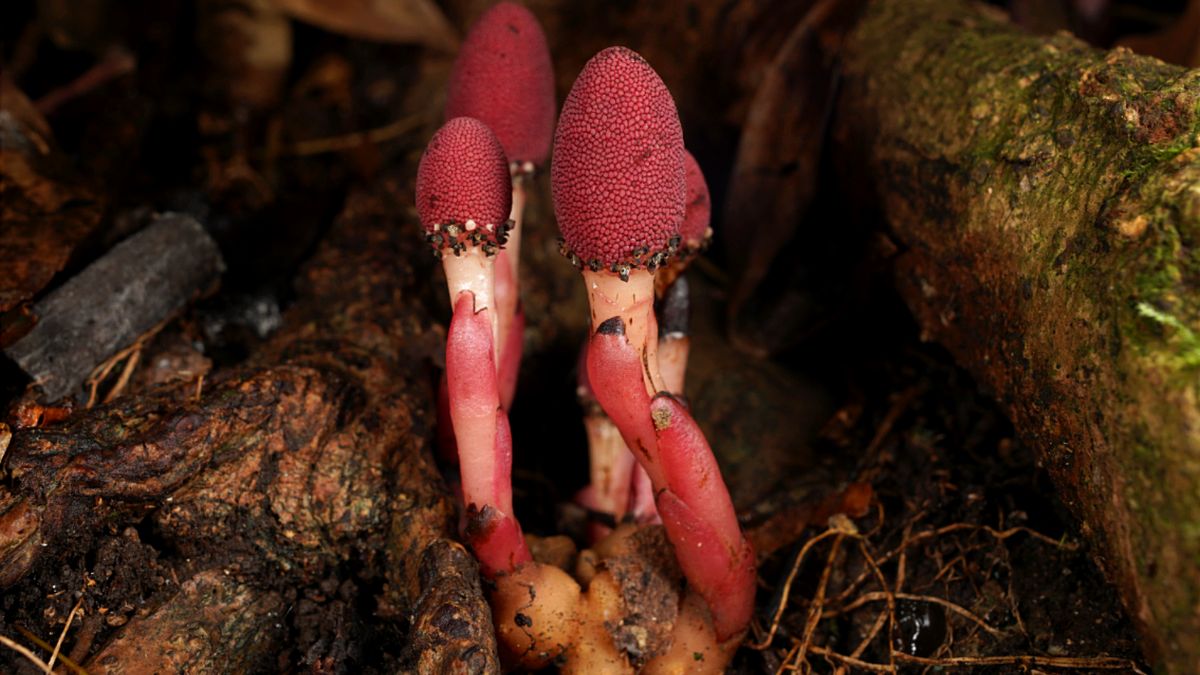
A parasitic plant called Balanophora has lost its photosynthesis ability and relies on tree roots for nutrients, evolving a highly reduced plastid genome and exhibiting convergent evolution with mushrooms, highlighting remarkable adaptations in plant evolution.
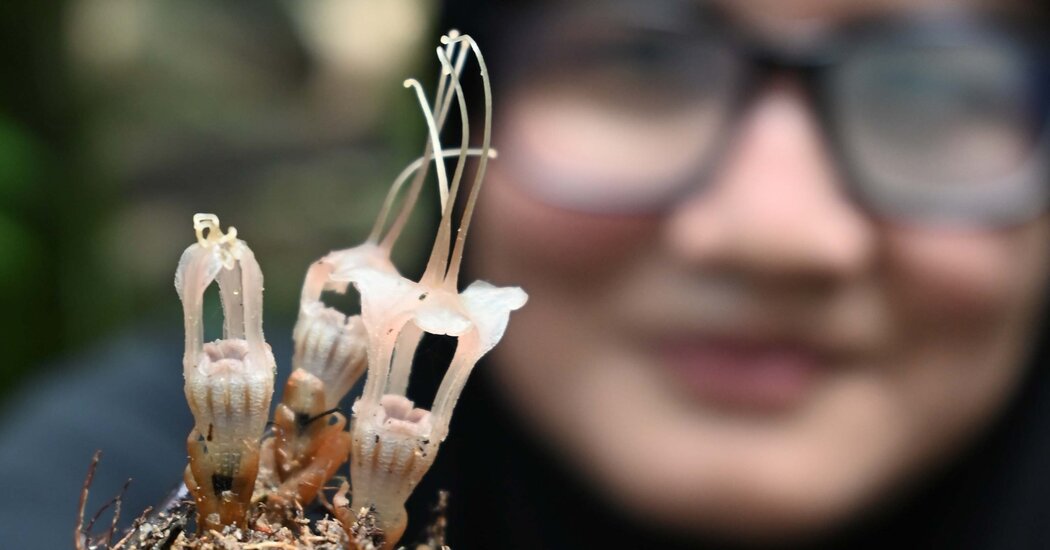
A new parasitic plant called fairy lantern (Thismia selangorensis) was discovered near Kuala Lumpur, Malaysia. It uniquely derives nutrients from underground fungi and produces a distinctive pinkish flower with tentacle-like structures, highlighting its parasitic nature and underground lifestyle.
Scientists have studied Balanophora, a rare, parasitic plant lacking chlorophyll and photosynthesis, revealing its unique evolutionary history, internal adaptations, and reproductive strategies, highlighting its vulnerability and importance for conservation.
Balanophora is a rare, parasitic flowering plant that resembles a mushroom, lacks chlorophyll, and relies on host trees for nutrients, with unique reproductive strategies including seed production without fertilization. Recent studies reveal its ancient origins, reduced plastids, and adaptation to island habitats, highlighting its evolutionary significance and vulnerability due to habitat loss.