The article discusses the most overbought and oversold stocks in the S&P 500 as 2026 begins, highlighting stocks that experienced significant turnarounds in 2025 and are expected to perform well with low volatility in the upcoming year.
Tesla's stock is considered one of the most oversold on the market, leading some analysts to believe that it could be due for a rebound. The electric vehicle company has faced recent challenges, but some experts see potential for a turnaround in the near future.
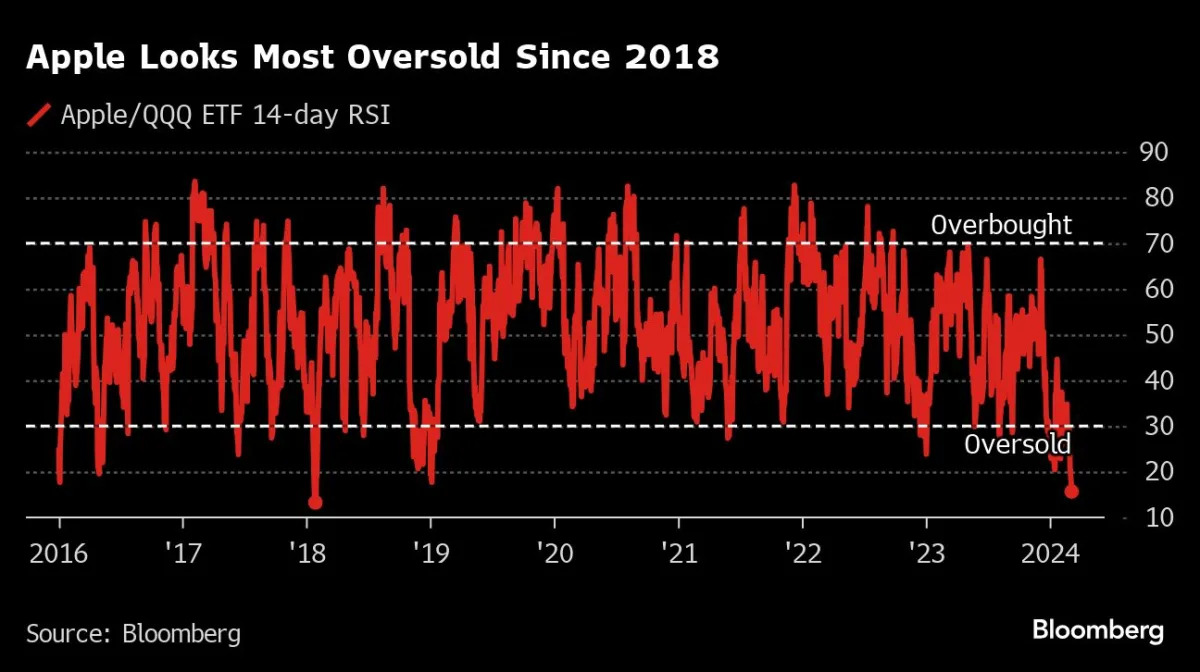
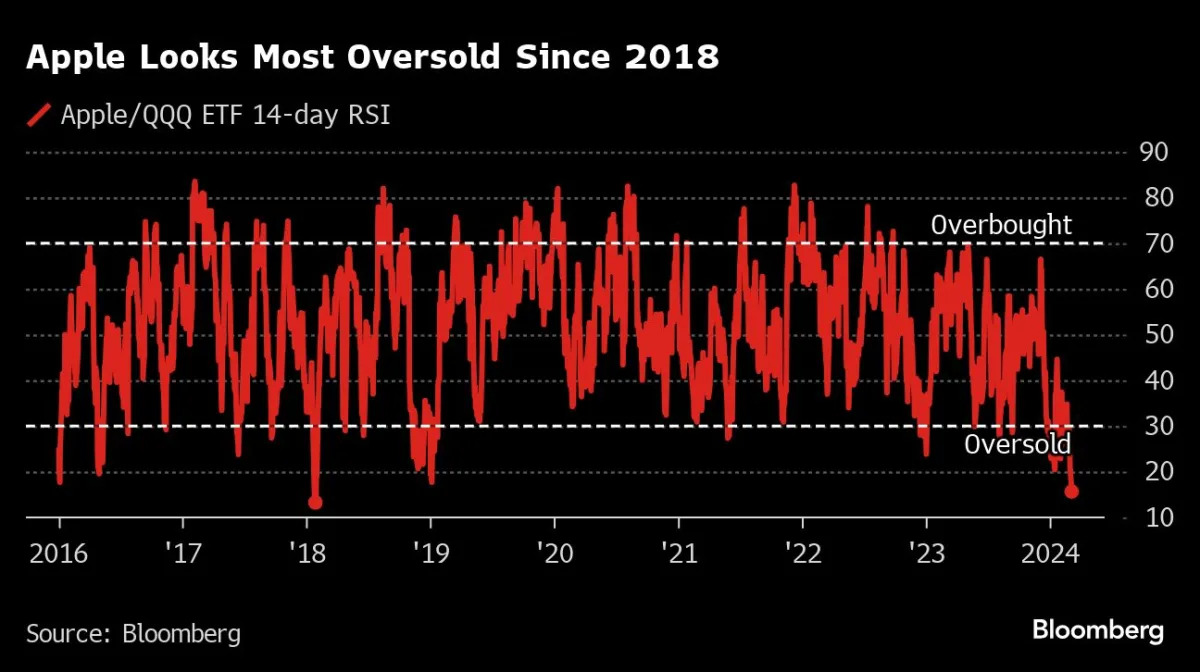
Apple's stock has experienced a significant selloff, leading analysts to believe it is the most oversold in years. Concerns over iPhone sales in China and a fine from the European Union have contributed to the stock's 12% decline this year. Despite the selloff, options traders are showing few signs of fear, and the stock trades near 25 times estimated earnings, above its 10-year average multiple of 19.
Apple's stock has experienced a significant selloff, leading analysts to believe it is the most oversold in years. Concerns over iPhone sales in China and a fine from the European Union have contributed to the stock's 12% decline this year. Despite the selloff, options traders remain optimistic about the broader technology sector.
Exxon Mobil is identified as one of the most oversold stocks, suggesting it may be poised for a rebound. The article highlights other potential candidates for a bounce in the stock market.
Natural gas markets experienced a significant plunge but showed signs of a potential rebound. The market is currently in a state of uncertainty, with traders factoring in the possibility of a recession. From a technical analysis perspective, the market is near the 61.8% Fibonacci level, which has previously acted as support. However, the overall energy market is becoming increasingly volatile, and it remains to be seen if natural gas can escape this trend. If the market breaks below the current support level, the next target could be $2.00.
China's CSI 300 Index, the country's benchmark stock gauge, has reached an oversold level as investor sentiment weakens due to Beijing's market rescue measures failing to impress and concerns over the nation's struggling economy. The index dropped to its lowest level since February 2019, with its 14-day relative strength index falling below 30, indicating that the market may have declined too rapidly.
GameStop (GME) has experienced a significant decline of 19.4% over the past four weeks, but there are indications that the stock may be ripe for a turnaround. The Relative Strength Index (RSI) reading of 29.62 suggests that the heavy selling pressure could be exhausting itself, potentially leading to a rebound. Additionally, there is strong agreement among Wall Street analysts that GameStop will report better earnings than previously predicted. The stock currently holds a Zacks Rank #1 (Strong Buy), further supporting the potential for a turnaround in the near term.
Bank of America analysts believe that Gilead stock is currently undervalued and oversold, presenting a buying opportunity. They have upgraded their rating on the stock, stating that it is underappreciated by the market.
Morgan Stanley and a packaging stock are identified as being among the most oversold stocks in the S&P 500, presenting potential investment opportunities.
Royal Caribbean has oversold another Allure of the Seas cruise, this time for the May 14, 2023 departure, and is offering guests generous compensation options, including switching to a different ship or cancelling for a full refund and future cruise credit. Guests who choose to switch to a different ship will receive a 100% refund of their fare and non-refundable onboard credit. Those who choose to stay on the same ship with a later departure date will not receive any further compensation. Guests can also choose to keep their original booking as-is.
A market analysis shows that several tech stocks, including Apple and Microsoft, are among the most overbought S&P 500 stocks, while several energy and financial stocks are among the most oversold. The analysis is based on the Relative Strength Index (RSI), which measures the momentum of a stock's price movement.