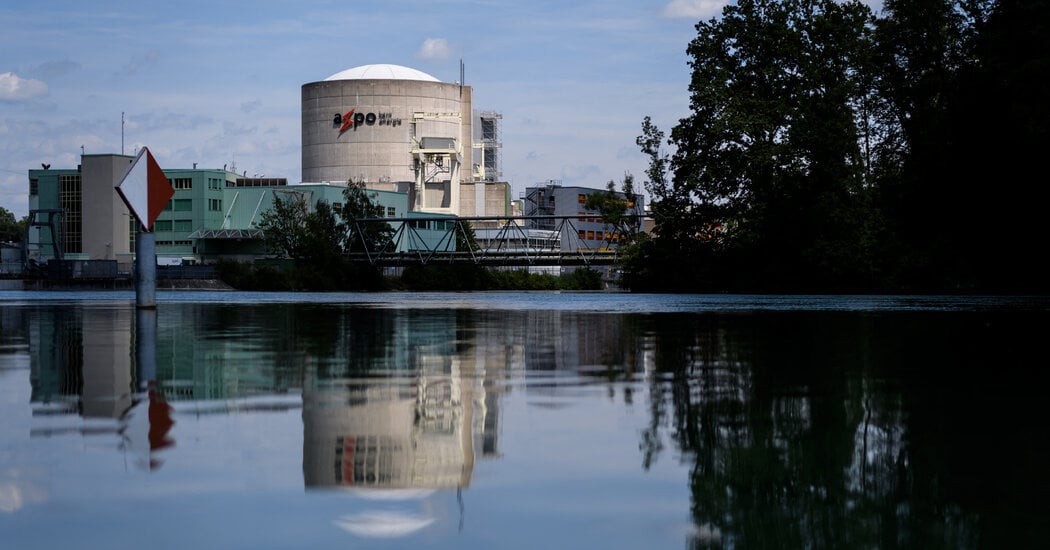
A record-breaking heat wave in Europe has led to the shutdown of at least three nuclear reactors in Switzerland and France, as rising river temperatures threaten the cooling processes essential for safe reactor operation.
The U.S. has announced a plan to significantly expand nuclear power to meet rising electricity demands, driven by AI data centers, electric vehicles, and new manufacturing. The plan, revealed at the COP29 climate summit, aims to triple nuclear capacity by 2050, deploying 15 gigawatts by 2035 and 200 gigawatts by 2050. It relies on existing government incentives and private industry initiatives, with bipartisan support but no new funding. The framework includes various reactor sizes, and recent deals, like Microsoft's with Constellation Energy, highlight growing interest in nuclear as a reliable, carbon-free power source.
The Biden administration plans to triple the US's nuclear power capacity by 2050, aiming to add 200 gigawatts through new reactors, plant restarts, and upgrades, as part of a strategy to meet rising energy demand with carbon-free sources. In the short term, the goal is to achieve 35 gigawatts of new capacity within the next decade.
A significant earthquake on Japan's western coast has raised concerns about the safety of restarting nuclear power plants in a country frequently hit by natural disasters. The quake caused damage and power outages, and occurred shortly after a ban on the operation of Tokyo Electric's Kashiwazaki-Kariwa plant was lifted. Despite the government's shift towards reviving nuclear energy due to energy crises, public skepticism remains high, especially after the recent tremor caused water to spill from nuclear fuel pools, although radiation levels remained normal. The incident has affected the stock market and could influence Japan's energy policy and public sentiment towards nuclear power.
A recent earthquake near Japan's western coast has raised concerns about the safety of restarting nuclear power plants in a country prone to natural disasters. The quake struck close to TEPCO's Kashiwazaki-Kariwa plant, which had just had an operational ban lifted, and caused water to spill from nuclear fuel pools, although radiation levels remained normal. The event has affected public sentiment and could influence government policy on nuclear energy, as Japan grapples with energy security and high prices. Despite initial market reactions, analysts do not foresee an immediate impact on LNG imports, but future disruptions could change this outlook.