King’s College London researchers warn that nitazenes may account for up to a third more UK drug deaths than official counts (with 333 fatalities linked to nitazenes in 2024) because postmortem toxicology often misses these ultra-potent opioids, a discrepancy that could affect public health policy and harm-reduction efforts.
Estonia is experiencing a severe opioid crisis driven by the emergence of highly potent synthetic opioids called nitazenes, which have caused a surge in overdose deaths and highlight the challenges of drug policy and social marginalization. The country's history with fentanyl and ongoing struggles with drug demand and supply reflect broader issues that could threaten other European nations and the UK.
Mexican authorities warn of the spread of nitazenes, synthetic opioids up to 40 times more potent than fentanyl, which could worsen the US overdose epidemic as they may be laced into drugs and are deadly even in trace amounts, amid ongoing struggles to control fentanyl production.
Nitazenes, a potent class of synthetic opioids, have been linked to numerous overdose deaths in the US and Europe since 2019, with recent cases in Boulder County, Colorado. These psychoactive substances, not controlled by laws, are hundreds to thousands of times more potent than morphine and 10 to 40 times stronger than fentanyl. They first emerged as street drugs in 2019 and are often mixed with other substances, making them difficult to detect. Signs of overdose resemble classic opioids, and naloxone may be effective in reversing the effects, but larger doses may be needed.
Nitazenes, a class of opioids 20 times more potent than fentanyl, are now being found in street drugs, posing a significant risk of overdose. These drugs are highly contaminated and may not show up on standard urine screens or harm reduction test strips. The presence of nitazenes in street drugs complicates overdose reversal with Narcan, potentially requiring more doses to be effective. Additionally, the inclusion of xylazine, an animal tranquilizer, in street drugs further complicates overdose reversal, as Nalaxone or Narcan may not be effective depending on the drug cocktail's composition.
Nitazenes, a class of synthetic opioids developed in the 1950s, are emerging in the illicit drug market and have been linked to a recent overdose death in Colorado. These drugs are known to be extremely potent, with some formulations being up to 10 times as potent as fentanyl. While their presence is still relatively rare, experts expect their prevalence to increase as they remain "under the radar." Naloxone, the medication used to reverse opioid overdoses, is effective against nitazenes, but due to the potential long-acting nature of these drugs, medical treatment is still crucial after revival.
Colorado law enforcement has issued a warning about a new opioid, nitazenes, which have been linked to a recent overdose death. Nitazenes, developed in the 1950s and 60s, are being modified by illicit drug manufacturers and can be up to 10 times as potent as fentanyl. While their presence in the drug market is still rare, experts expect their prevalence to increase. Naloxone, an opioid antagonist, is effective in reversing overdoses involving nitazenes, but immediate medical treatment is still crucial due to the potential long-acting nature of these drugs.
Super-strength street drugs known as nitazenes, smuggled from China, have been linked to at least 54 deaths in the UK in the last six months. These man-made drugs, often mixed with other substances like cocaine and anxiety medication, can be up to 300 times stronger than heroin and fentanyl. Nitazenes, nicknamed the "Frankenstein" drug, are causing a surge in drug-related deaths, prompting calls for them to be classified as a Class A drug. The West Midlands has seen the highest number of deaths, followed by the East of England and Scotland. The true total could be higher as more cases await testing.
Fifty-four people in the UK have died in the past six months after taking synthetic opioids called nitazenes, believed to be manufactured in China. These opioids are up to 300 times stronger than heroin and up to 10 times stronger than fentanyl. The National Crime Agency suspects that the drugs are being shipped to Britain through the postal system. Fentanyl, another synthetic opioid from China, has been a major contributor to the opioid crisis in the US. The UK government plans to classify 15 new synthetic opioids as Class A drugs. The presence of nitazenes in heroin sold on the streets has led to a spike in fatal overdoses, with 45 deaths in England and nine in Scotland. Experts warn that nitazenes could become a global drug problem.
Synthetic opioids called nitazenes, stronger than heroin and fentanyl, have been linked to at least 54 deaths in the UK in the past six months. Experts believe these drugs are being manufactured in labs in China and then imported into the UK. The true number of deaths could be higher, as 40 more cases are awaiting further testing. The UK government plans to classify 15 new synthetic opioids as Class A drugs. Users have reported the shockingly strong effects of nitazenes, with some dealers selling heroin laced with nitazenes as "fentanyl." Families affected by these deaths are calling for government intervention, warning of a potential epidemic.
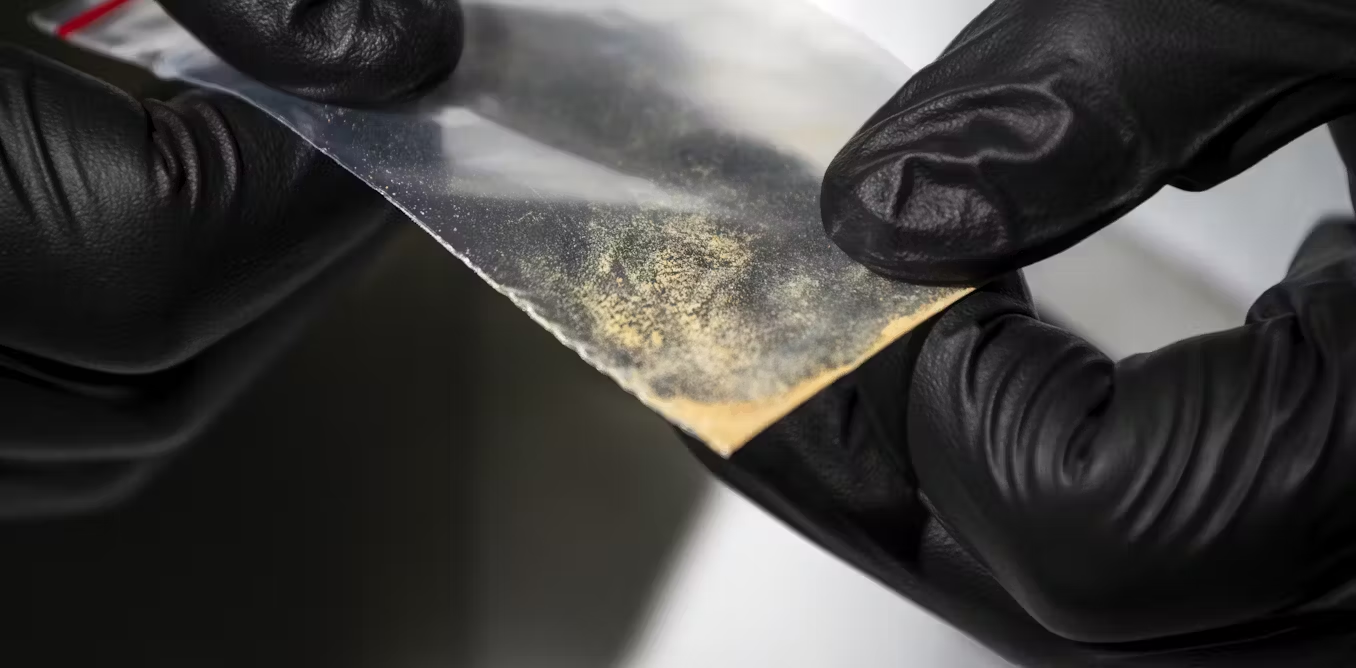
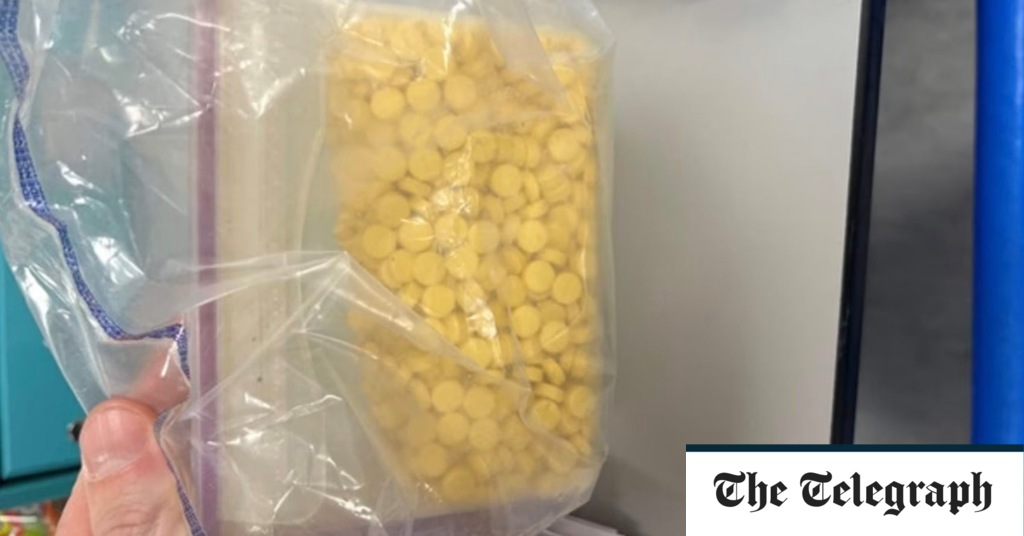
The Drug Foundation in New Zealand is warning about the increasing prevalence of nitazenes, a family of synthetic opioids more potent and harmful than fentanyl, being sold as other substances. Nitazenes can be deadly at very low doses and are often disguised as different forms such as pills, powders, gel caps, and liquids. Drug checking providers have seen concerning increases in nitazenes, prompting the call for drug-users to get their substances tested. High Alert, New Zealand's drug early warning system, has identified orange powder being sold as butonitazene, which is likely to be N-pyrrolidino-protonitazene or N-pyrrolidino-isotonitazene, both of which are more potent and potentially deadly. The Drug Foundation is urging people to improve access to naloxone, an opioid overdose medicine, to prevent fatal overdoses.
Nitazenes, a class of synthetic opioids, are emerging as a deadly threat in overdose cases, with some drugs in this class being 100 times more potent than morphine. Recent studies have shown that nitazene overdoses often require multiple doses of naloxone, the overdose-reversal drug, indicating their increased lethality compared to fentanyl. These drugs, originally developed in the 1950s but never brought to market, have been discovered by clandestine labs and are now being used illicitly. Nitazenes are illegal in the UK, but their presence as adulterants in other drugs is a growing concern. Public health agencies are urging education on nitazenes and the use of naloxone to combat overdose.
A new study published in JAMA Network Open warns that a subclass of synthetic opioids called nitazenes could be deadlier than fentanyl, with some nitazenes being 1,000 times more potent than morphine. Patients who overdosed on nitazenes required two or more doses of naloxone, compared to fentanyl patients who only needed one dose. Nitazenes are being mixed into illegal drugs like heroin and are among the fastest-growing classes of opioids detected in patients with opioid overdose. The study highlights the need for clinicians to be aware of nitazenes in the drug supply and be prepared to administer multiple doses of naloxone.
A new study warns that a group of synthetic opioids called nitazenes, which are emerging in illicit drugs in the United States, may be more potent than fentanyl and require multiple doses of naloxone to reverse an overdose. Nitazenes are associated with an increased rate of cardiac arrest when overdosed on, and patients who overdose on metonitazene, a type of nitazene, experience higher rates of cardiac arrest and death. The study highlights the need for clinicians to be aware of these opioids and the potential need for repeat naloxone dosing. Nitazenes are among the fastest-growing types of opioids detected in people who overdose, and their prevalence is increasing in certain regions.