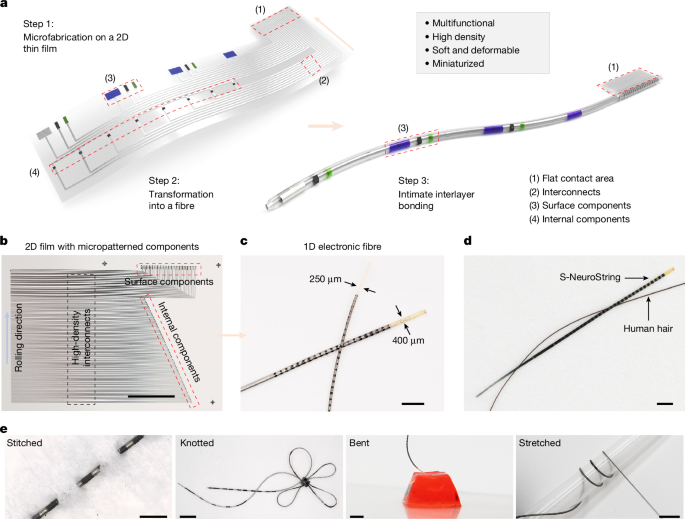
The article discusses the development of high-density soft bioelectronic fibers capable of multimodal sensing and stimulation, advancing neural interface technology and biomedical applications.
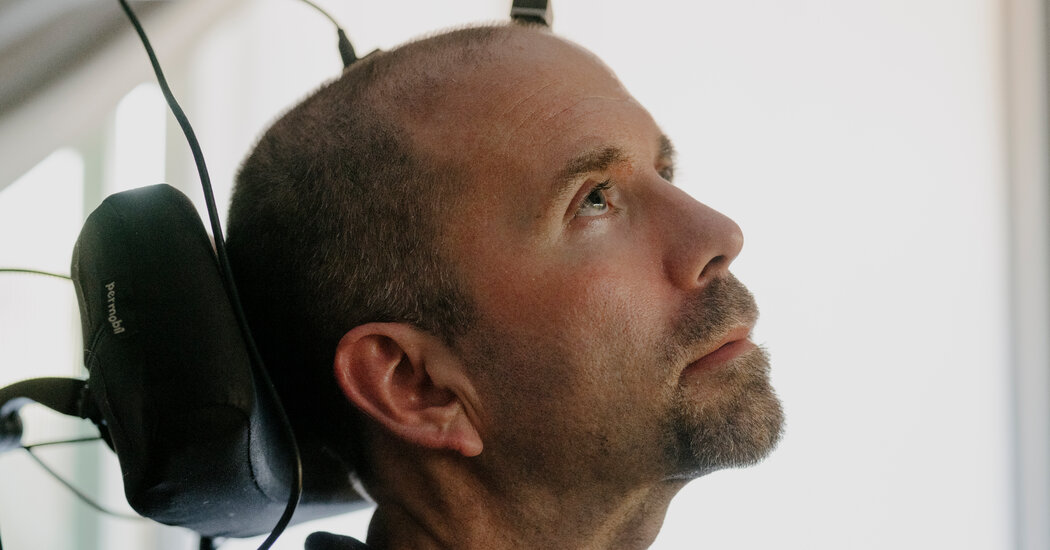
Scientists have made significant progress in decoding not only spoken words but also imagined speech using brain-machine interfaces, offering hope for patients with speech impairments like A.L.S. and stroke victims to communicate through their 'inner voice.'
Rice University engineers, supported by a $6.25 million grant from the National Institutes of Health, are working to optimize nanoelectronic threads (NETs) for use in the spinal cord. These NET probes have already been successful in gathering data from neurons in the brain and can provide both neuronal activity recordings and localized stimulation. By integrating the NETs into a larger-scale data-processing system, researchers hope to gain a better understanding of spinal cord function and potentially develop new therapies for spinal cord injuries and associated medical conditions.