
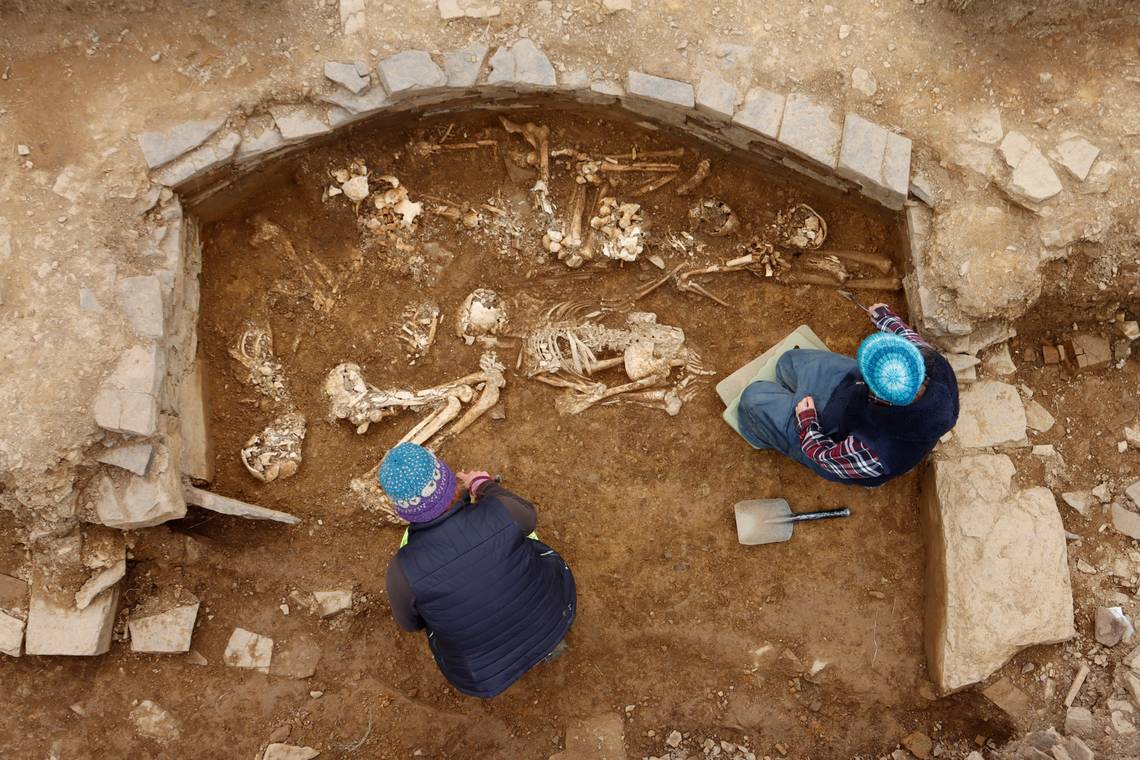
An "incredibly rare" Neolithic tomb, estimated to be 5,000 years old, has been discovered buried under a field in Orkney, Scotland. The tomb, known as a "Maes Howe-type" passage grave, features a 50-foot-wide stone mound with a central chamber and six smaller rooms. Fourteen human skeletons, along with stone tools, pottery, and a bone pin, were found inside. The excavation director expressed astonishment at the size and construction of the tomb, which was nearly lost without record.
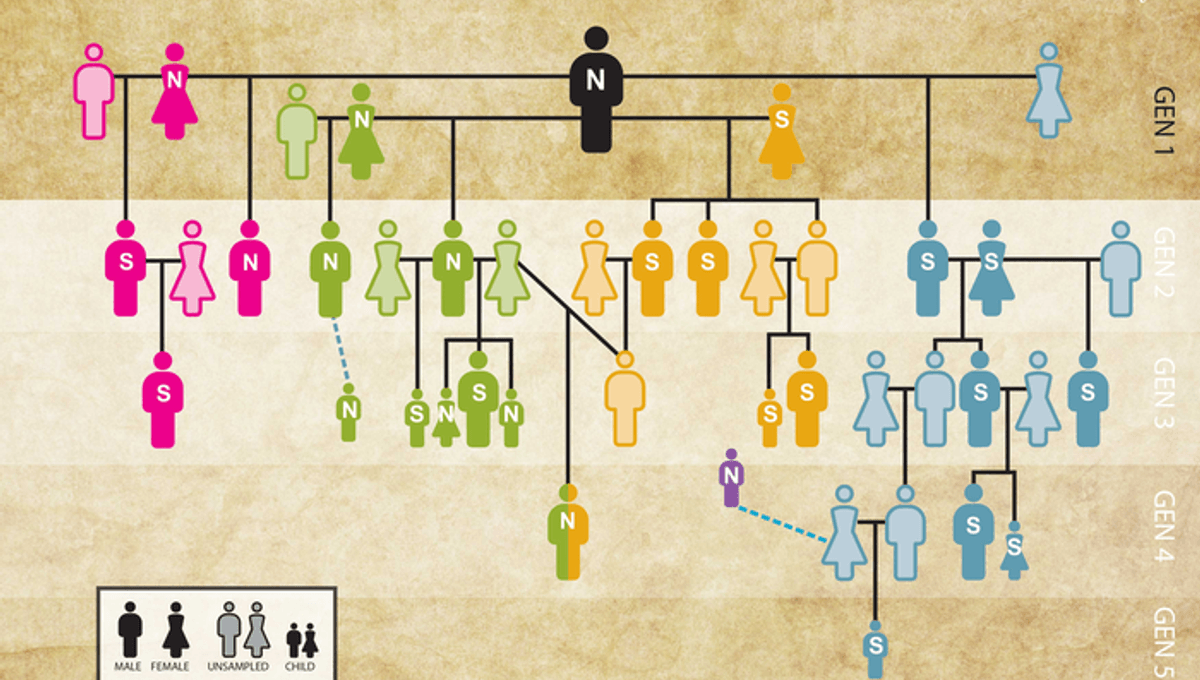
A 5,700-year-old tomb in Britain has been found to contain five generations of one family, providing unprecedented insight into kinship networks and burial practices during the Neolithic period. The tomb, known as the Hazleton Long Barrow, contains the bones and teeth of many individuals, with 35 preserved well enough for DNA sequencing. The findings reveal that 27 of these individuals were closely related, descending from a single patriarch who had children with at least four women. The tomb's architectural layout suggests how kinship operated at the time, with each half of the tomb used to place the remains of the dead from one of two branches of the same family. This discovery represents the oldest reconstructed family tree ever found and sheds light on the social structure of ancient societies.