
Tag

Myeloid Cells

All articles tagged with #myeloid cells

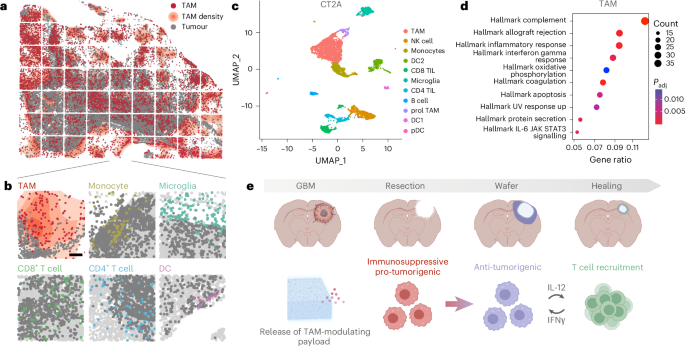
Implant-Based Slow Release of Molecules to Prevent Glioblastoma Recurrence

Originally Published 2 months ago — by Nature

Featured image for Implant-Based Slow Release of Molecules to Prevent Glioblastoma Recurrence
Source: Nature

The article discusses a novel implantable wafer system called CANDI that delivers immunostimulatory small molecules to reprogram immunosuppressive myeloid cells in glioblastoma, leading to long-term survival and prevention of tumor recurrence in mouse models, with promising implications for human treatment.
Revolutionary Approach to Overcoming Prostate Cancer Therapy Resistance

Originally Published 2 years ago — by Nature.com

Researchers have identified a potential strategy to reverse therapy resistance in prostate cancer by targeting myeloid chemotaxis. Myeloid cells play a crucial role in tumor progression and therapy resistance, and the study found that inhibiting the chemotaxis of these cells can enhance the effectiveness of existing therapies. The findings provide a promising avenue for developing targeted treatments for prostate cancer patients who have developed resistance to current therapies.

Long-term HIV persistence in myeloid cells despite antiretroviral therapy

Originally Published 2 years ago — by National Institutes of Health (.gov)

Featured image for Long-term HIV persistence in myeloid cells despite antiretroviral therapy
Source: National Institutes of Health (.gov)

A new study supported by the National Institutes of Health has found that a subset of white blood cells known as myeloid cells can harbor HIV in people who have been virally suppressed for years on antiretroviral therapy. The study suggests that myeloid cells contribute to a long-lived HIV reservoir, making these cells an important but overlooked target in efforts to eradicate HIV. The researchers note that larger studies with more diverse participant pools will be essential to accurately estimate the proportion of people who have latent HIV in myeloid cells.