President Trump warned Raytheon to increase weapons production and stop stock buybacks or risk losing government contracts, amid a push for a $1.5 trillion military budget increase to build a 'dream military' in response to rising geopolitical tensions.
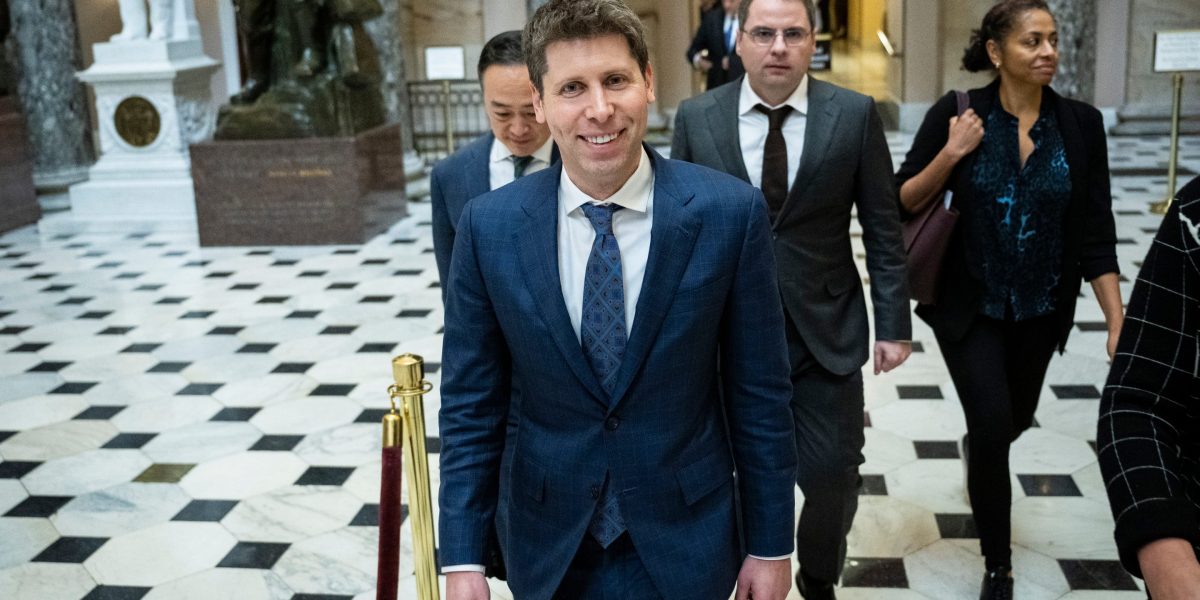
The US Department of Defense has awarded OpenAI a $200 million contract to develop 'frontier AI' capabilities for national security, focusing on applications like cyber defense and administrative support, while adhering to OpenAI's usage policies that prohibit weapon development. The deal is part of a broader initiative to integrate AI into government and military operations, with recent high-level military appointments of AI executives and collaborations with other tech companies.
Silicon Valley AI companies, including Meta, Google, and OpenAI, are increasingly pursuing military contracts with the U.S. Department of Defense (DoD) to offset the high costs of developing generative AI technologies. This shift marks a departure from previous hesitations about defense work, driven by the potential for substantial long-term financial rewards. The DoD is exploring AI applications for data management, cybersecurity, and autonomous systems, with AI now considered a critical technology for future conflicts. Despite ethical concerns, the changing political landscape and economic pressures are making defense contracts more attractive to tech firms.
ScaleAI, an artificial intelligence company, is positioning itself as a key player in the next major age of geopolitical conflict by aggressively pitching its services to the U.S. military. The company aims to help the Pentagon extract insights from vast amounts of data, develop better autonomous vehicles, and create chatbots for military commanders. ScaleAI has already secured a $249 million contract with the Department of Defense and counts the Army, Air Force, Marine Corps University, and Oshkosh among its customers. The CEO, Alexandr Wang, believes that without AI developed by private tech companies, the U.S. will struggle to maintain its technological edge over China. However, competition for military contracts is fierce, with tech giants like Google, Microsoft, and Amazon vying for Pentagon partnerships.
The U.S. Air Force has entered into contracts worth up to $142 million with Archer Aviation, a leader in electric vertical takeoff and landing (eVTOL) aircraft. The partnership aims to assess the transformative potential of eVTOL technologies for military purposes. The contracts include the delivery of up to six of Archer's Midnight aircraft for personnel transport, logistics support, and rescue operations. This investment represents a significant commitment by the U.S. military to maintain its leadership position in aviation and enhance national defense capabilities.
The Wagner Group, a Russian mercenary organization, has refused to sign military contracts with Russia's defence ministry after it issued orders for all independent forces to do so by the end of June. The order did not mention Wagner, but the Russian media reported it was an attempt by the defence minister to bring the mercenaries to heel after a series of public outbursts by its controversial leader. The founder of the Wagner Group, Yevgeny Prigozhin, said the order did not apply to Wagner and that the group was completely subordinate to the interests of Russia.
Apple has acquired Mira, an AR headset startup that makes headsets for other companies and the US military. The acquisition comes just a day after Apple unveiled its own mixed reality headset, the Vision Pro. It is unclear how much Apple paid for Mira, which has raised about $17 million in funding to date. Mira's military contracts include a small agreement with the US Air Force and a $702,351 agreement with the Navy.
Russian mercenary group Wagner may lose most of its prisoners as their six-month military contracts expire, with thousands expected to be pardoned and released. This could significantly weaken Wagner, which is already struggling after being banned from recruiting any more prisoners by the Kremlin. The group has been fighting for Bakhmut, a city in eastern Ukraine of little strategic value but of increasing symbolic importance.