The midseason return of 'Brilliant Minds' reveals Michelle's death after a car crash, the exits of Van and Jacob, and introduces Sarah Steele's character Sofia, whose role and connection to Noah and Oliver are teased, with the show exploring complex themes like brain death and medical mysteries.

Cindy O’Connor suffered from lifelong bladder control issues, experiencing frequent accidents from childhood, which remained undiagnosed for decades until doctors identified the underlying problem.
A Minnesota woman experienced persistent face spasms on the right side, which doctors could not initially explain. Her history of multiple root canals and dental procedures raised questions about a possible link, but the exact cause of her convulsions remains unclear, highlighting a complex medical mystery.
Summer McKesson's use of a DNA test uncovered a medical mystery involving her genetic conditions and revealed a doctor, Dr. Peete, had used his own sperm for fertility treatments without consent, leading to decades of deception and the discovery of multiple half-siblings, raising ethical and legal concerns about fertility fraud in the US.
Summer McKesson's unexplained blood clots led her to discover she was genetically predisposed to Marfan syndrome and a clotting disorder, which were linked to her biological father, Dr. Charles Peete, who secretly used his own sperm for fertility treatments, revealing decades of medical deception and resulting in the discovery of multiple half-siblings.
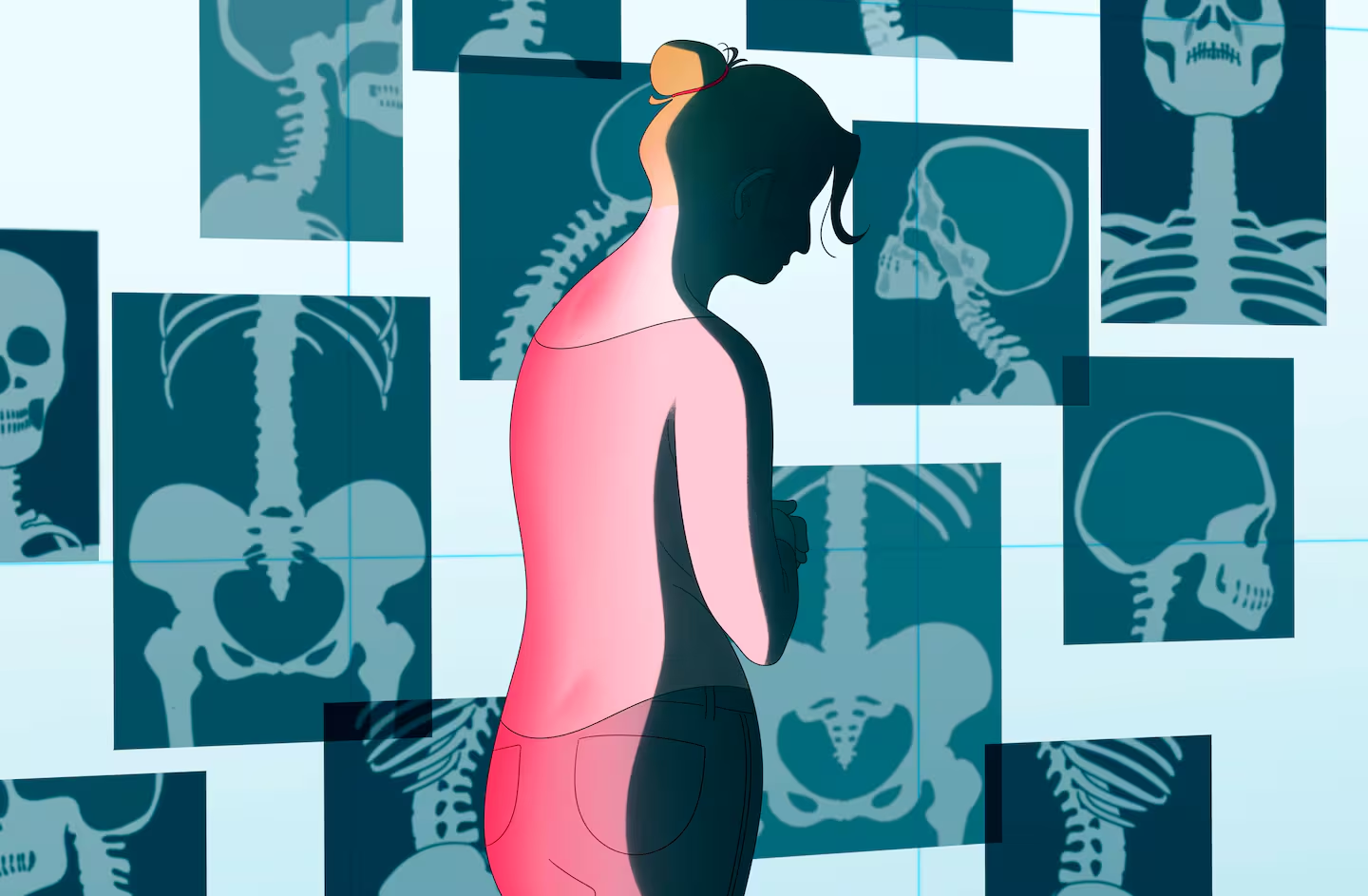
A woman from New York suffered for six years with unexplained neurological symptoms until a neurologist diagnosed her with functional neurological disorder (FND), leading to a multidisciplinary treatment approach that significantly improved her condition.
Robert Carlyle will guest star as Sherlock Holmes in Season 2 of CBS's 'Watson,' a modern medical mystery series starring Morris Chestnut as Dr. John Watson. The show explores Watson's investigation of rare diseases, with Holmes presumed dead but reappearing unexpectedly, prompting personal and professional revelations. The season premieres on October 13, streaming on Paramount+.
A new mother experiences recurring daily fevers and chills a month after childbirth, despite antibiotics, prompting a medical investigation into a possible postpartum infection or other underlying cause.
A 25-year-old man with abdominal pain and a pseudocyst was eventually diagnosed with pancreatic cancer after a series of life-threatening complications, including internal bleeding. His case highlights the importance of thorough diagnosis and the rare occurrence of pancreatic cancer in young individuals, with successful treatment leading to his eventual cure after five years.
A medical mystery in Congo is providing valuable insights into the Mpox epidemic, potentially aiding in understanding and controlling the disease's spread. Researchers are investigating the origins and transmission patterns of Mpox, which could lead to improved public health strategies.
Deborah Menzies, a 55-year-old legal secretary, experienced severe depression and memory issues, which were exacerbated by a crisis at her workplace in Northern California. Her condition, marked by these mental health challenges, was later found to have an unusual underlying cause.
Ann Malik, a 39-year-old non-smoker, experienced worsening health symptoms that were initially misdiagnosed as mild anemia and stress-related issues. After months of deteriorating health and multiple misdiagnoses, she was eventually diagnosed with advanced non-small cell adenocarcinoma, a type of lung cancer. Despite being given a grim prognosis, Malik's cancer was found to have a rare ROS1 genetic mutation, allowing for targeted therapy that has extended her life significantly. Her case highlights the importance of considering serious diagnoses even in patients who don't fit typical profiles.
Seven months after being hospitalized for severe pneumonia, former Olympic gymnast Mary Lou Retton reveals she is still on supplemental oxygen and faces a long recovery. Despite being a medical mystery, Retton's condition has improved slightly after a recent relapse. Her daughters supported her throughout the crisis, even preparing to say goodbye at one point. An online fundraiser launched by her daughter has raised nearly $500,000 to cover medical bills, drawing both support and criticism.
After suffering from flu-like episodes, hives, and a high fever for nearly two decades, Beth Sternlieb's mysterious illness was traced to a rare and startling cause. An operation to remove uterine fibroids revealed an unknown strain of salmonella bacteria, which had been causing her symptoms. The bacteria had likely been contracted from a reptile, although Sternlieb and her family had never owned one. The surgery ultimately cured her, and her case was published to raise awareness about considering abdominal hives as a possible sign of a pelvic infection.