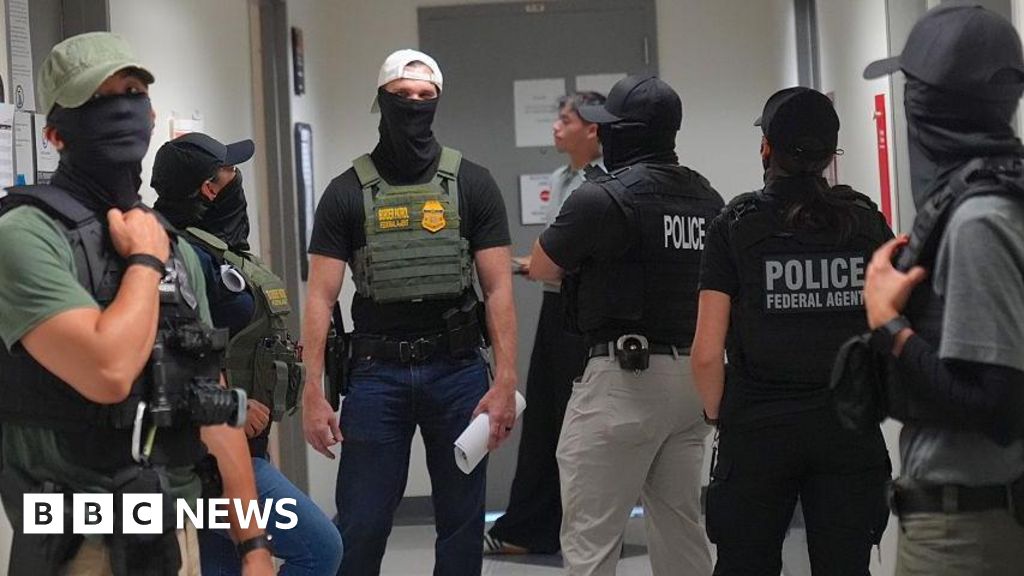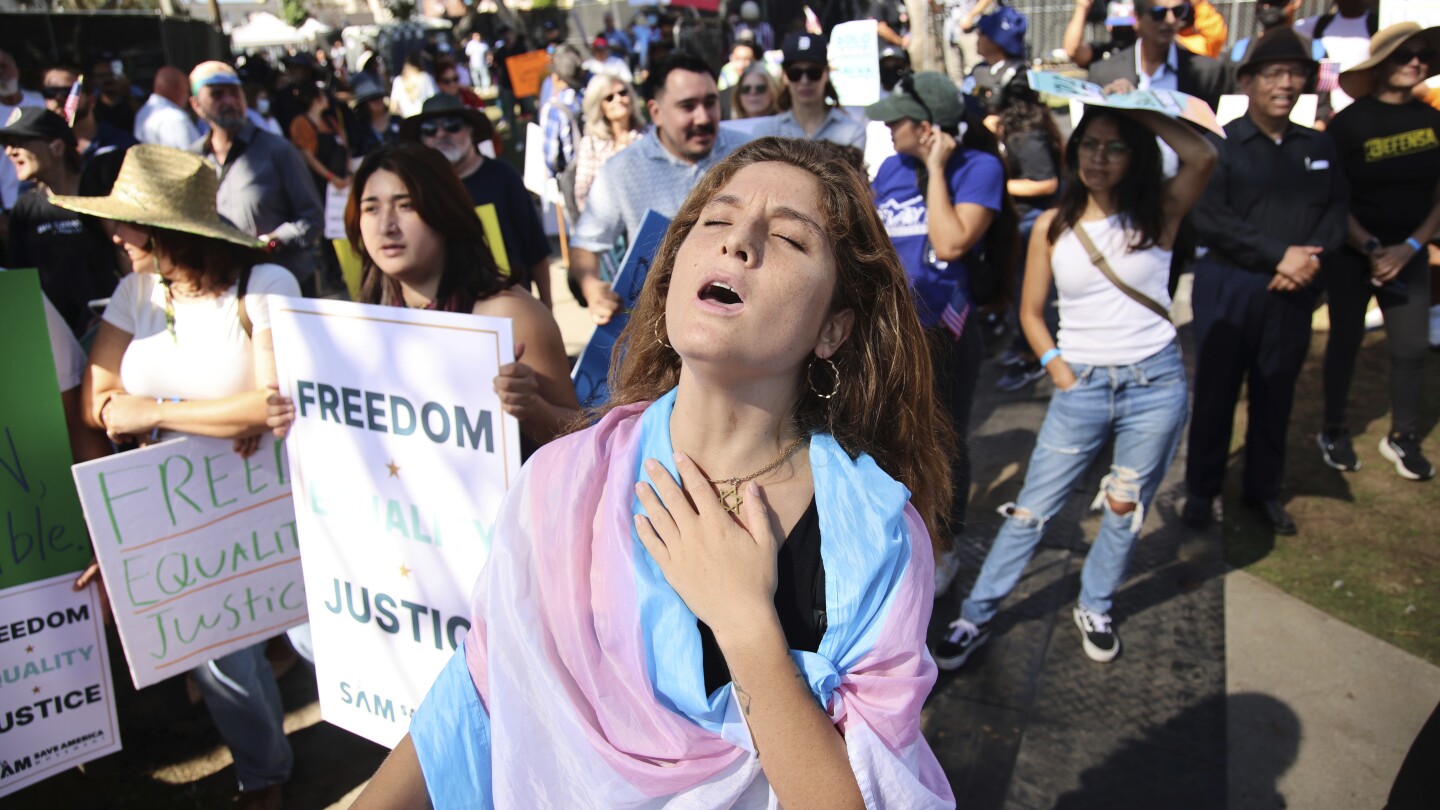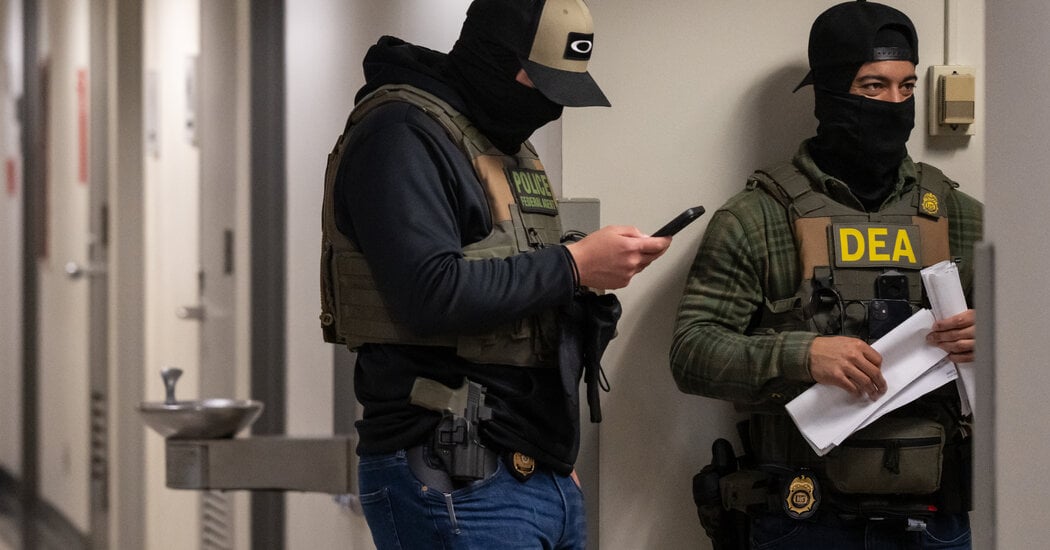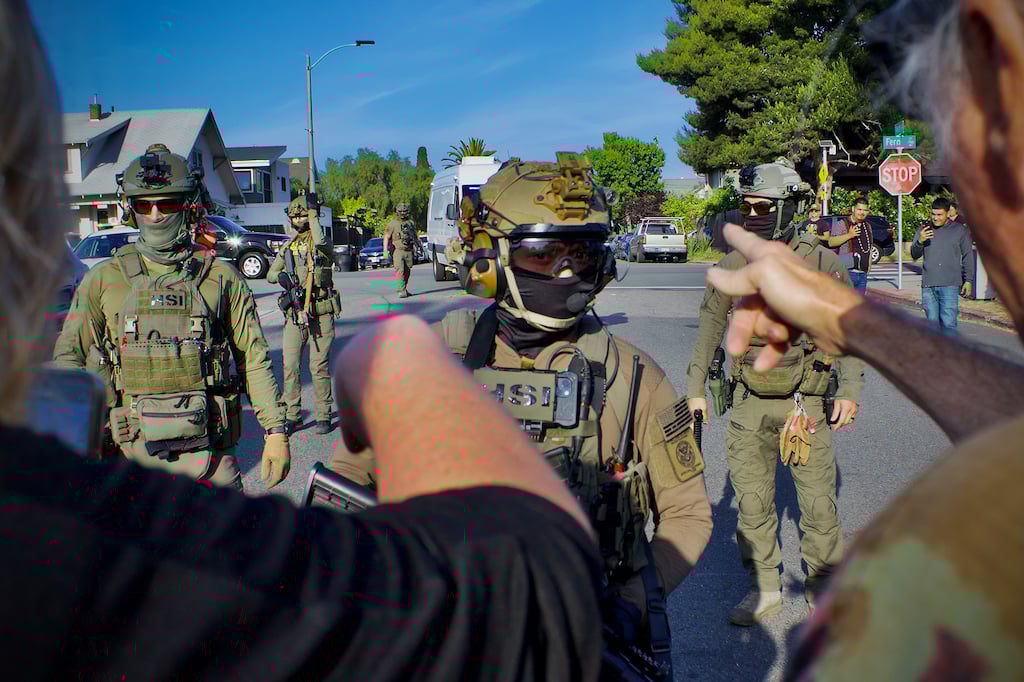
California has enacted a law banning law enforcement officers from covering their faces, with exceptions, aiming to curb anonymous federal agents involved in immigration raids. The Trump administration is suing to block the law, citing federal supremacy and safety concerns for agents. Legal experts suggest the law may face significant challenges in court due to longstanding federal immunity principles and constitutional considerations.
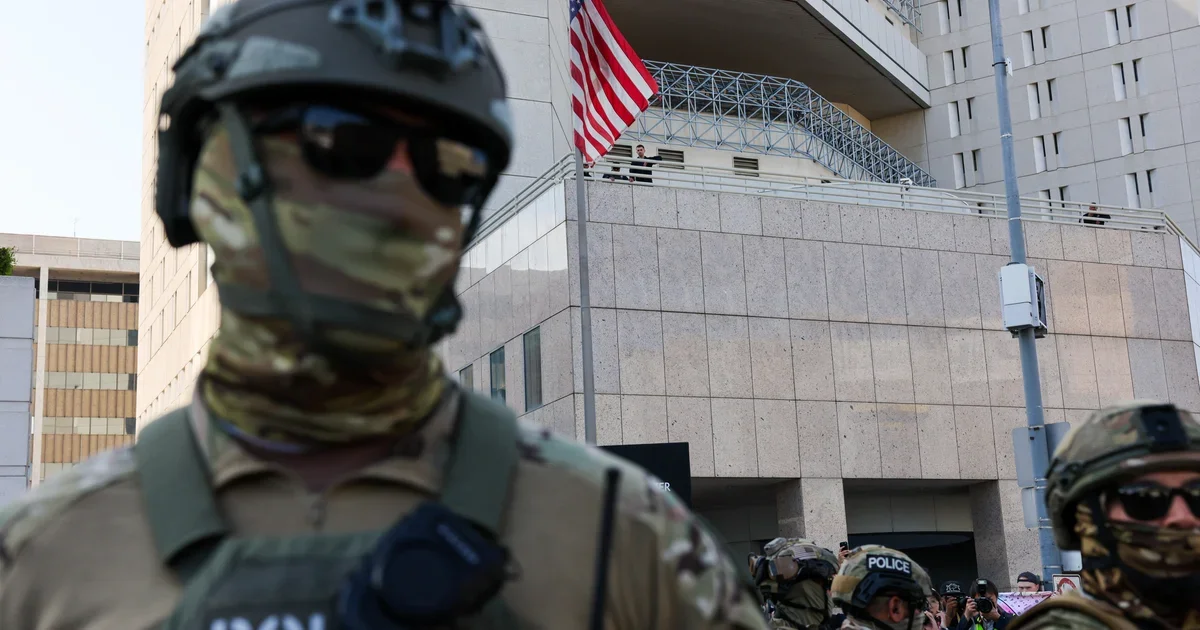
Federal immigration agents announced they will not comply with California's new law banning masks for law enforcement during operations, asserting federal jurisdiction and opposing state restrictions, while California officials defend the law's enforceability.
Acting U.S. Attorney Bill Essayli announced that federal immigration enforcement agents will not comply with California's new law banning on-duty officers from covering their faces, asserting federal jurisdiction and citing safety concerns amid increased assaults on agents. The law, signed by Governor Gavin Newsom, aims to restrict law enforcement face coverings, but federal agencies, including ICE and CBP, plan to ignore it, citing safety and operational reasons.
California has enacted a law banning most law enforcement, including ICE, from wearing masks on duty, citing concerns over 'secret police' and community safety, with exceptions for undercover work and health reasons, while also implementing measures to limit federal immigration enforcement in schools and hospitals.
California has become the first state to ban most law enforcement officers, including federal immigration agents, from covering their faces during operations, in response to recent immigration raids and concerns over masked agents' safety and public trust. The law faces challenges in enforcement against federal agencies, which argue masks are necessary for safety. The legislation aims to increase transparency and protect rights, while also addressing broader immigration enforcement issues.
California Governor Gavin Newsom has signed a bill prohibiting law enforcement and ICE agents from wearing masks while on duty, aiming to increase transparency and accountability.
California has become the first state to ban most law enforcement officers, including federal immigration agents, from covering their faces during official operations, in response to recent immigration raids and concerns over masked agents detaining individuals without identification. The law aims to increase transparency and public trust, but faces opposition from federal agencies and questions about enforcement. Additional legislation restricts immigration agents from entering schools and healthcare facilities without warrants, reflecting California's stance on immigration enforcement and law enforcement transparency.
California lawmakers have passed a bill to ban ICE agents from wearing masks during arrests, aiming to promote transparency and public trust, though Governor Newsom has expressed doubts about the state's authority to regulate federal agents. The bill is part of a broader debate over immigration enforcement and law enforcement transparency in the state.
California lawmakers have passed a bill banning most law enforcement officers from covering their faces during public interactions, aiming to increase transparency amid concerns over masked federal agents involved in immigration raids. The bill now awaits Governor Gavin Newsom's decision, with debates over its constitutionality and impact on officer safety and federal authority.
Democratic officials in New York and California are proposing laws to ban law enforcement from wearing masks in public to increase accountability and transparency, targeting federal immigration agents involved in deportations, amid ongoing tensions over immigration enforcement practices.
Democratic senators introduced a bill to prohibit ICE agents from wearing masks or concealing their identities during enforcement activities, aiming to increase transparency and accountability amid concerns over masked agents conducting operations without clear identification, especially in California.