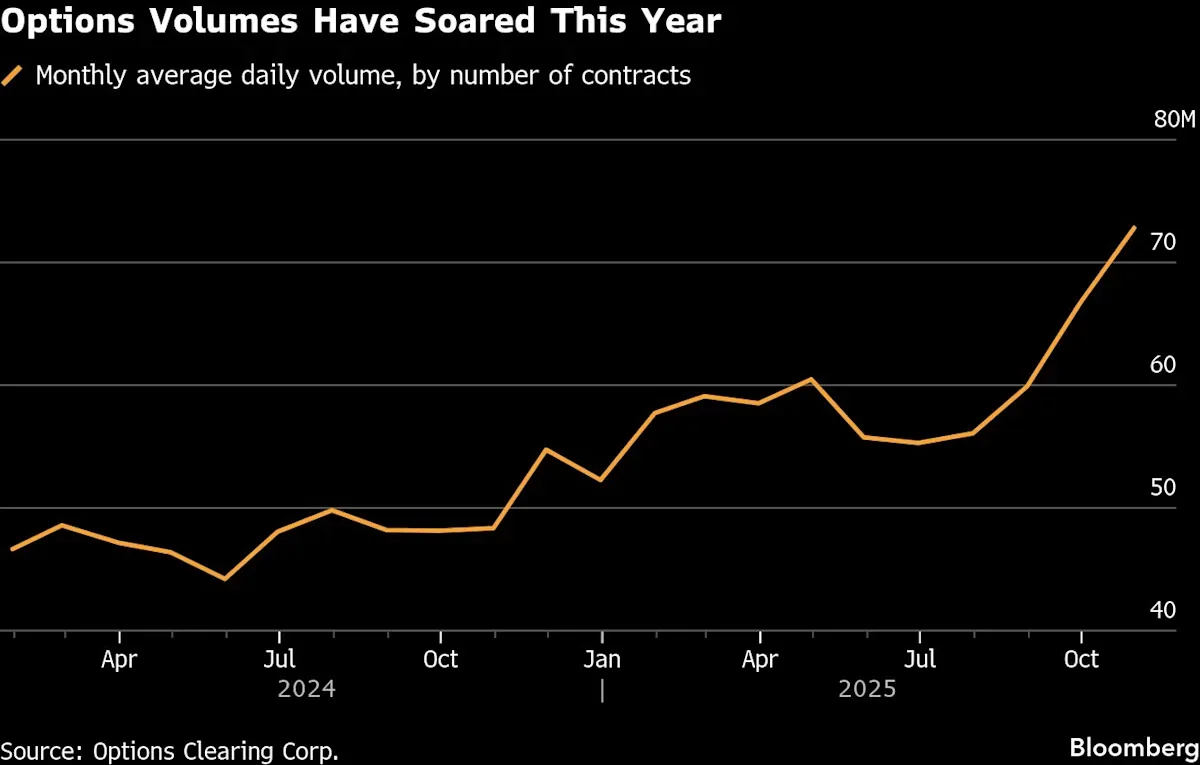
The US options market is experiencing record volumes, but concerns are rising over its reliance on a small group of banks to guarantee trades, which poses a concentration risk that could lead to significant losses if one of these banks fails, especially as market activity continues to grow rapidly.
Robinhood CEO Vlad Tenev defends the controversial practice of payment for order flow (PFOF), stating that it is "inherently here to stay" in the United States. Tenev argues that PFOF has helped drive down trading commissions and make investing cheaper for consumers. Critics, however, raise concerns about the conflict of interest it creates between brokers and clients. While PFOF is banned in the UK and the European Union, Robinhood plans to launch in the UK. Tenev notes that PFOF accounts for a small portion of Robinhood's revenue, with the majority coming from net interest income. The company has diversified its business to include other areas like securities lending and subscriptions. The rise of Robinhood has forced traditional brokers to slash their fees, leading to industry consolidation.
Big trading firms, including Jane Street, Virtu Financial, Jump Trading, and Hudson River Trading, are reportedly in talks with BlackRock to provide liquidity for its proposed spot bitcoin exchange-traded fund (ETF) if it receives regulatory approval. Market makers play a crucial role in providing liquidity for ETFs by matching buyers and sellers and creating and redeeming ETF shares. The approval of a spot bitcoin ETF is eagerly awaited, with Bitcoin's value surging recently due to speculation surrounding BlackRock's ETF.
On Friday, $4.57 billion worth of bitcoin options contracts and $2.3 billion worth of ether contracts will expire on Deribit exchange, which controls over 85% of the global options activity. The bitcoin contracts due for settlement account for 43% of the total open interest. Investors have recently bought call options with strike prices at and above $30,000, which has the highest open interest. Dealers' negative gamma positioning means a slight move away from $30,000 could translate into an explosive rally or price slide. In ether's case, market makers have accumulated long gamma positions in the ether market, and hence the risk of a gamma squeeze in Ethereum's native token is relatively low.