
Tag

Mammalian Evolution

All articles tagged with #mammalian evolution

Rete ridges reveal distinct epidermal programs shaping mammalian skin
evolutionary-biology29 days ago

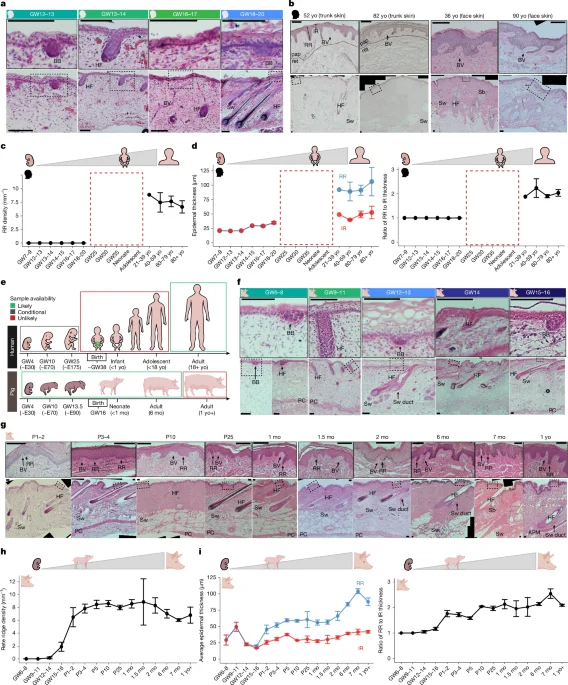
Rete ridges reveal distinct epidermal programs shaping mammalian skin

Across mammals, rete ridges form through a BMP-driven epidermal program that is distinct from the development of hair follicles and sweat glands, linking epidermal thickening with dermal pockets. The timing of ridge formation aligns perinatally in humans and pigs, and has been observed in dolphins and bears, while neonatal pig wounds can regenerate rete ridges de novo. The authors also show that mouse fingerpad rete ridges require epidermal BMP signaling, leading to the idea that evolution replaced discrete skin appendage programs with an interconnected epidermal–dermal network. This work has implications for regenerative approaches to restore epidermal structures after injury or disease.
Unveiling the Genetic Origins of Human Diseases and Primate Evolution
science-and-medicine2 years ago

Unveiling the Genetic Origins of Human Diseases and Primate Evolution

Researchers from UNC School of Medicine are using evolutionary genomics to understand human diseases by studying highly constrained genes that have remained unchanged throughout mammalian evolution. This approach provides insights into the origins of psychiatric and neurological disorders and may allow for the manipulation of DNA sequences to lessen the effects of genetic diseases. The research has produced a comprehensive document that researchers can use to explore the genetics underlying various human diseases, offering a new perspective on the role of genetic variations in disease development.

Canine brain networks reveal insights into mammalian evolution
science2 years ago

Canine brain networks reveal insights into mammalian evolution

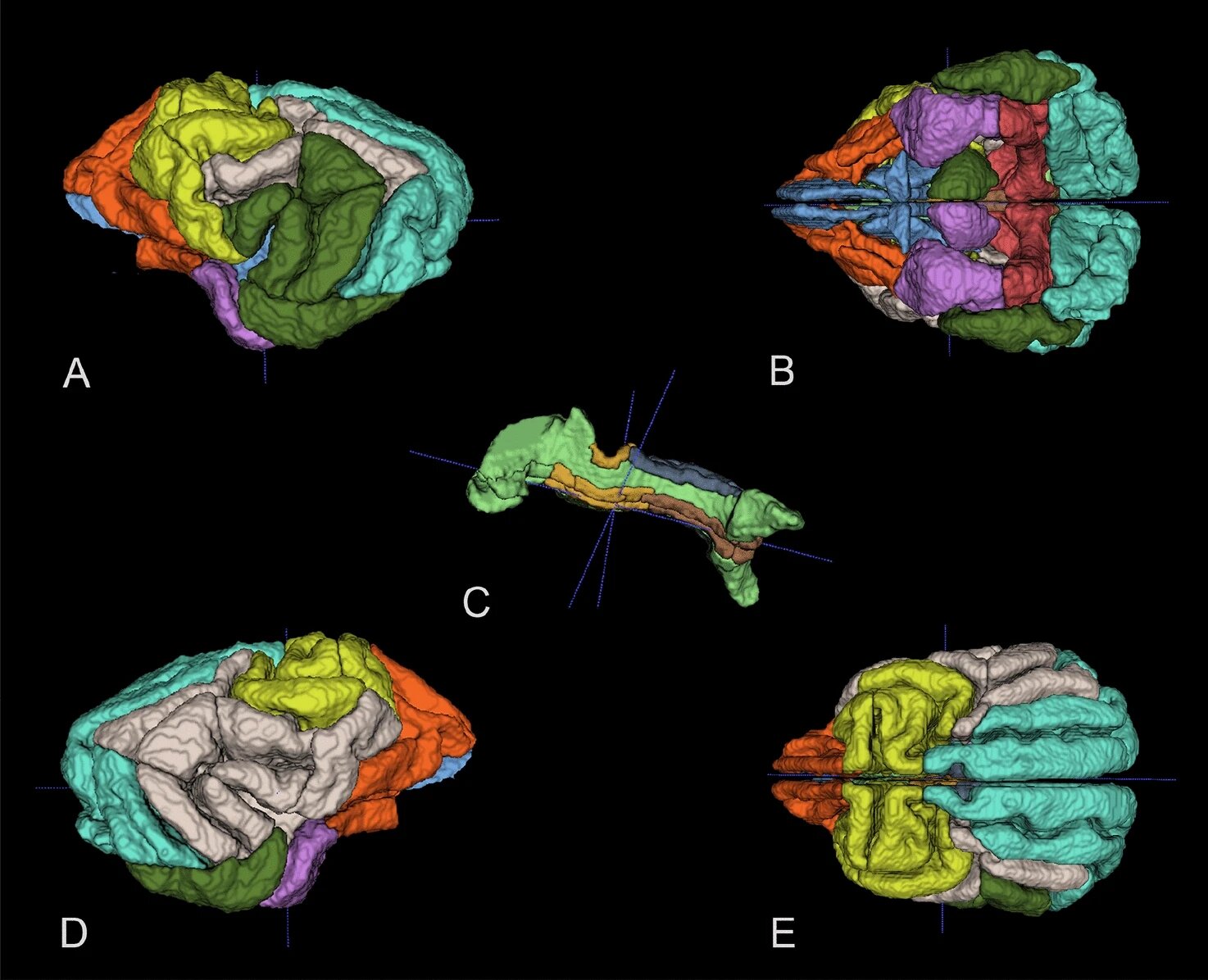
A new canine resting state fMRI brain atlas has been developed to investigate the brain mechanisms that influence a dog's learning and memory, resulting in superior dog training methods as well as knowledge on the evolutionary steps that led to the development of human brain function. The study reveals that during mammalian brain evolution, the role of the cingulate cortex was partly taken over by the lateral frontal lobes, which control problem-solving, task-switching, and goal-directed behavior. The new rs-fMRI brain atlas can aid in the investigation of conditions in which integration and communication across brain areas are impaired, resulting in a dysfunctional division of tasks.