The Whitehead family, an African American family in Baltimore, discusses race and the legacy of slavery, including their views on affirmative action. While some family members support affirmative action as a necessary policy to address racial disparities, others, like Amir, believe that admissions should be based solely on merit. The Supreme Court's recent ruling to end race-conscious admissions at colleges and universities has sparked conversations among African Americans nationwide about how to deal with the legacy of slavery. The family's discussions reflect the broader debate on issues such as reparations and racial equity in America.

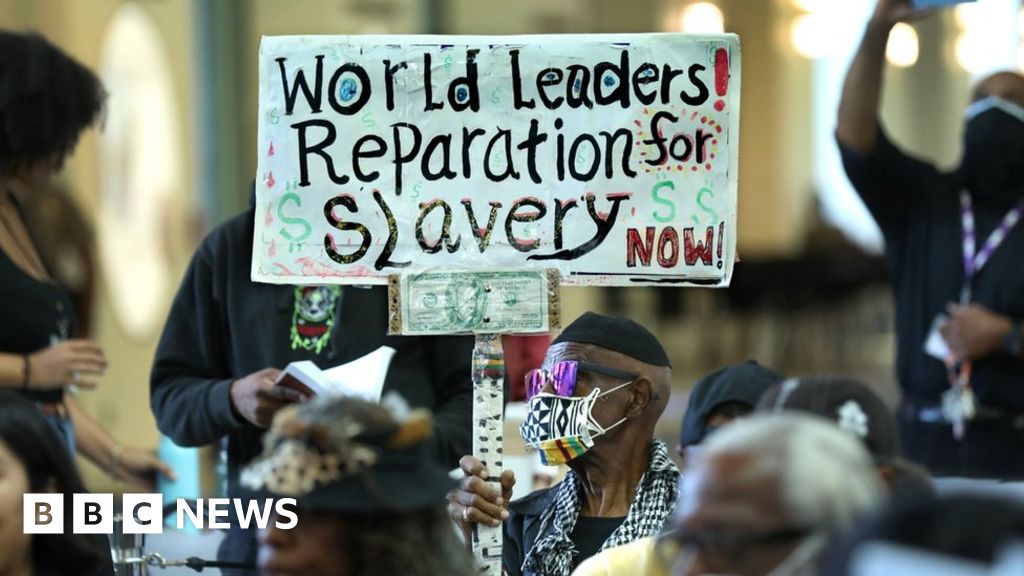
California Governor Gavin Newsom declined to endorse the cash payments recommended by his state's reparations task force, which could reach as high as $1.2 million for a single recipient, stating that dealing with the legacy of slavery "is about much more than cash payments." While he applauded the task force's work, he declined to endorse any specific recommendations, though he pledged to continue to "advance systemic changes that ensure an inclusive and equitable future for all Californians." The task force's final recommendations will soon be submitted to the California Legislature, which will then decide whether to implement the measures and send them to Newsom's desk to be signed into law.
San Francisco is considering a plan to award $5m to each eligible black resident as reparations for the legacy of slavery and racism. The plan also suggests guaranteed annual incomes of $97,000 for qualifying recipients and homes in San Francisco for $1 a family. Supporters argue that it is needed to redress the legacy of US slavery and racist policies, while opponents say the price tag is too high and that Californians who were never slave owners should not have to give money to people who were not enslaved. The panel's final report is expected to be released in June.