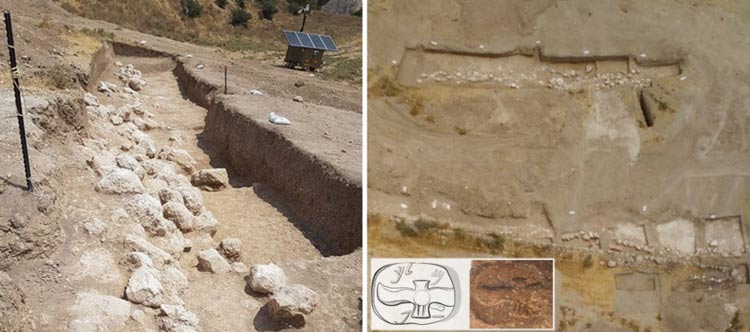
Archaeologists have uncovered a 3,200-year-old Biblical city in the Promised Land, identified as Zanoah, mentioned in the Old Testament. The findings include stone walls, pottery, and a jar handle inscribed with Hebrew text meaning "belonging to the king," supporting the Biblical narrative of the Israelites' settlement after their exodus from Egypt. The excavation, led by the Israel Antiquities Authority, also revealed farming terraces and various artifacts, highlighting the historical significance of the site.
A 3,300-year-old shipwreck discovered in the Mediterranean Sea has rewritten our understanding of ancient sailing, revealing that ancient mariners could navigate open seas without sight of the shore. Found by Energean during an environmental survey, the ship contained hundreds of intact jars likely used for transporting oil, wine, or agricultural products, indicating extensive maritime trade. The discovery, described as a world-class sensation, will be displayed in Jerusalem this summer.
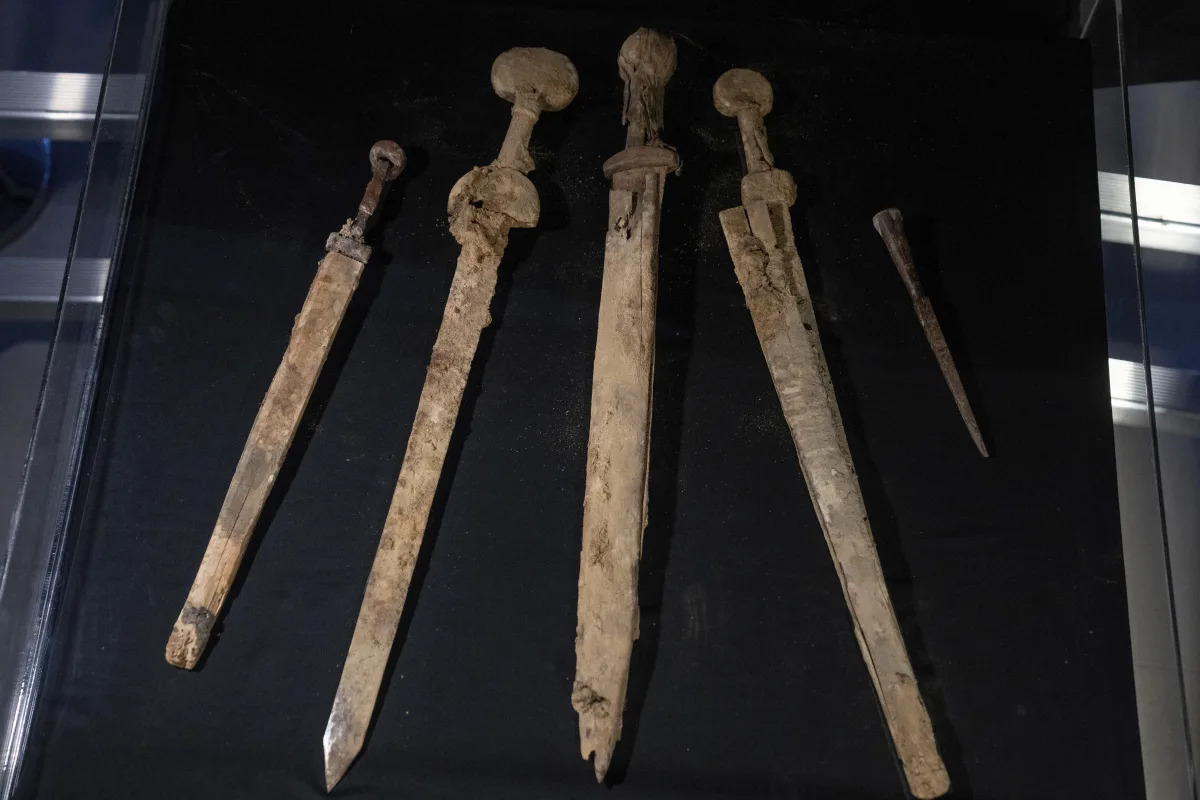
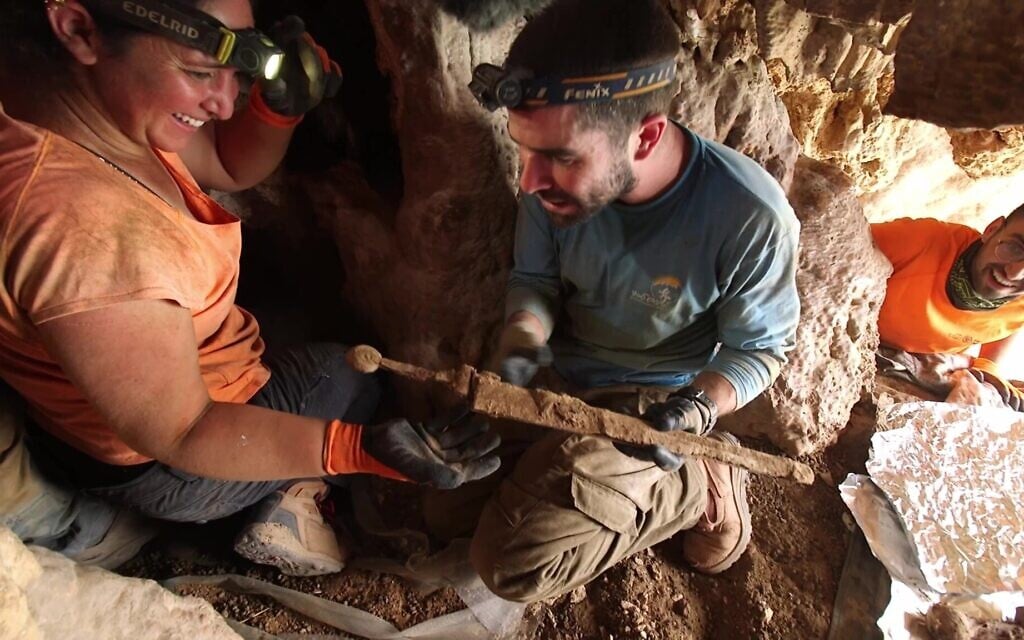
Four Roman-era swords, along with their wooden and leather hilts and scabbards, have been discovered in a well-preserved state in a desert cave near the Dead Sea in Israel. The artifacts, believed to have been hidden by Jewish rebels during an uprising against the Roman Empire in the 130s, provide insights into empire and rebellion. The swords, which have not yet been radiocarbon dated, were likely crafted in a European province and brought to Judaea by Roman soldiers. The discovery highlights the exceptional preservation of organic remains in the desert caves, including the famous Dead Sea Scrolls. Future research will focus on studying the swords' manufacture and the history of the objects and the people they belonged to.
Four 1,900-year-old Roman swords have been discovered in a cave in the Judean Desert, believed to have been captured by Jewish rebels during the Bar Kochba revolt and hidden in a narrow crevice. The swords, including three Roman spatha swords and a ring-pommel sword, are incredibly well-preserved, with intact blades and ornate handles. The discovery is considered extremely rare and sheds light on the final moments of the revolt. The arid climate of the desert has helped preserve fragile artifacts, making it a unique time capsule for archaeological finds.
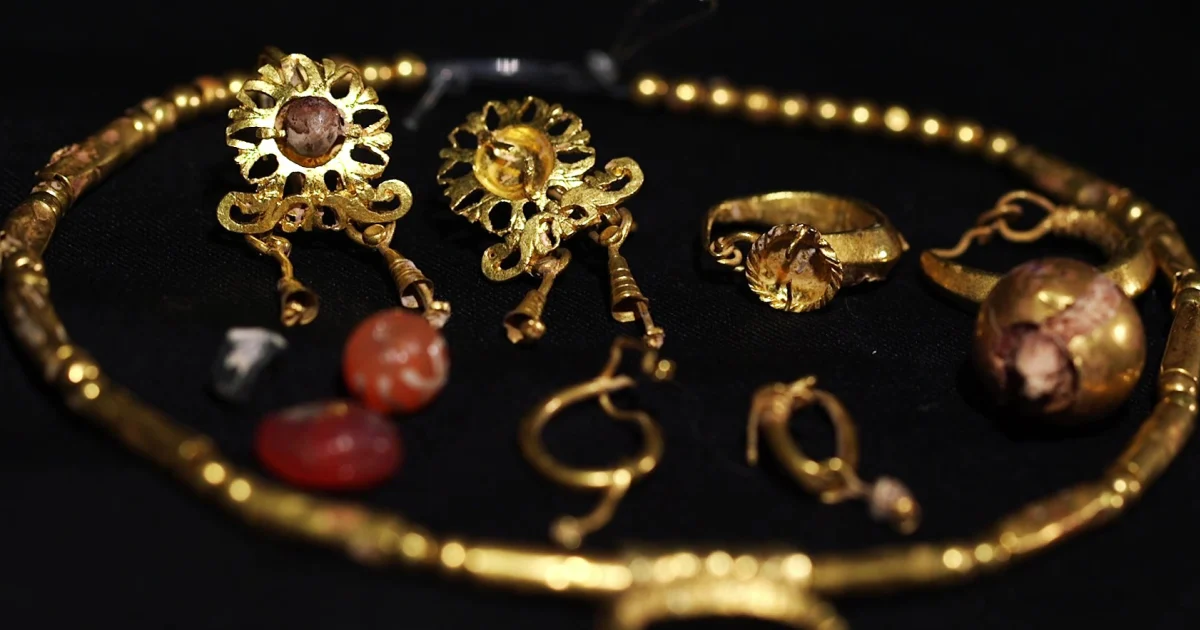
Jewelry designed to protect a young girl from the "evil eye" and aid her passage to the afterlife over 1,800 years ago has been unveiled in Jerusalem. The treasure, which includes golden earrings, a hairpin, a pendant, and glass and gold beads bearing the symbols of the Roman Moon goddess Luna, was discovered in a lead coffin in 1971 but has only now gone on display for the first time. The remarkably well-preserved items date to when Jerusalem had been re-established as a colony named Aelia Capitolina in AD 129 following the destruction of the city and its Jewish Temple during the Roman-Jewish War in AD 70.