
Tag

Iron Based Superconductor

All articles tagged with #iron based superconductor

science-and-technology2 years ago

Groundbreaking Discovery: Visualizing Zero-Field Pair Density Wave for the First Time

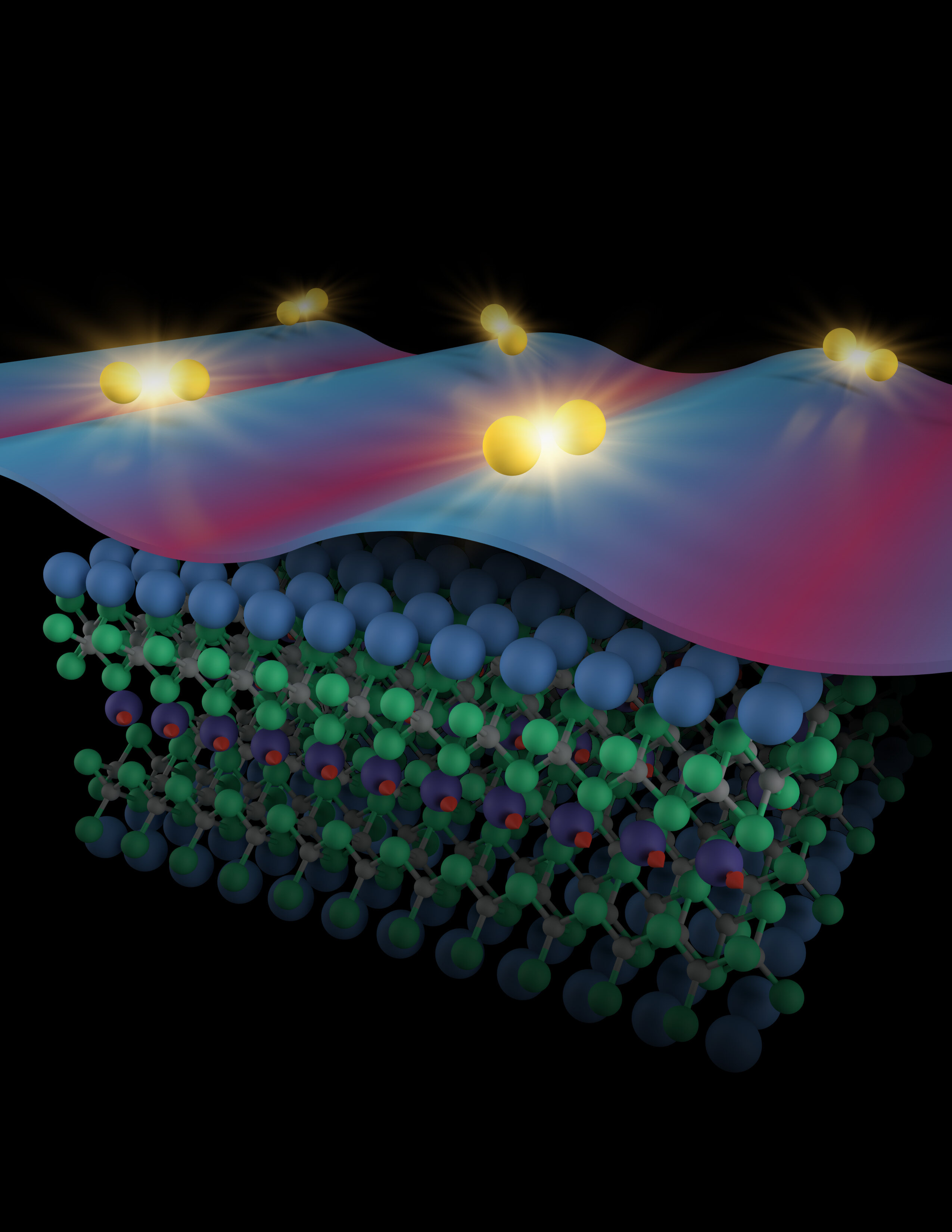
Researchers have made a breakthrough in the field of superconductivity by directly visualizing a pair density wave (PDW) in an iron-based superconductor without the presence of a magnetic field. This discovery challenges previous understandings of superconductivity and opens up new potential avenues for research. The material studied, EuRbFe4As4 (Eu-1144), naturally exhibits both superconductivity and ferromagnetism, providing a unique opportunity to investigate the connection between the two phenomena. The findings could contribute to the development of room-temperature superconductors and have implications for various applications.
science2 years ago

"Groundbreaking: Zero-Field Pair Density Wave Captured in Stunning Visuals"

Scientists have directly observed a pair density wave (PDW) in an iron-based superconducting material, EuRbFe4As4, without the presence of a magnetic field. This discovery challenges previous theories and opens new avenues for research in superconductivity. The material naturally exhibits both superconductivity and ferromagnetism, leading researchers to investigate the connection between the two phenomena. The spatially modulated superconductivity was detected upon the appearance of magnetism. The findings provide insights into the complex nature of superconductors and may lead to the development of room-temperature superconductors.

physics2 years ago

Magnetic-Free Superconducting Vortices in Physics

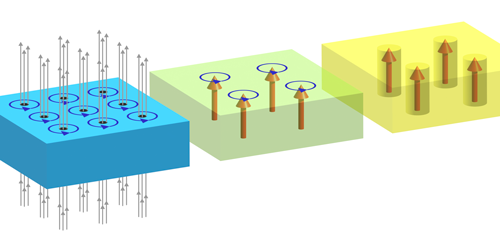
Researchers have detected and manipulated quantum anomalous vortices (QAVs) in the iron-based superconductor Fe(Se,Te) that form in the absence of a magnetic field and could theoretically support non-Abelian anyons known as Majorana zero modes. QAVs are formed by isolated magnetic impurities inserted into the superconductor that break the material’s time-reversal symmetry and locally suppress the strength of the electron-pairing interaction responsible for superconductivity. The members of a QAV-antivortex pair have opposite vorticities such that they do not repel each other, unlike the Abrikosov vortices seen in conventional superconductors.