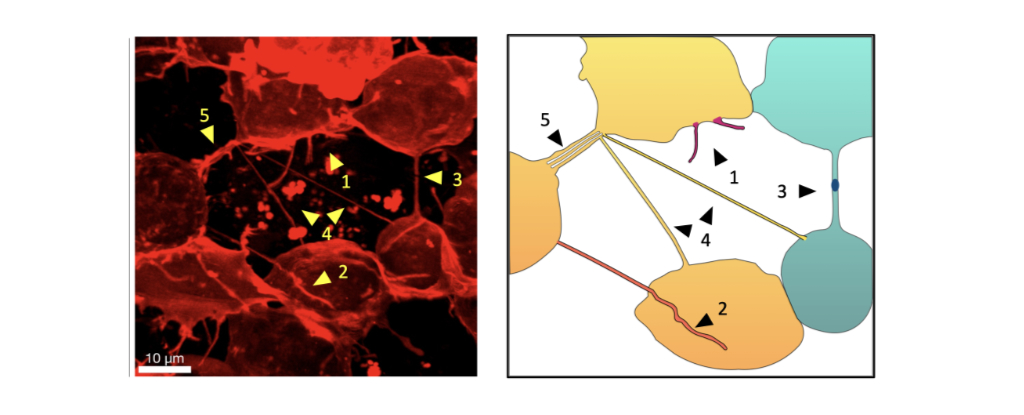
Recent research identifies dendritic nanotubular bridges in the brain that facilitate intercellular transport of ions, molecules, and proteins, potentially impacting understanding of neural communication and neurodegenerative diseases like Alzheimer's.
Cells inside zebrafish embryos have been observed using tunneling nanotubes to transport cargo between each other, according to a study published on bioRxiv. These long, thin tubes serve as intercellular transport systems for various substances, including chemicals, messenger RNA, proteins, organelles, viruses, and bacteria. The discovery of functional tunneling nanotubes in a living embryo could have implications for understanding diseases such as cancer, Alzheimer's, HIV, and SARS-CoV-2. Researchers overcame the challenge of observing these structures in a complex, 3D living organism by tracking their growth in transparent zebrafish embryos.