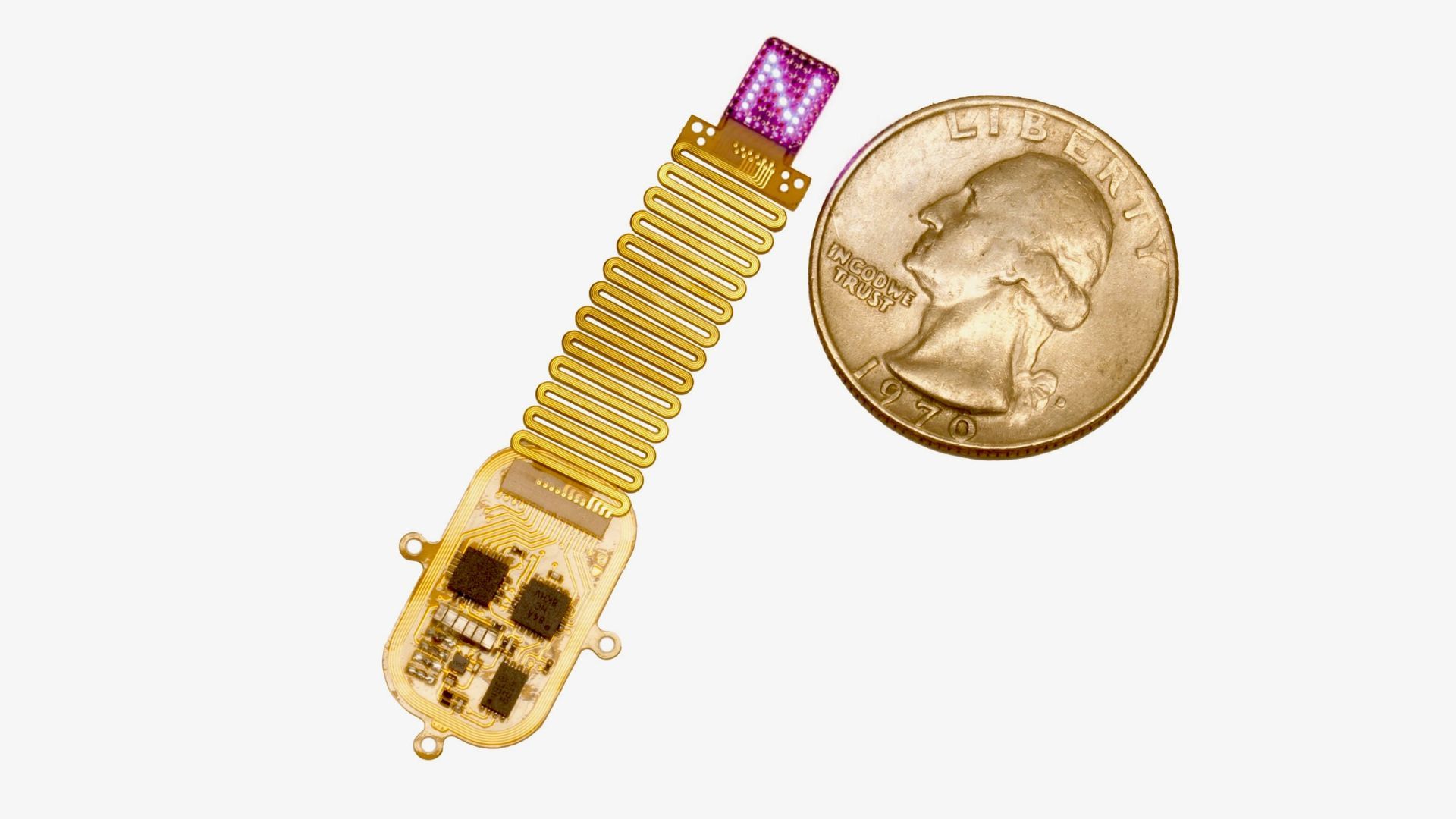
A small, wireless implant uses LED light and genetic modification to communicate directly with the brain's neurons in mice, enabling new ways to study and potentially treat neurological conditions without invasive procedures or external wires.
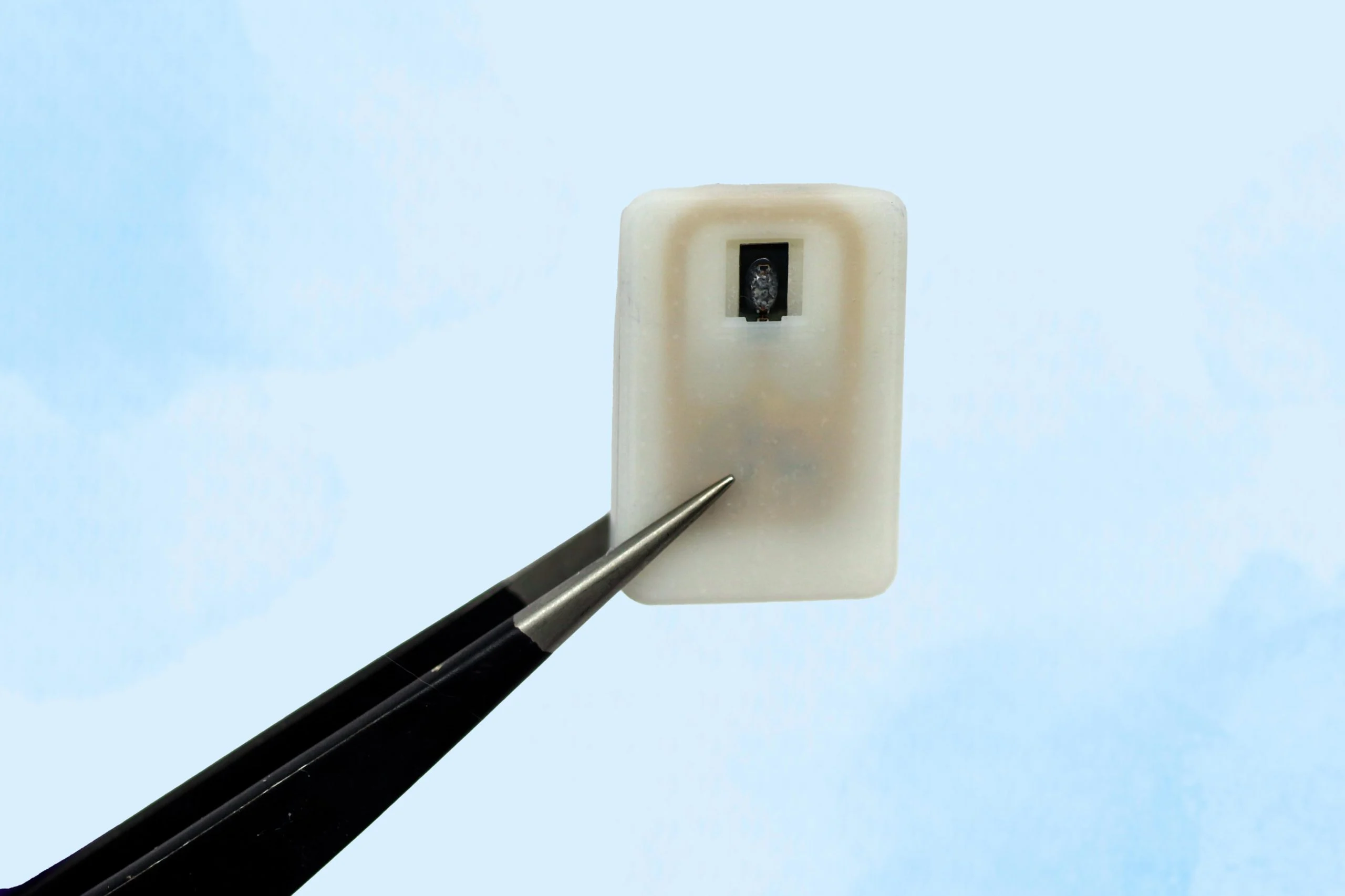
MIT has developed a small, implantable device that stores and automatically releases glucagon to prevent dangerous blood sugar drops in diabetics, potentially improving emergency treatment and reducing hypoglycemia risks, especially during sleep or for children.
MIT engineers have developed a small implantable device that automatically releases glucagon to treat dangerously low blood sugar levels in people with type 1 diabetes, potentially improving emergency response and safety.
MIT engineers have developed an implantable device that could revolutionize the treatment of Type 1 diabetes by replacing daily insulin injections. The device contains insulin-producing cells and an onboard oxygen factory that generates oxygen by splitting water vapor in the body. In tests on diabetic mice, the device successfully maintained stable glucose levels for over a month. The researchers aim to create a larger version of the device for human testing. This technology could potentially be adapted to treat other diseases requiring repeated delivery of therapeutic proteins.
Engineers at MIT have developed an implantable device that could help people with type 1 diabetes monitor their glucose levels and potentially produce insulin when needed. The device, which has been tested on mice, contains oxygen-producing islet cells and kept glucose levels stable for at least one month. Although concerns about diabetic ketoacidosis and fibrosis remain, researchers hope to create a larger version of the device for human testing within the next four years. If successful, this technology could revolutionize diabetes treatment and potentially be adapted for other illnesses requiring therapeutic protein delivery.
MIT engineers have developed an implantable device that carries insulin-producing islet cells and generates its own oxygen by splitting water vapor in the body. When implanted in diabetic mice, the device successfully maintained stable blood glucose levels for at least a month. The researchers aim to create a larger version of the device for testing in humans with Type 1 diabetes. This technology could potentially replace the need for frequent insulin injections and be adapted for other diseases requiring repeated delivery of therapeutic proteins.