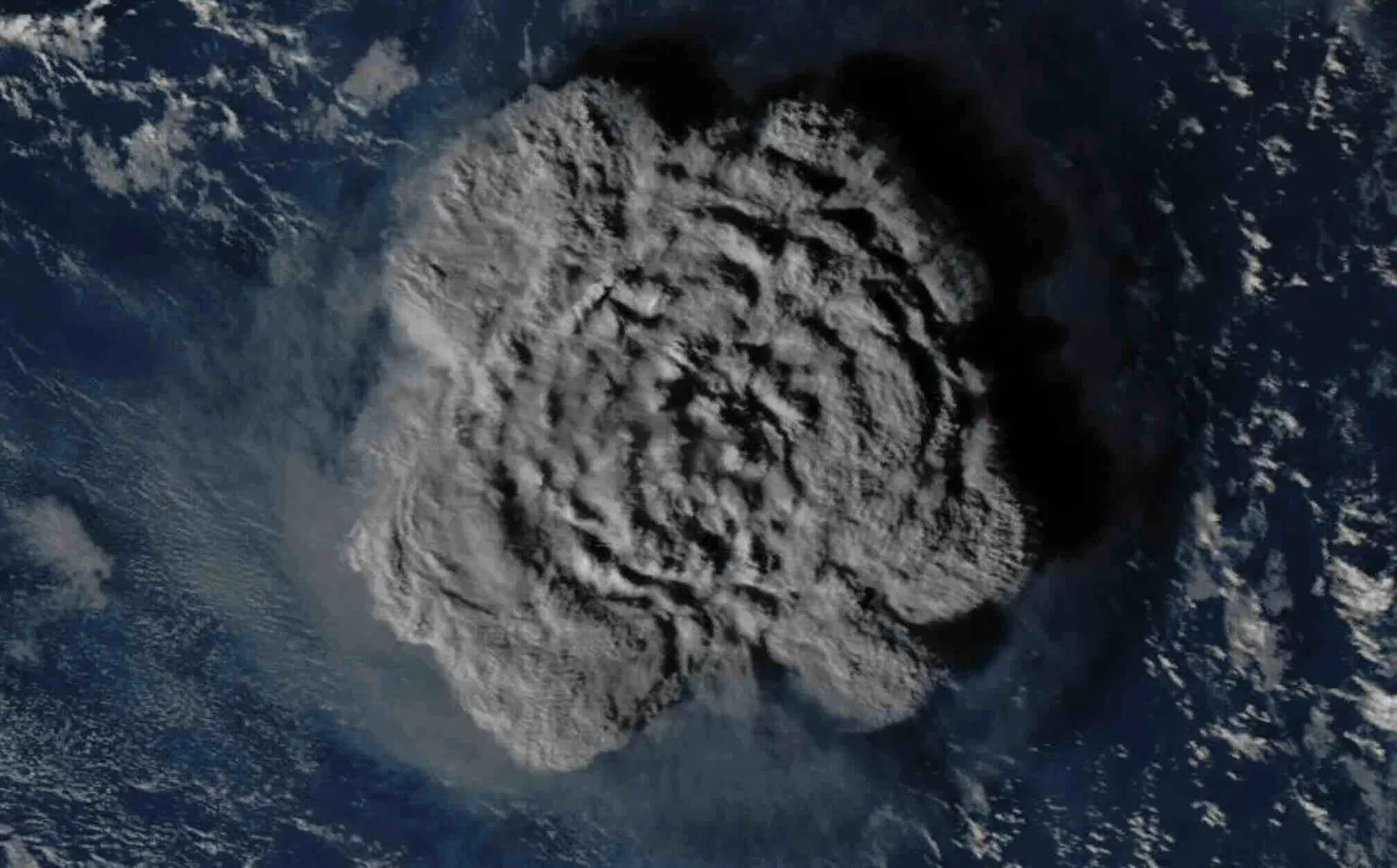
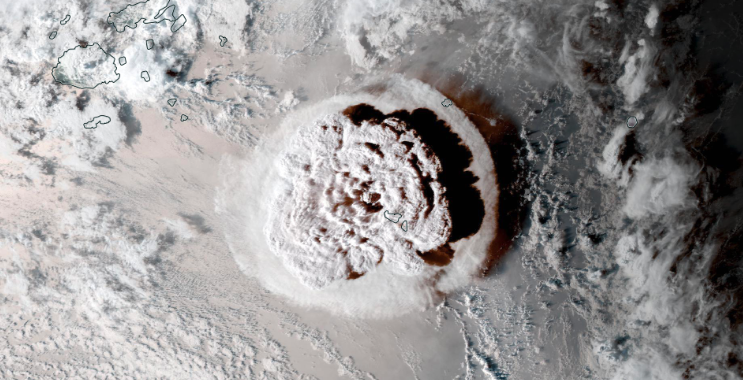
The January 2022 eruption of the Hunga Tonga–Hunga Haʻapai volcano was an extraordinarily powerful event, visible from space, that produced massive ash plumes, shock waves, and a tsunami, causing regional devastation and highlighting advancements in satellite observation technology.
Scientists have discovered that seismic waves detected 15 minutes before the massive 2022 eruption of the Hunga Tonga Hunga Ha’apai volcano could serve as an early warning system for future eruptions. The seismic activity, recorded by stations in Fiji and Futuna, was linked to a fracture in the oceanic crust, allowing magma and seawater to mix and build explosive pressure. This finding suggests that similar seismic signals could help predict eruptions, especially in remote oceanic areas, potentially mitigating disaster impacts.
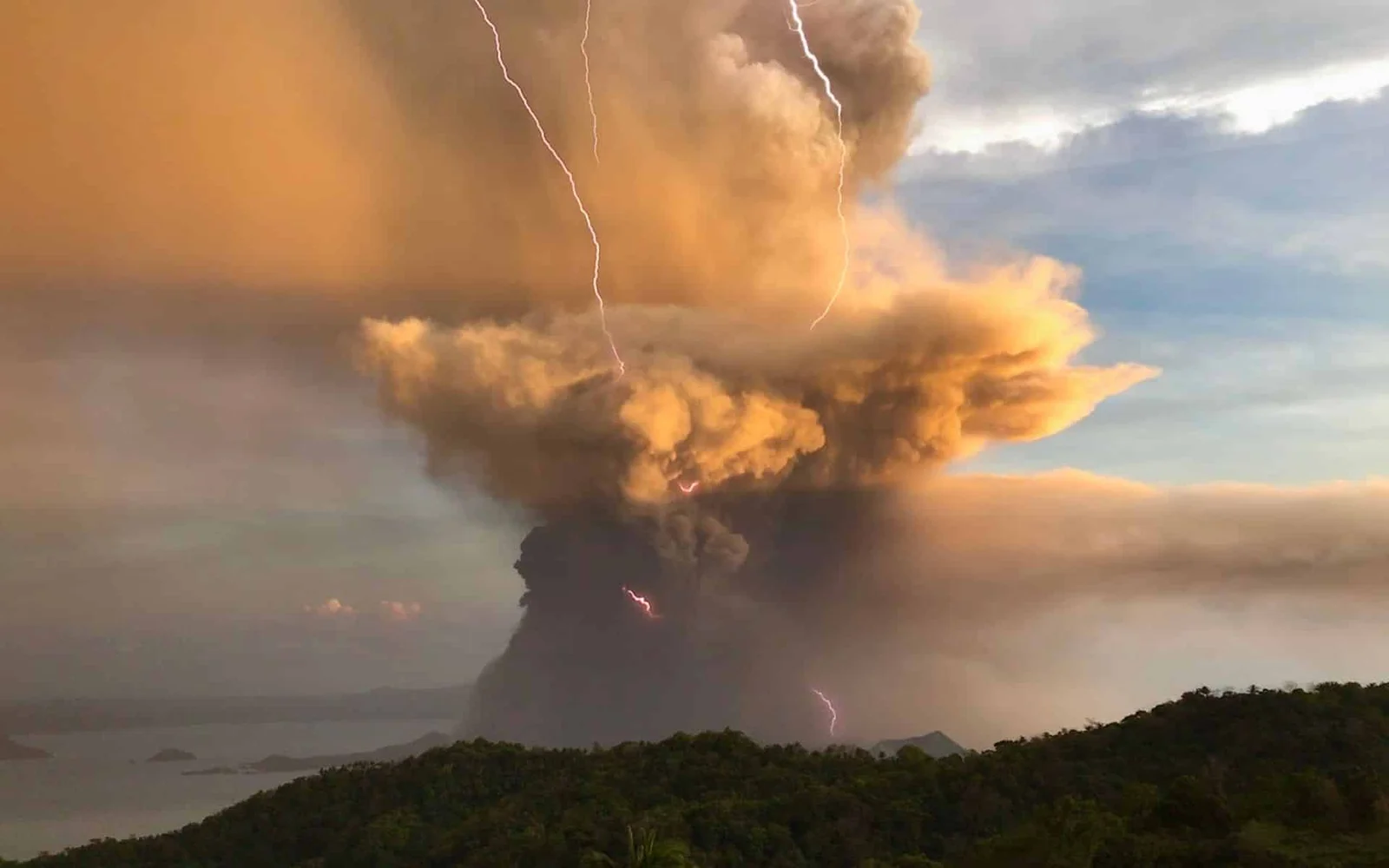
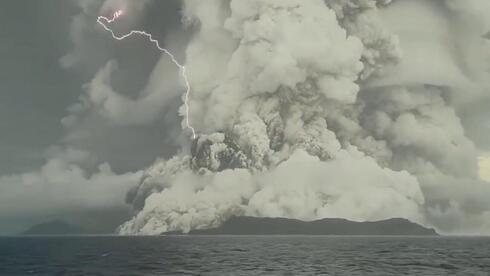
The 2022 Hunga Tonga volcanic eruption in Tonga triggered an unprecedented level of electrical activity, with nearly 200,000 lightning flashes within the volcanic plume, reaching a peak rate of over 2,600 flashes per minute. The eruption expelled a massive amount of molten rock and evaporated water, creating a towering plume that reached halfway to space. Scientists believe that plume particles surfing a volcanic "gravity wave" contributed to the record-breaking lightning. The eruption, classified as a phreatoplinian eruption, was a milestone as it had never been observed with modern equipment before. The insights gained from studying the lightning activity can improve monitoring and prediction of aviation hazards during major volcanic eruptions.
The eruption of the Hunga Tonga volcano in January 2022 set off the most extreme lightning ever recorded on Earth, with concentric rings of lightning flashing about 192,000 times over 11 hours. Lightning shot up to 30 km high, beating even cyclones and supercells. The lightning was created by superfast energetic waves known as gravitational waves, which caused changes in air pressure and brought on enough turbulence to generate lightning. The discovery will make it easier to assess risks to aircraft from lightning and ash clouds that can obscure vision.