Recent research suggests that a protein from the stomach bacteria Helicobacter pylori, traditionally known for causing ulcers, may help prevent the buildup of proteins linked to Alzheimer's disease, offering a potential new therapeutic approach, though it is still in early experimental stages.
A study conducted by Charité – Universitätsmedizin Berlin and McGill University suggests that symptomatic Helicobacter pylori infections after the age of 50 are associated with an 11% increased risk of developing Alzheimer's disease, which escalates to a 24% higher risk a decade post-infection. H. pylori is a common gut microbe that can potentially reach the brain, causing inflammation, neuron damage, and impairing the absorption of Vitamin B12 and iron. The findings highlight H. pylori as a possible modifiable risk factor for Alzheimer's, opening up new avenues for prevention and treatment strategies. However, further research is needed to determine the extent to which eradicating H. pylori could affect the development of Alzheimer's disease.
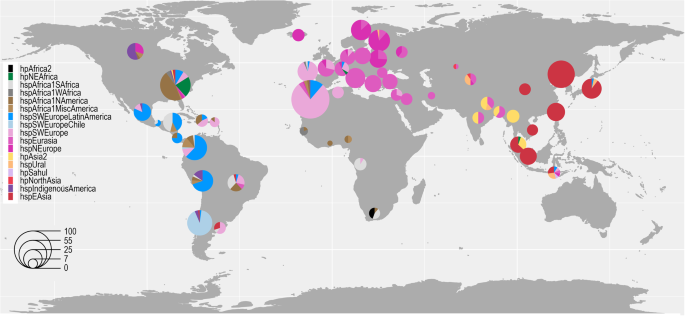
The Helicobacter pylori Genome Project (HpGP) has analyzed 1011 H. pylori genomes from 50 countries, providing insights into the population structure of this bacterium. The analysis revealed four main population clusters: Southwest Europe, Northern and Central Europe, Western and Southern Africa, and North, Central, and East Asia. Within Europe, three main subpopulations were identified: hspNEurope, hspSWEurope, and hspEurasia. Central Asia was described with increased resolution, identifying hpAsia2, hpNorthAsia, and hspUral as distinct subpopulations. The dataset also included African and African-descent genomes, Latin American subpopulations, and Indigenous American H. pylori strains, each with their own unique ancestral contributions. Additionally, a deep clone of H. pylori was identified in the United States. Overall, this study provides a comprehensive understanding of the global population structure of H. pylori.
A mother believes her son's stomach cancer, which led to his death at the age of 40, was caused by an infection from the stomach-eating bug Helicobacter Pylori (H. pylori) that he may have picked up during his backpacking trip to India 20 years ago. She is calling for more awareness about the potential risks of this bug, which can lead to certain types of cancer. While the UK Health Security Agency states that there is no current data to suggest that travel is a risk factor for developing H. pylori infection, the mother believes that if her son had taken a test for H. pylori upon his return from his travels, his life could have been saved. She is now campaigning for more information and the availability of cheap tests to detect the bug.