

Tag

Health Economy

All articles tagged with #health economy

health-economy1 year ago

"India's Wealthy Grapple with Rising Health Crisis"

India's economic growth has led to a surge in lifestyle diseases such as diabetes, heart disease, and obesity, with nearly 500 million people expected to develop these conditions by 2030. The shift towards sedentary lifestyles, processed foods, and increased tobacco and alcohol consumption has contributed to this health crisis, affecting even younger individuals. As incomes rise, so does the prevalence of these illnesses, reflecting a global pattern seen in other developing economies. Proactive measures, including public health campaigns and workplace wellness programs, are needed to address the root causes and promote healthy lifestyles amidst India's economic prosperity.

health-economy1 year ago

"The Economic Impact of Britain's Mental Health Crisis"

Britain's stiff upper lip mentality is outdated and damaging, with a sharp increase in mental ill-health across generations impacting the economy as millions are economically inactive due to health issues. Mental illness has increased significantly, with long waiting lists for mental healthcare and concerns about reaching crisis point before receiving help. Drastic public sector cuts, including closures of libraries and playgrounds, have worsened the mental health crisis. Urgent action is needed as the country plunges into recession, with unemployment worsening symptoms of anxiety and depression, creating a vicious cycle for those feeling forgotten.

health-economy2 years ago

Comparing the effectiveness of lockdowns and behavioral changes during the pandemic

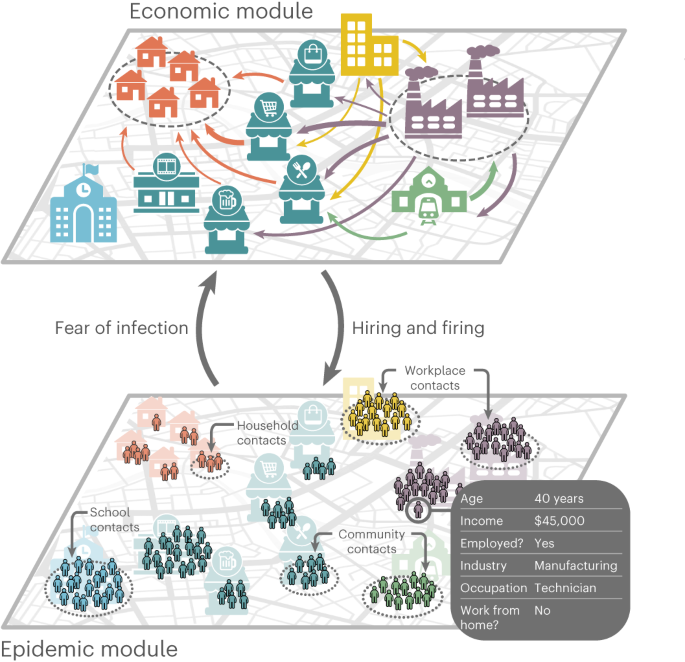
The unequal effects of the COVID-19 pandemic on health and the economy have impacted people differently across socioeconomic groups. Mandated non-pharmaceutical interventions (NPIs) such as closures of non-essential economic activities have led to lower exposure to the virus for employees in non-essential industries or those able to work remotely, while workers in essential, in-person tasks have faced a higher risk of exposure. Self-imposed behavioral changes, such as minimizing contacts and reducing the use of customer-facing services, have also had varying consequences across socioeconomic groups. A data-driven agent-based model has been developed to simulate the epidemic and economic impacts, providing insights into the effects of different policies and interventions. The model shows that stricter closures and higher fear of infection lead to increased unemployment and fewer COVID-19 deaths, with low-income individuals being disproportionately affected. The study also explores the effectiveness of industry-specific closures and the timing of interventions, highlighting the importance of early mitigation measures. Additionally, an age-specific fear of infection scenario is examined, which marginally reduces both unemployment and deaths compared to uniform fear.