
Comparing the effectiveness of lockdowns and behavioral changes during the pandemic
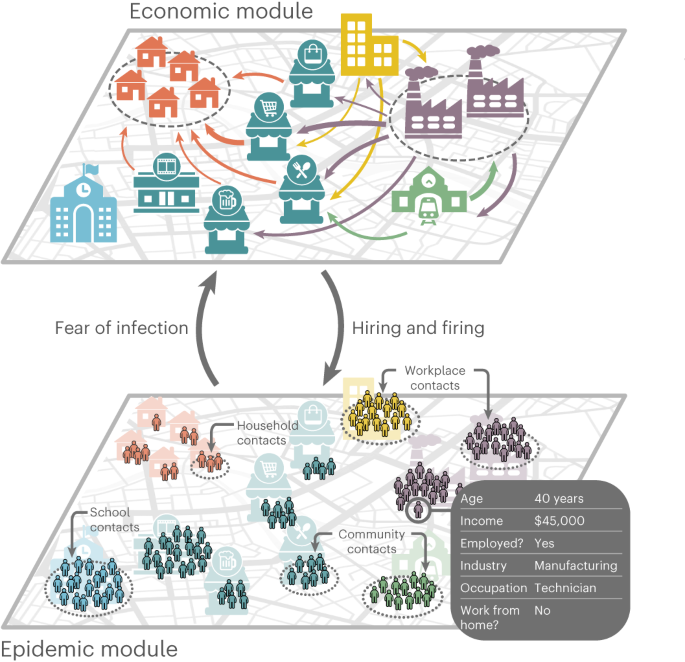
The unequal effects of the COVID-19 pandemic on health and the economy have impacted people differently across socioeconomic groups. Mandated non-pharmaceutical interventions (NPIs) such as closures of non-essential economic activities have led to lower exposure to the virus for employees in non-essential industries or those able to work remotely, while workers in essential, in-person tasks have faced a higher risk of exposure. Self-imposed behavioral changes, such as minimizing contacts and reducing the use of customer-facing services, have also had varying consequences across socioeconomic groups. A data-driven agent-based model has been developed to simulate the epidemic and economic impacts, providing insights into the effects of different policies and interventions. The model shows that stricter closures and higher fear of infection lead to increased unemployment and fewer COVID-19 deaths, with low-income individuals being disproportionately affected. The study also explores the effectiveness of industry-specific closures and the timing of interventions, highlighting the importance of early mitigation measures. Additionally, an age-specific fear of infection scenario is examined, which marginally reduces both unemployment and deaths compared to uniform fear.
- The unequal effects of the health–economy trade-off during the COVID-19 pandemic Nature.com
- Behavioral changes were as effective as lockdowns during the pandemic Earth.com
- What Businesses Should Stay Open in the Next Pandemic? Northeastern University
- Covid lockdowns were NO more effective than Swedish-style softer approach, major Oxford University-backed stud Daily Mail
- View Full Coverage on Google News
Reading Insights
0
1
50 min
vs 52 min read
98%
10,206 → 174 words
Want the full story? Read the original article
Read on Nature.com