A male humpback whale has set a record for the longest migration by traveling over 13,046 kilometers from South America to Africa, marking the first documented journey of an adult male humpback between the Pacific and Indian oceans. This unusual migration, tracked using the Happy Whale platform, highlights the interconnectedness of oceanic spaces and suggests that social or environmental factors may influence such movements. The study underscores the potential for global collaboration in whale research and the evolving understanding of whale migratory patterns.
Amateur photographer Sanchez captured a Blue Rock Thrush in Oregon, marking the first confirmed sighting of this species in the United States. Typically found in Europe and Asia, the bird's unexpected appearance has excited the ornithological community and sparked discussions on possible reasons for its presence, such as storm displacement or climate change. This event underscores the significance of citizen science and the potential for unexpected discoveries in nature.
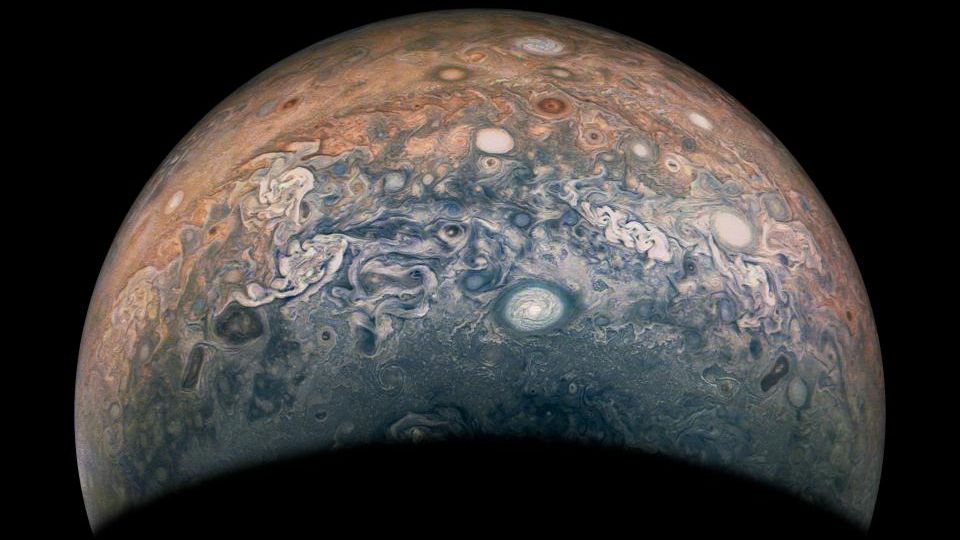
NASA's Juno spacecraft has captured stunning images of Jupiter's atmospheric storms and its moon Amalthea during its 66th close flyby. The photos, processed by citizen scientists, reveal intricate details of Jupiter's chaotic weather patterns and highlight the planet's vibrant colors. Juno, which has been orbiting Jupiter since 2016, is on an extended mission set to conclude in 2025. The mission has provided valuable data to help scientists understand Jupiter's atmosphere and evolution.
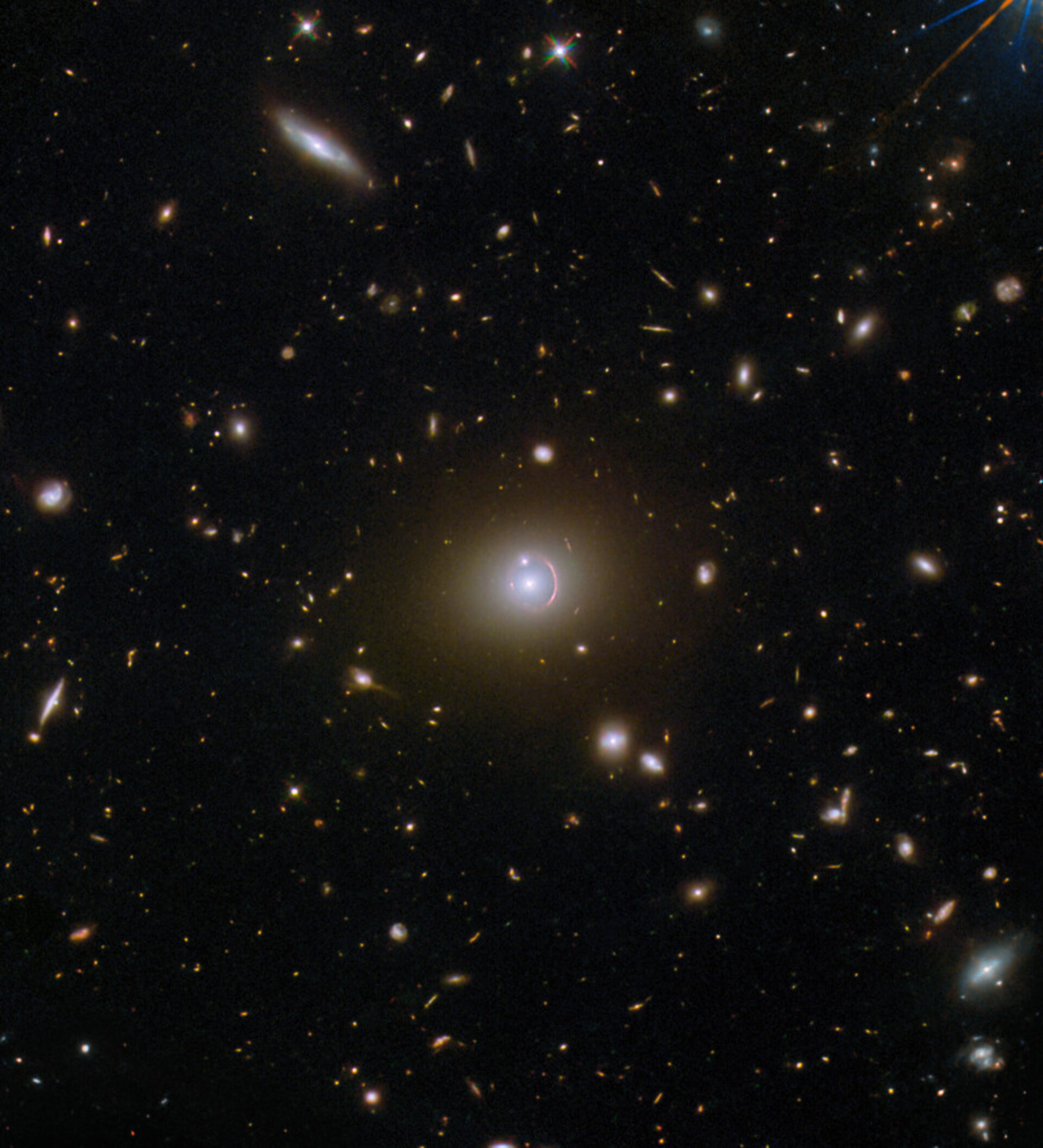
Astronomers have captured an image showcasing a rare cosmic phenomenon known as an Einstein ring, where light from a distant galaxy (19.5 billion light-years away) is bent around a closer galaxy (2.7 billion light-years away), creating a curved crescent of light. This visual effect is due to the precise alignment of the distant galaxy, the closer galaxy, and Earth. The Einstein ring was identified with the help of a citizen science project called SPACE WARPS, highlighting the contribution of the public to astronomical discoveries. The image features a central bright dot, the closer galaxy SDSS J020941.27+001558.4, and another bright dot, SDSS J020941.23+001600.7, with the lensed light forming the partial Einstein ring from the distant galaxy HerS J020941.1+001557.