
Tag

Gliese 367 B

All articles tagged with #gliese 367 b

"Lifeless Sub-Earth: GJ 367b's Harsh Conditions Revealed"
astronomy2 years ago

"Lifeless Sub-Earth: GJ 367b's Harsh Conditions Revealed"

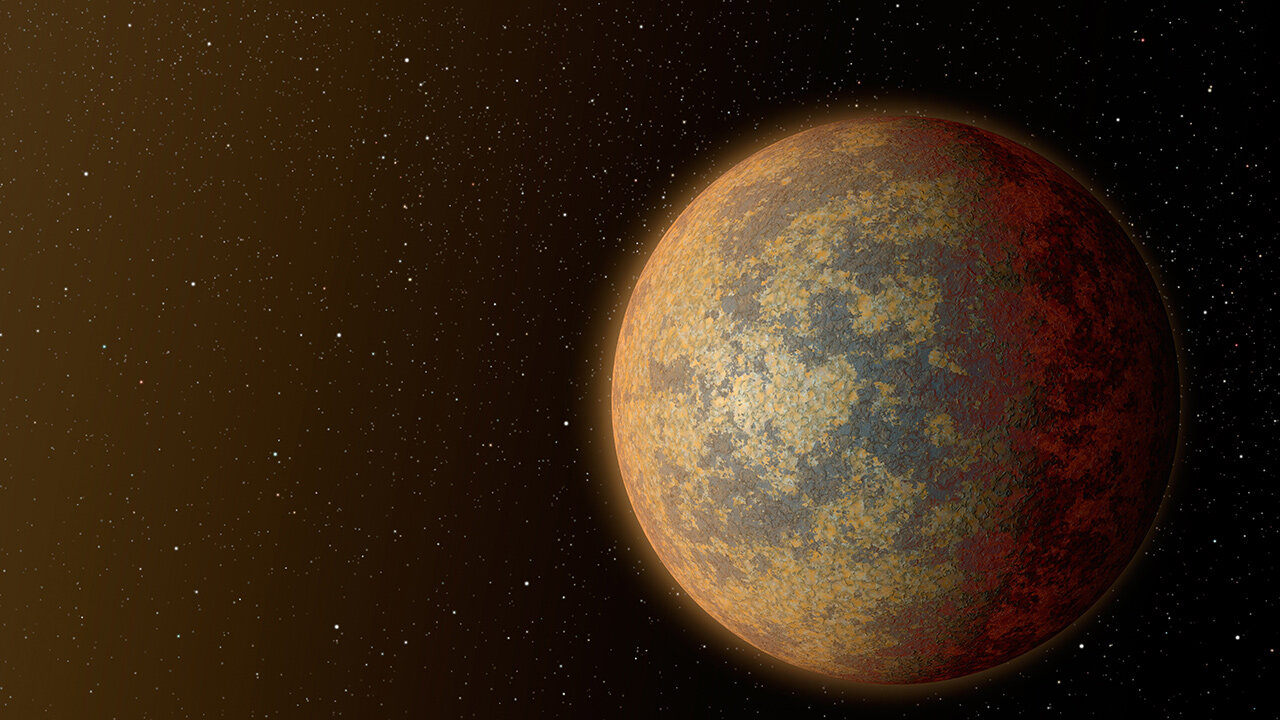
Astronomers using the James Webb Space Telescope have discovered that Gliese 367 b, a sub-Earth exoplanet, is dark, hot, and lacks a detectable atmosphere. The planet, located 31 light years away, has an equilibrium temperature of 1,367 K and orbits its parent star every 7.7 hours. Observations using JWST's Mid-Infrared Instrument revealed that Gliese 367 b has no atmosphere, no heat redistribution, and a dark surface with a dayside temperature of 1,728 K and a nightside temperature below 847 K. The lack of atmosphere suggests that the planet has considerably fewer volatiles compared to Earth, possibly due to intense stellar irradiation.
Exoplanet Gliese 367 b: A Solid Ball of Metal
astronomy2 years ago

Exoplanet Gliese 367 b: A Solid Ball of Metal

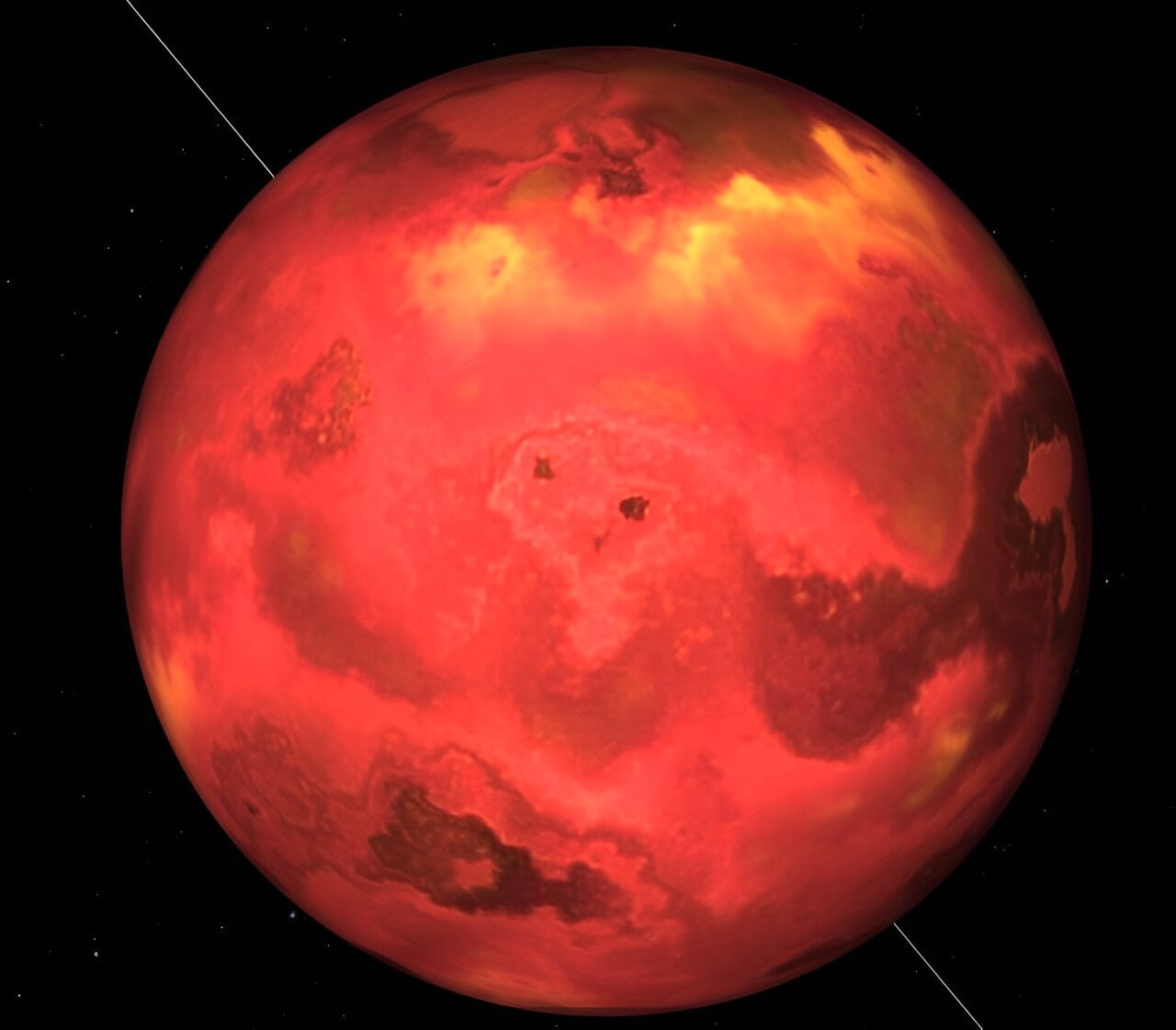
Scientists have discovered an exoplanet called Gliese 367 b, also known as Tahay, which is an ultra-dense planet composed almost entirely of iron. It is an outlier among Ultrashort Period (USP) planets, with a density almost twice that of Earth. The planet is believed to be the core of a once larger planet, with its rocky mantle stripped away, possibly due to collisions or intense irradiation from its star. The discovery of two additional low-mass planets in the same system further strengthens the idea that USP planets are often found in systems with multiple planets. The unusual properties of Gliese 367 b challenge current theories of planetary formation and motivate scientists to refine their understanding of these oddball planets.

"Discovery: Solid Iron Planet Discovered Orbiting Nearby Star"
astronomy2 years ago

"Discovery: Solid Iron Planet Discovered Orbiting Nearby Star"

Astronomers have discovered an Earth-sized exoplanet, Gliese 367 b, made almost entirely of solid iron. The planet, which orbits its star in just 7.7 hours, is twice as dense as Earth and likely the stripped core of a once larger planet. The discovery was made using data from the Transiting Exoplanet Survey Satellite (TESS) and the High-Accuracy Radial Velocity Planet Searcher (HARPS) spectrograph. The researchers also found two companion planets in the system, strengthening the idea that ultrashort period planets are often found in systems with multiple planets. The formation of Gliese 367 b remains a mystery, with possibilities including an iron-rich environment, collisional stripping, or the remnant core of a gas giant. Further investigation is needed to understand the formation and migration scenarios of ultrashort period systems.