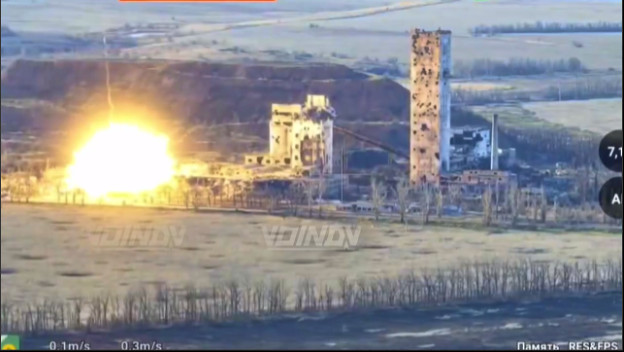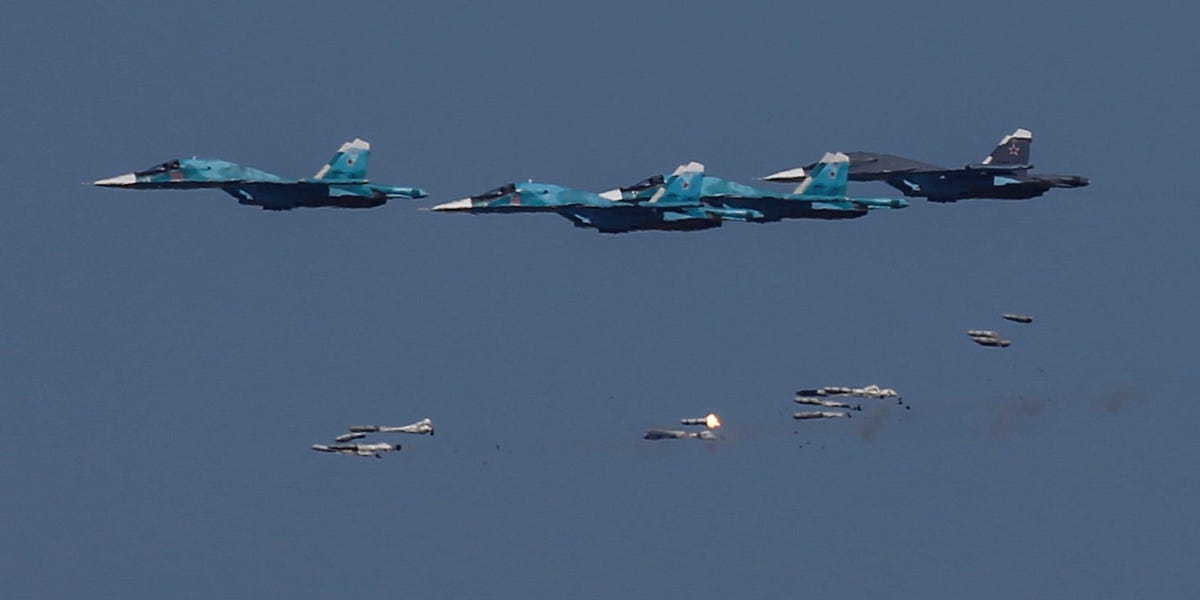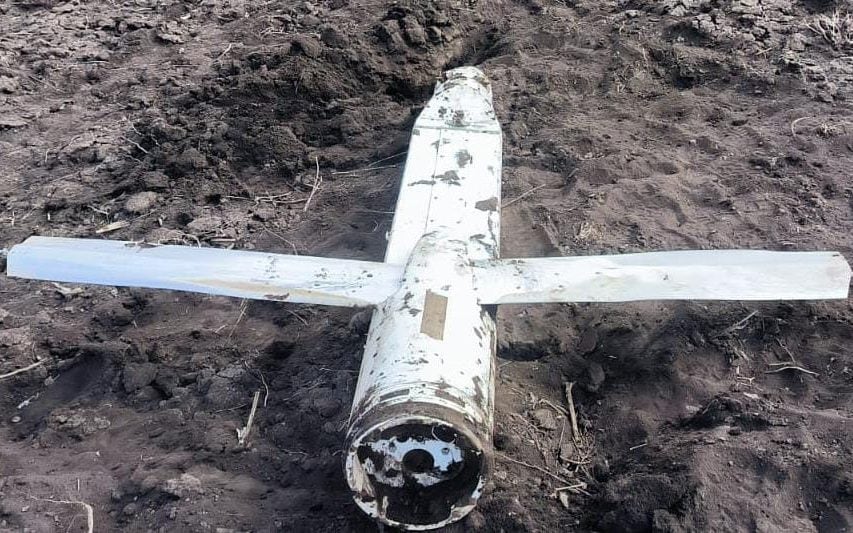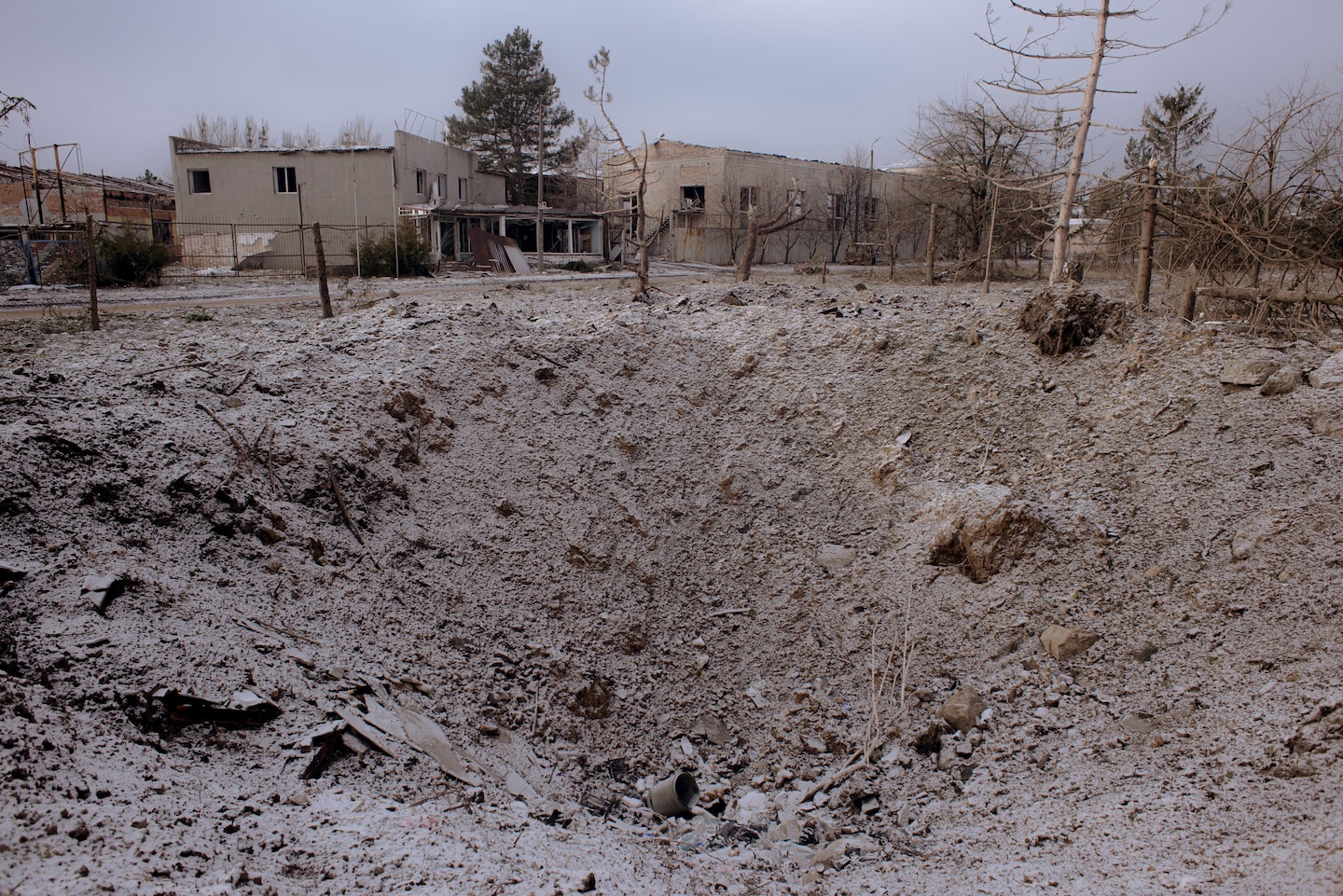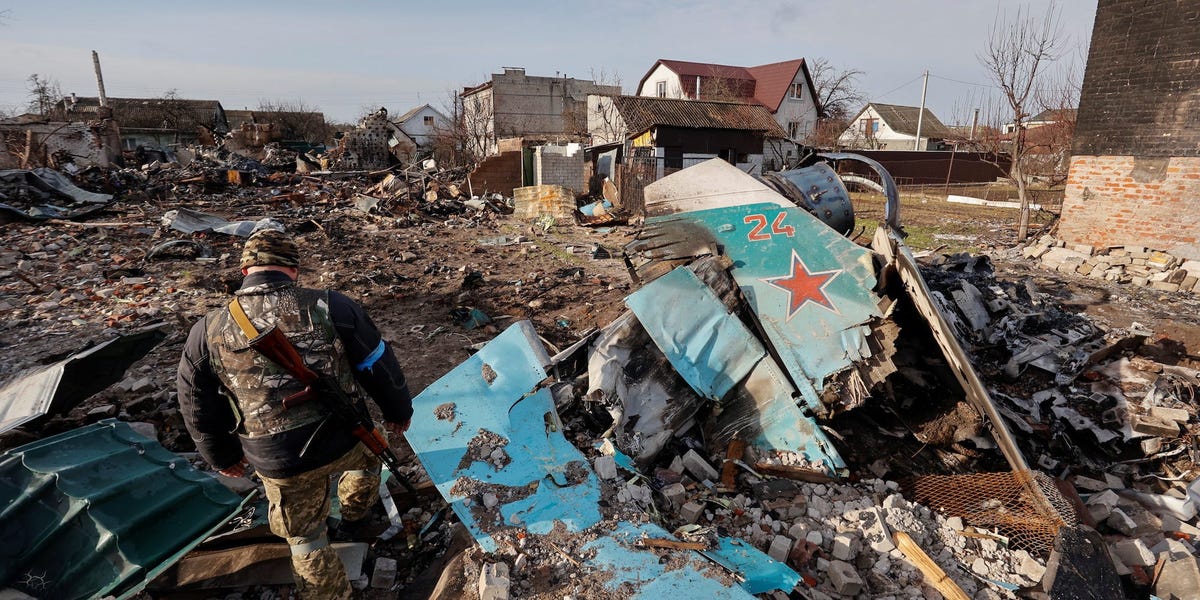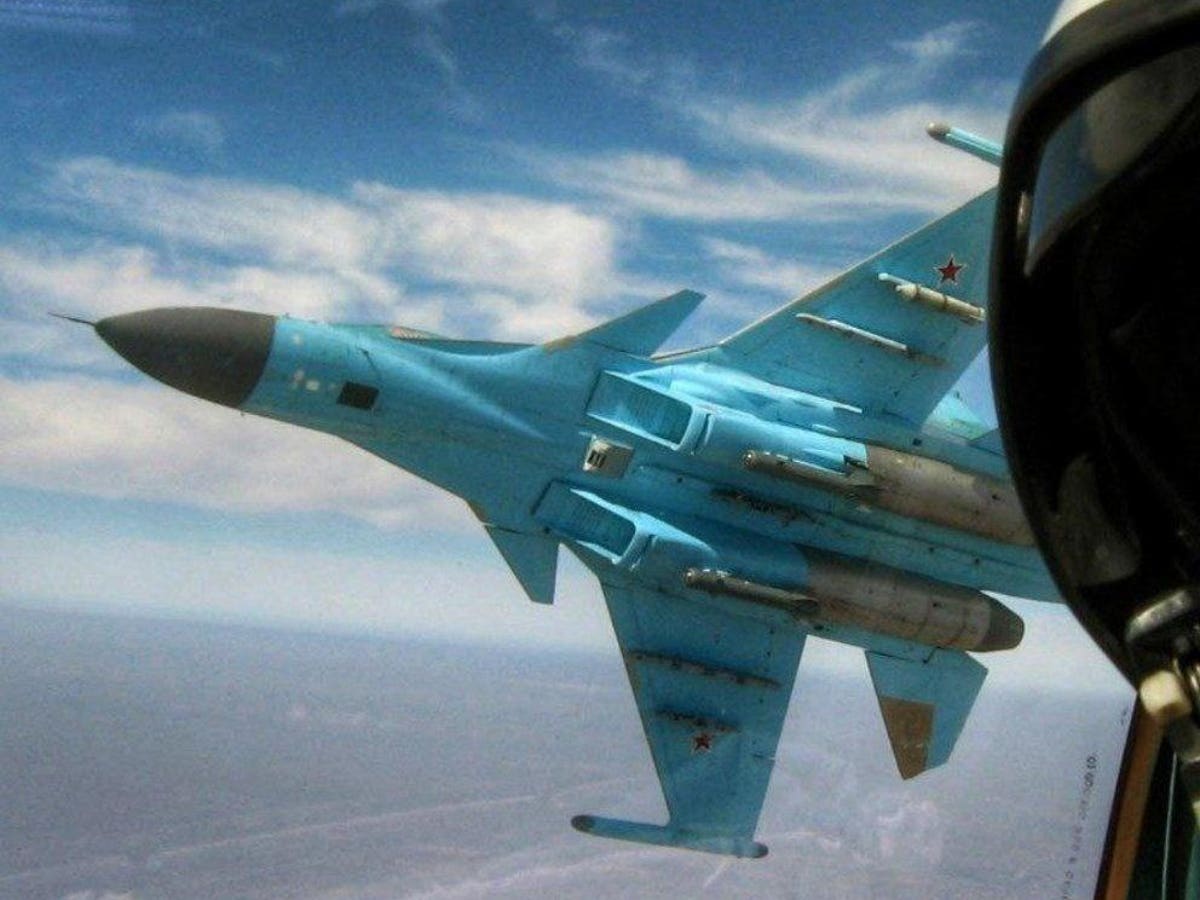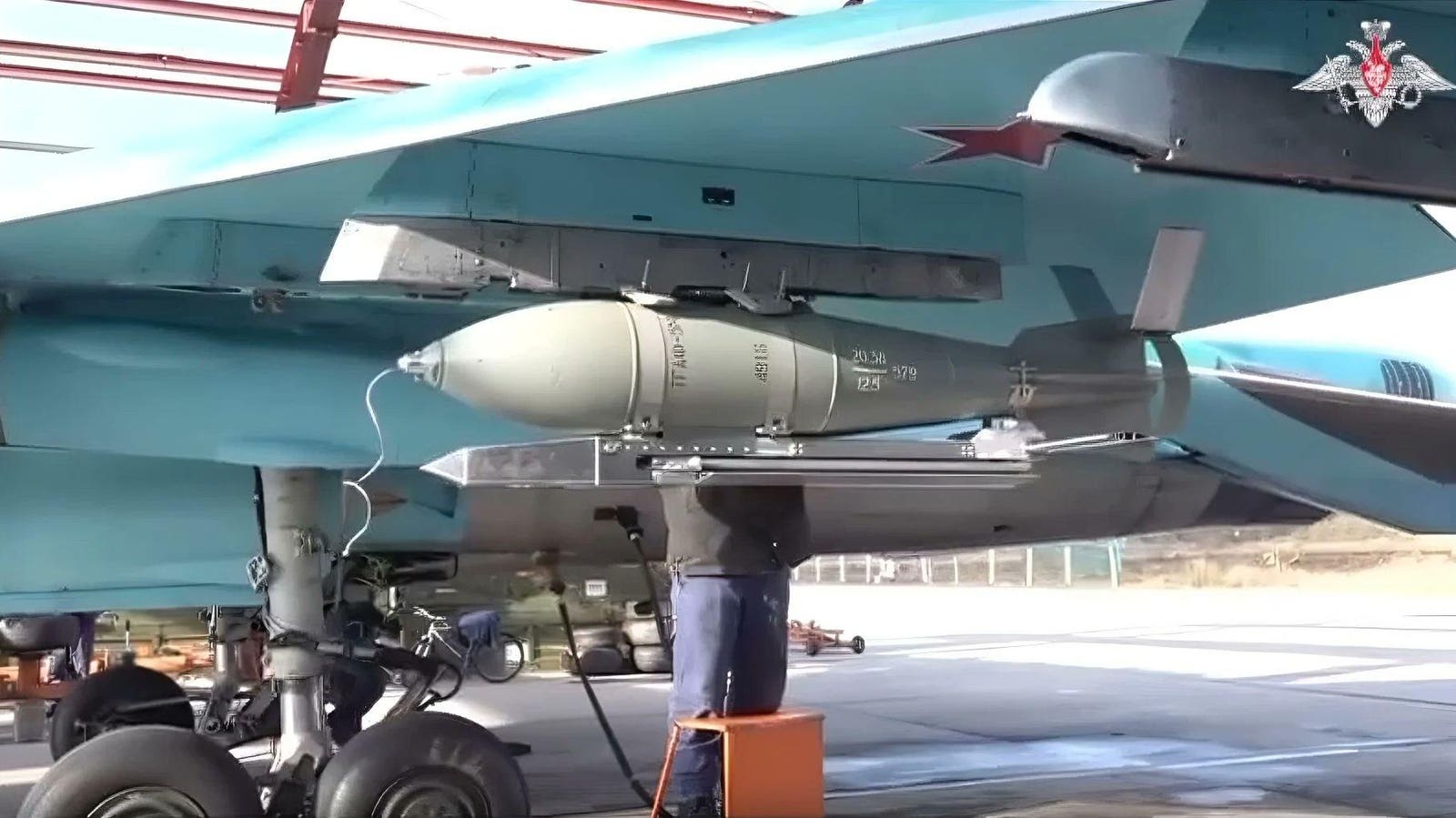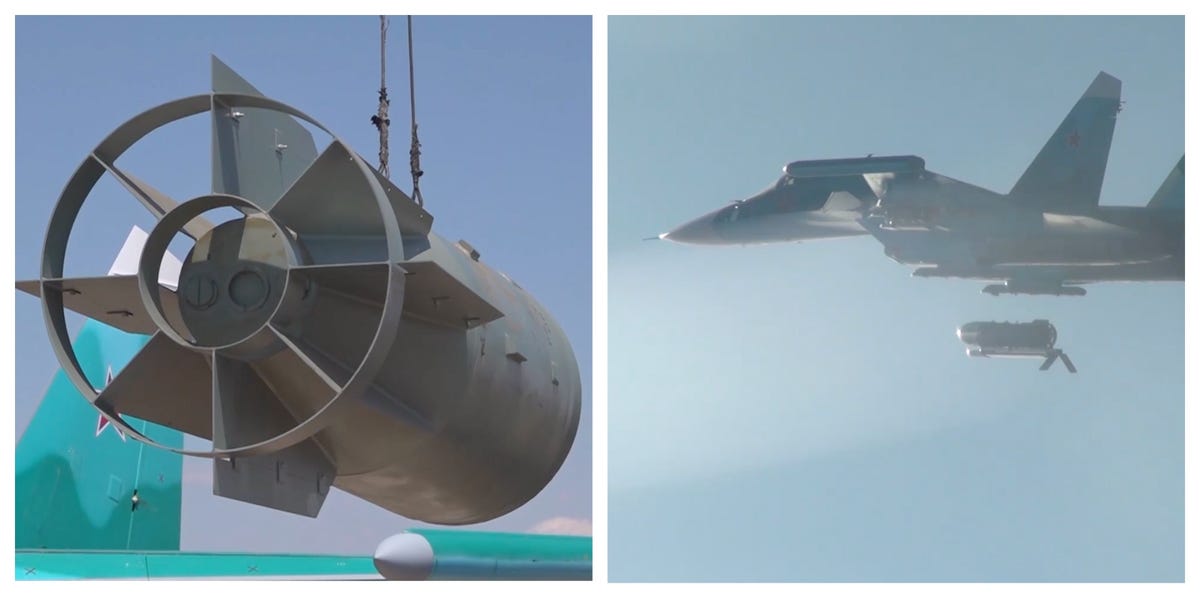
Russia's defense ministry released a video showing an Su-34 jet dropping a 3.3-ton FAB-3000 glide bomb on a Ukrainian military position, highlighting the bomb's devastating impact. These upgraded older munitions allow Russian aircraft to launch from a distance, making them difficult for Ukraine to intercept. Ukraine's limited air defense systems and restrictions on using long-range equipment to target Russian airfields further complicate their defense efforts.
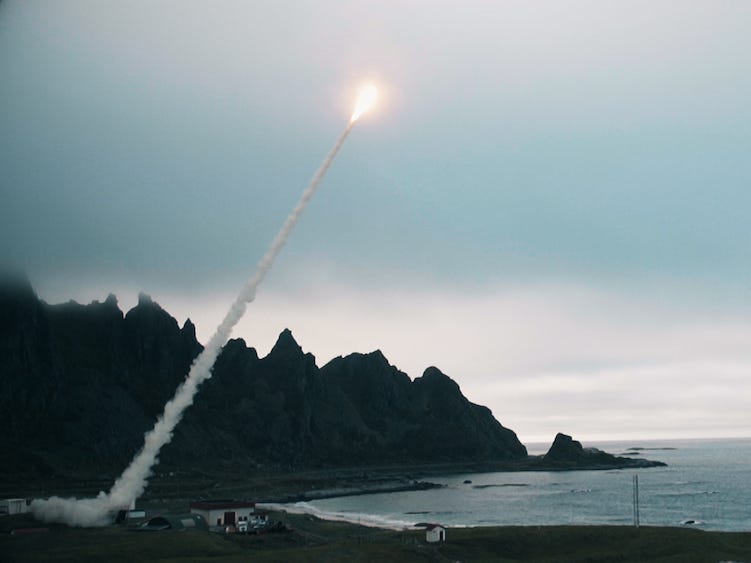
Ukraine's US-supplied glide bombs are being thwarted by advanced Russian electronic jamming, causing many to miss their targets. Despite the bombs' touted precision and long range, Russian electronic warfare has significantly reduced their effectiveness, highlighting a critical challenge in Ukraine's use of US-provided munitions.
Ukraine's US-supplied glide bombs are missing targets due to sophisticated Russian electronic jamming, which disrupts their GPS navigation systems. Despite being marketed for their high precision and jamming resistance, the bombs' effectiveness has been significantly reduced. This issue highlights Russia's advanced electronic-warfare capabilities, which have also impacted other precision weapons used by Ukraine.
Kremlin forces have made significant ground gains near Avdiivka, Ukraine, using heavy air strikes and long-range glide bombs, despite Ukrainian defenses holding strong. The Russian military has intensified attacks in the Avdiivka sector, with reports of ground assaults following heavy air and artillery strikes. Ukrainian forces lack sufficient air defense systems due to a halt in American military aid, allowing Russian bombers to launch glide bombs with impunity. Ukrainian President Zelensky stated that the only way to counter the Russian glide bombs is to increase the range of their air defenses. The situation remains tense, with reports of Russian air strikes in multiple sectors and weakening Ukrainian air defenses.
Ukraine launched a large-scale drone attack on a Russian airfield, targeting fighter-bombers capable of dropping devastating glide bombs, claiming to have destroyed six fighter bombers and significantly damaged eight others. Russia, however, disputed the extent of the damage. The success of the offensive counter-air operation remains unclear, as satellite imagery showed little visible damage to the base and aircraft. Ukraine's targeting of Russian aircraft capable of using glide bombs is significant, as these weapons have been used to devastating effect by Russia in recent months. Ukraine's air defense network is stretched thin, and President Zelenskyy has emphasized the urgent need for more air-defense systems to defend against Russian attacks.
Russia has been using a new type of "glide bomb" to target civilian areas in Ukraine, with the latest strike hitting the city of Kharkiv. These bombs, adapted from heavy "dumb" munitions to behave like cruise missiles, have caused civilian casualties and significant damage. The use of these bombs reflects a shift in Russia's tactical approach, enabling them to strike targets from a distance and evade advanced air defense systems. The production of these glide bombs has reportedly increased, posing a significant threat to Ukrainian defenses, with efforts to counter them still underway.
Russia has significantly increased its air power effectiveness in the Ukraine war by using Soviet-era glide bombs fitted with wings and guidance systems, contributing to recent battlefield successes such as the capture of Avdiivka. These bombs have added destructive firepower to Russia’s campaign, posing a significant challenge for Ukrainian forces. The most effective counter, according to Ukrainians, would be the acquisition of U.S.-made F-16 fighter planes. Despite claims of downing Russian aircraft, the use of glide bombs continues to pose a threat, with Russian forces increasing their use in the Kharkiv region.
Experts suggest that Russia's strategy of keeping its aircraft at a distance and using glide bombs to protect them may be giving Ukraine more time to shoot them down. By launching glide bombs from higher altitudes, Russian jets are exposed to longer-range Ukrainian air defense systems, making them more vulnerable. While Ukraine's recent success in shooting down Russian jets is unlikely to change the course of the war, it has hindered Russia's air operations. However, Ukraine's missile stocks are running low, posing a serious threat to its ability to continue repelling Russian aircraft.
Russian air force's successful use of satellite-guided glide-bombs in the assault on Avdiivka signals a potential shift in tactics along the Ukrainian front line, despite previous limitations due to effective Ukrainian air defenses. The devastating bombardment forced the Ukrainian 110th Mechanized Brigade to retreat, highlighting the impact of the new Russian tactic. However, the Ukrainian military's possession of U.S.-made Patriot missiles presents a potential defense against the glide-bombs, although their supply is dwindling due to political obstacles. The arrival of new F-16 fighters may offer additional defense, but the situation remains precarious as more Ukrainian cities could face similar bombardments without adequate defense.
Ukrainian marines have established a bridgehead across the Dnipro River in Kherson Oblast, prompting Russian forces to resort to massive aerial firepower in an attempt to dislodge them. The Russian air force has been using long-range precision glide-bombs to target the Ukrainian forces, causing significant damage to the area. Ukrainian troops fear these bombs, which have been described as one of their biggest fears. The Ukrainian air force is working to protect the bridgehead, but reinforcements are needed to ensure the marines' success.
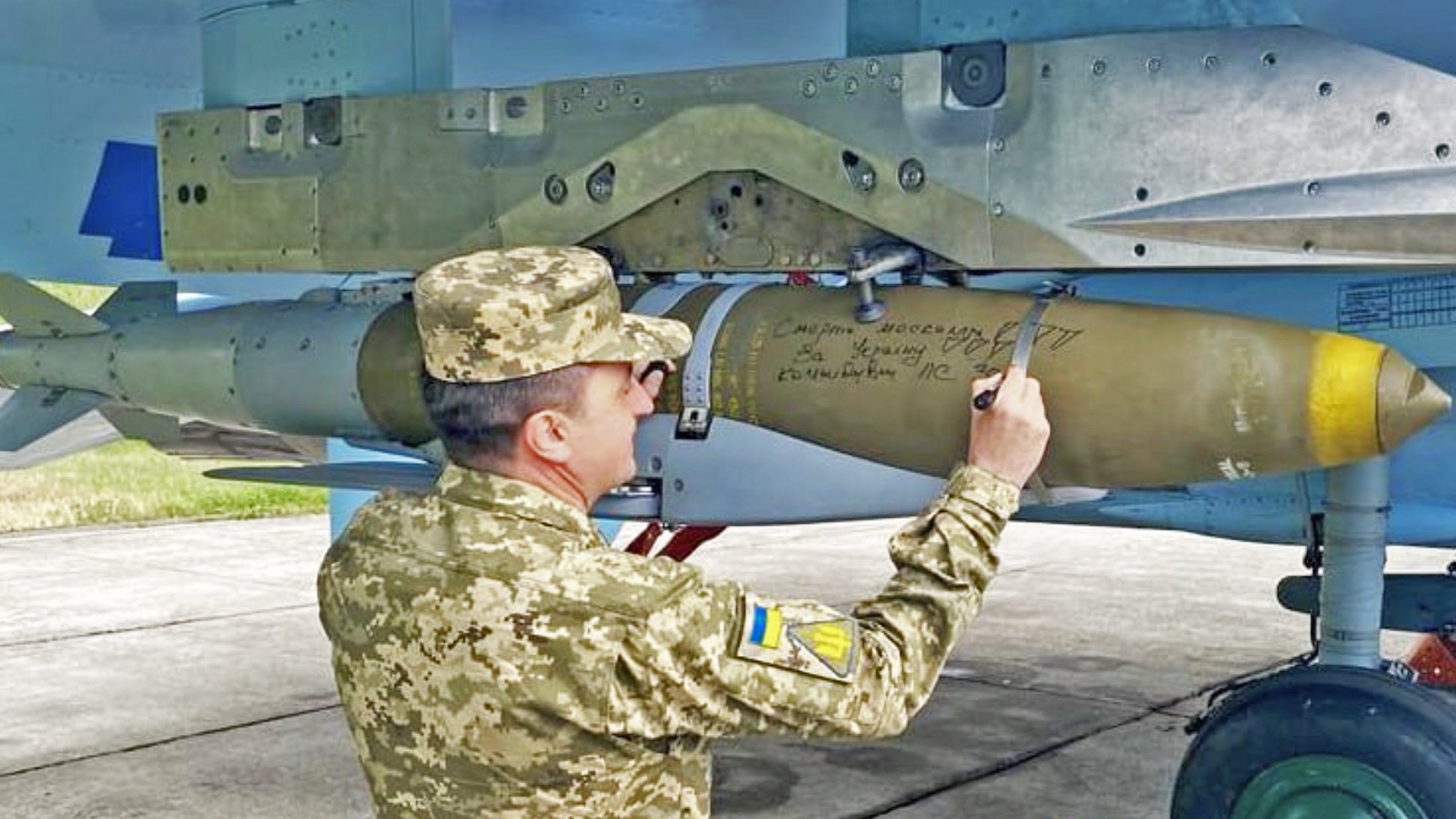
Ukraine's Su-27 Flanker fighters have been spotted carrying JDAM-ER GPS-guided glide bombs, in addition to the previously seen MiG-29 Fulcrums. The unique pylon construction on the Su-27 suggests that it was specifically developed to accommodate these weapons. The JDAM-ER is a kit applied to conventional bombs, providing them with inertial and GPS guidance and pop-out wings for increased range. The use of Su-27s offers advantages in terms of performance, range, and the ability to carry multiple weapons. The deployment of JDAM-ERs by Ukraine indicates a shift towards precision-guided munitions and a potential future integration with F-16 jets.