June has three birthstones: alexandrite, pearl, and moonstone. Alexandrite changes color based on light, pearls are formed by mollusks and symbolize purity, and moonstone has a unique glow and is associated with love and good luck.
Gem expert estimates that Taylor Swift's new ring, featuring an oversized white opal stone and smaller blue topazes, could cost over $175,000. The ring holds sentimental meaning as it includes opal, Travis Kelce's birthstone, and blue topaz, Taylor Swift's birthstone. Opals symbolize hope and purity, while blue topaz is said to channel inner wisdom. Taylor Swift has previously expressed her love for opals, making the ring even more special. Although it is unclear if Kelce gave her the ring, his wife's social media activity suggests he did. The couple recently celebrated Swift's birthday and she has moved into Kelce's Kansas City mansion, sparking speculation of a possible proposal.
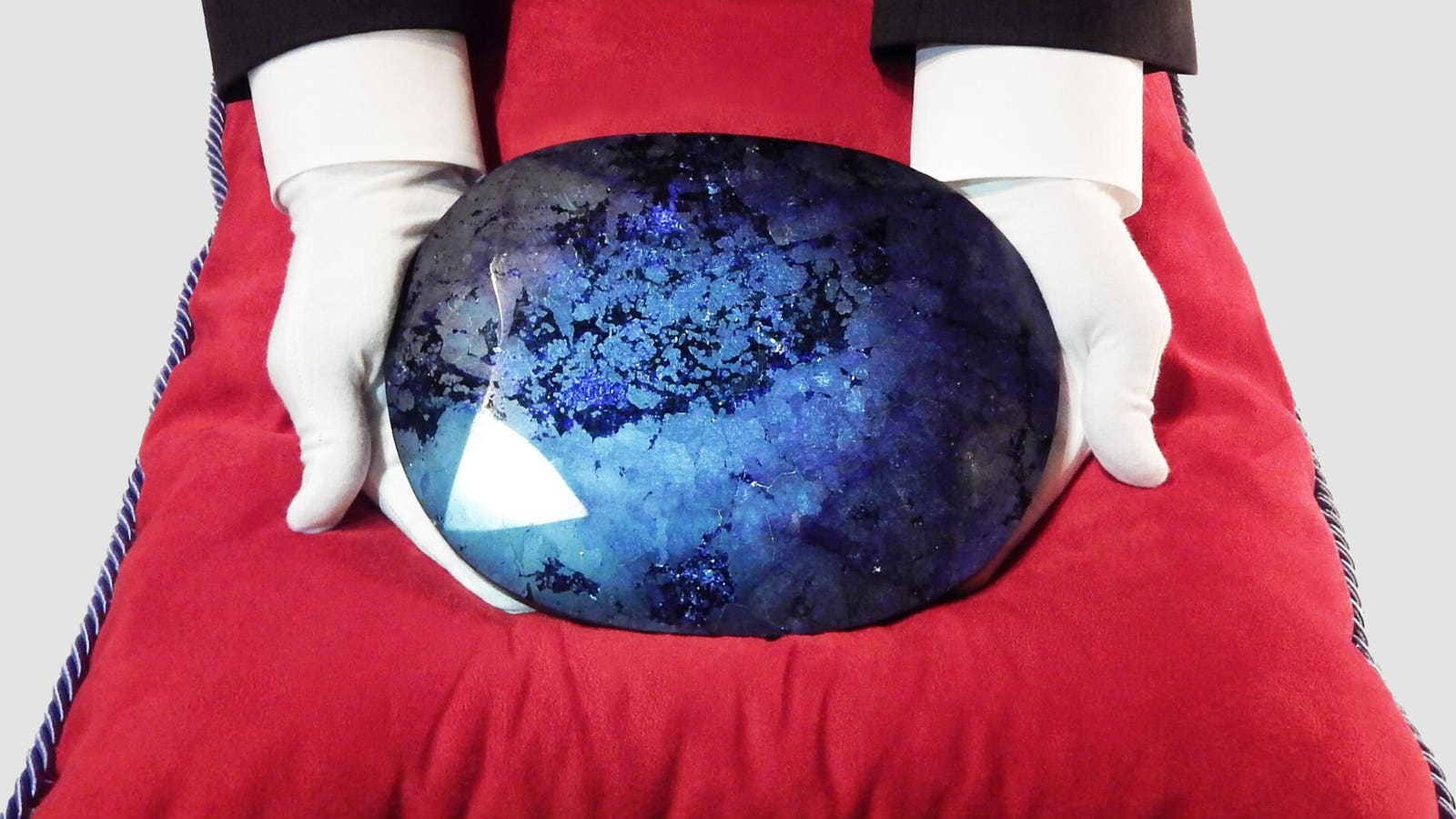
The Ophir Collection, a trove of 43 precious gems appraised at $3.2 billion, has become the center of a years-long battle over ownership. The collection, which includes unique and rare gemstones, has sparked confusion over its true value, with experts questioning the validity of the $3.2 billion appraisal. The collection's owner, Dion Tulk, a gem hunter and pop singer, has faced disputes from individuals claiming ownership, including Ohio businessman Brett Regal and financier Jeffrey Hackman. The collection has been used as collateral in various deals, leading to legal battles and court rulings. The latest attempt to sell the collection involved a healthcare company, Novo Integrated Sciences, proposing a convoluted deal involving non-fungible tokens (NFTs). However, talks with Novo have reportedly stalled, leaving the future of the Ophir Collection uncertain.
Moissanite, a gemstone discovered in a meteor crater, outshines diamonds with its exceptional brilliance and rainbow-like sparkle. Its unique composition of silicon carbide makes it nearly as tough as diamond, but at a fraction of the cost. Moissanite's superior fire and dispersion value, along with its ethical and environmental advantages, make it an attractive alternative to traditional diamonds in the world of jewelry.
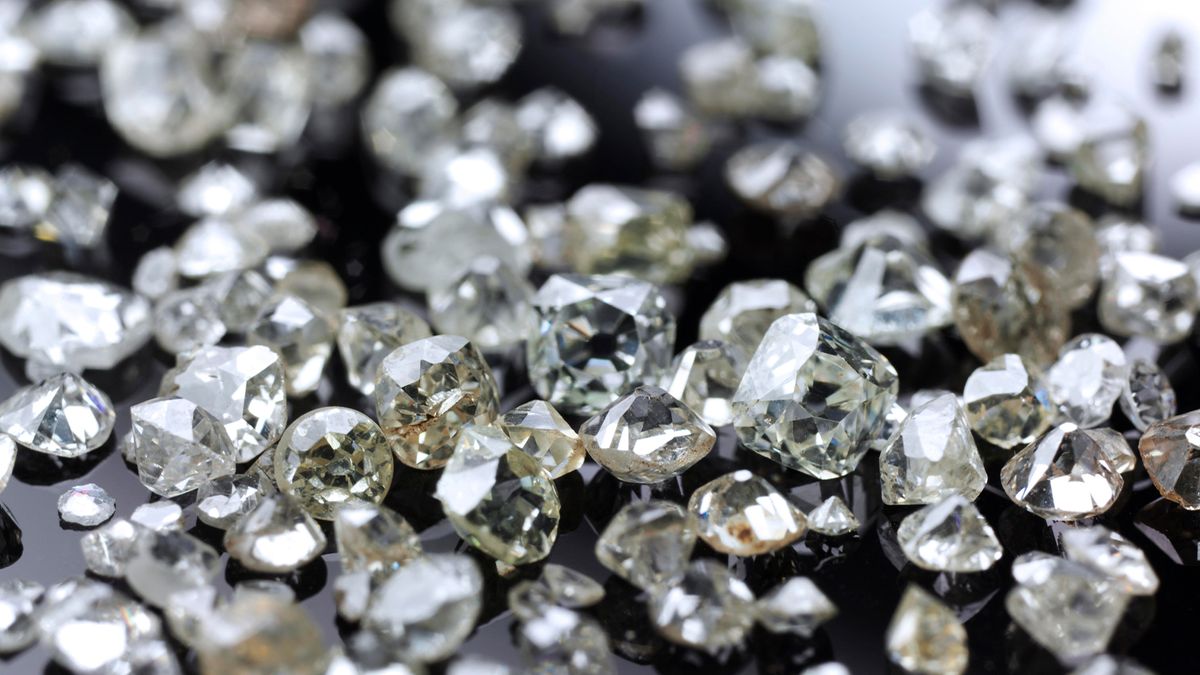
Diamonds are the deepest-occurring gemstones on Earth, forming in the upper mantle at depths between 93 and 186 miles (150 to 300 km) under extreme pressures. Peridot, the gem form of olivine, was once a contender for the title but has been surpassed by superdeep diamonds found at depths of 410 miles (660 km) and 466 miles (750 km). Diamonds are brought to the surface by volatile kimberlite magma, and their scientific importance lies in providing valuable insights into the Earth's interior and processes, including tectonic activity, the carbon cycle, water distribution, and the discovery of new minerals.
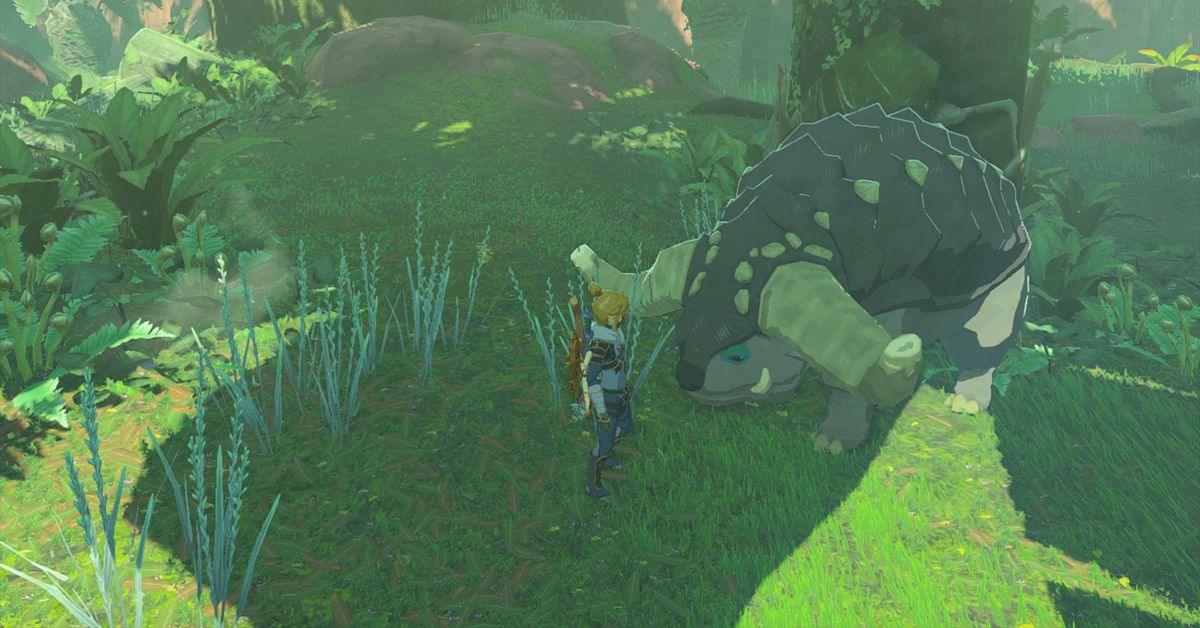
Dondons are elephant-like beasts found in southern Akkala in The Legend of Zelda: Tears of the Kingdom. They can give you gemstones like diamonds, rubies, and sapphires if you feed them luminous stones. However, you can't ride them. To feed them, place a luminous stone in front of the dondon, wait for it to eat it, leave the area, and come back after 10 minutes to collect your loot.
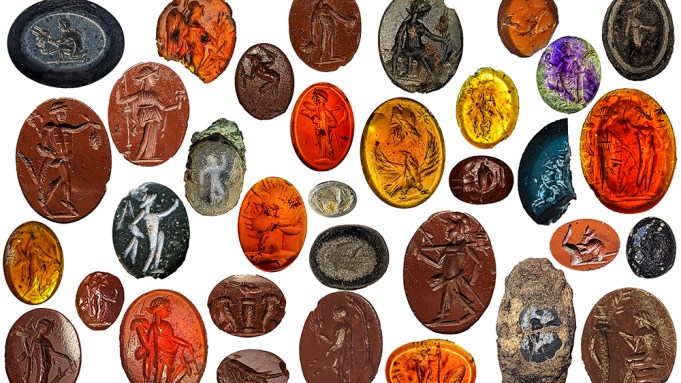
Archaeologists in Britain discovered 36 engraved semiprecious stones from the third century at the site of an ancient Roman bathhouse beneath the Carlisle Cricket Club. The gems, made of materials like amethyst, carnelian, and jasper, likely fell out of wealthy people’s rings after they entered the baths. The water may have loosened the adhesives used in the rings, causing the stones to fall off and sink to the bottom of the baths. Along with the gems, archaeologists found more than 700 items at the Carlisle site, including pottery, clay figures, and more than 100 hairpins.
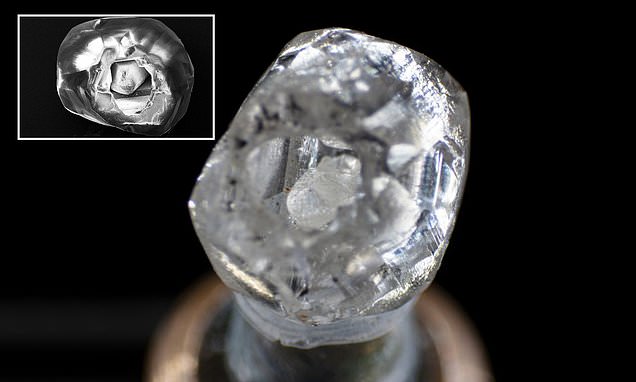
A diamond manufacturer in India's Surat has unearthed a unique 0.329-carat diamond named 'Beating Heart', which consists of a piece of diamond with a smaller freely-moving piece trapped inside. The Gem & Jewellery Export Promotion Council confirmed the authenticity of the stone via further analysis, using optical and electron microscopes. The 'Beating Heart' joins a little group of similar natural diamonds such as the Matryoshka diamond from Siberia, which was first recorded in 2019.
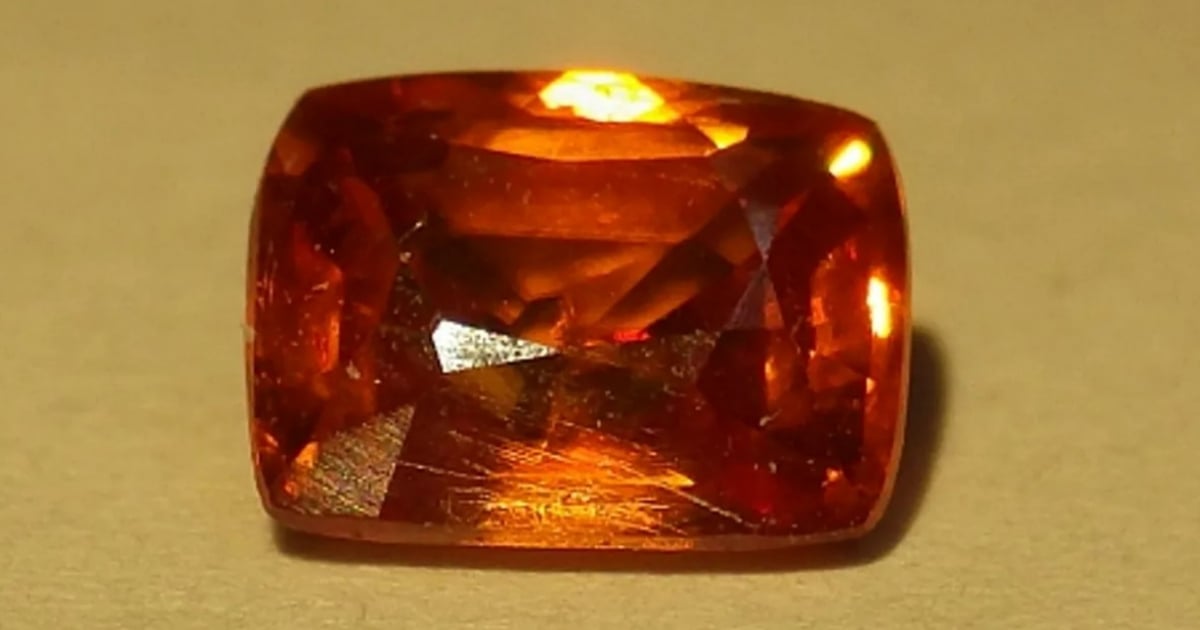
Kyawthuite is the rarest mineral on Earth, known from only one sample found in Myanmar. Its chemical formula is Bi3+Sb5+O4, with traces of tantalum. The transparent reddish-orange stone is composed of checkerboard sheets of octahedra Sb5+O6 parallel to Bi3+ atoms. It is named after Dr. Kyaw Thu, a former geologist at Yangon University. A synthetic replica of kyawthuite exists, so there's no need to steal the only sample on Earth from its home at the Natural History Museum of Los Angeles County.
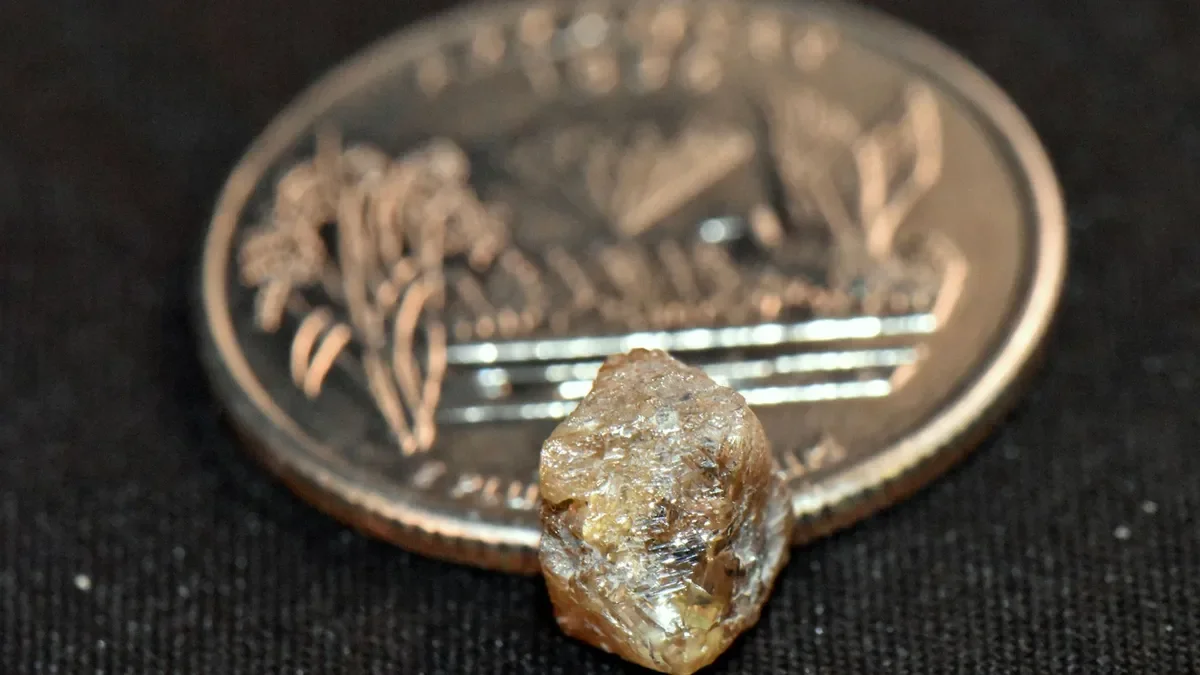
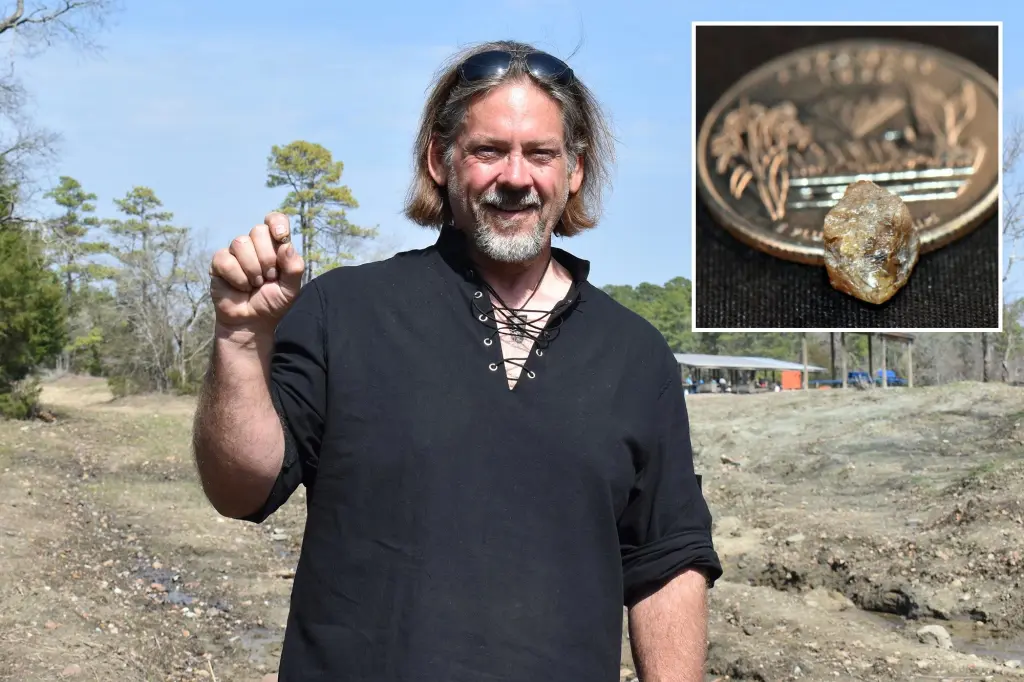
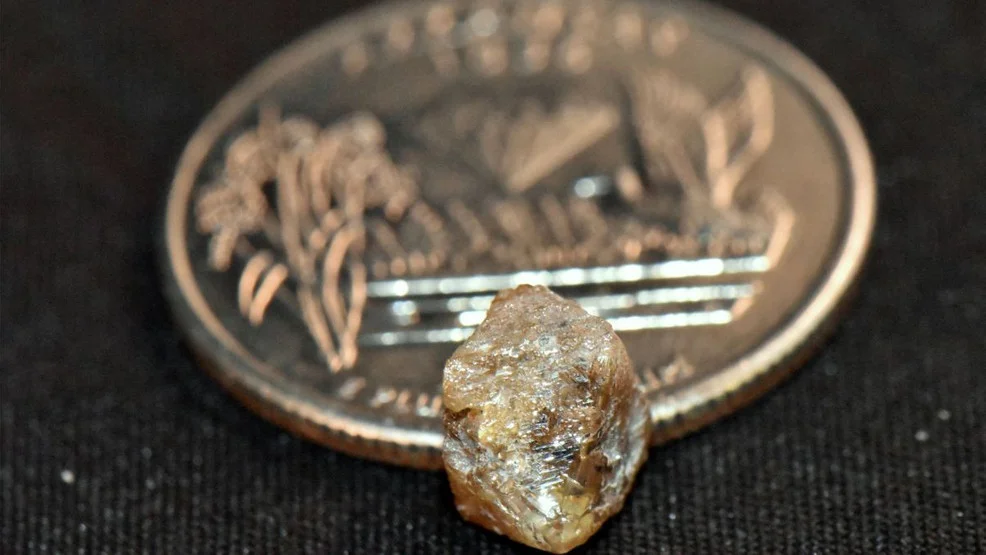
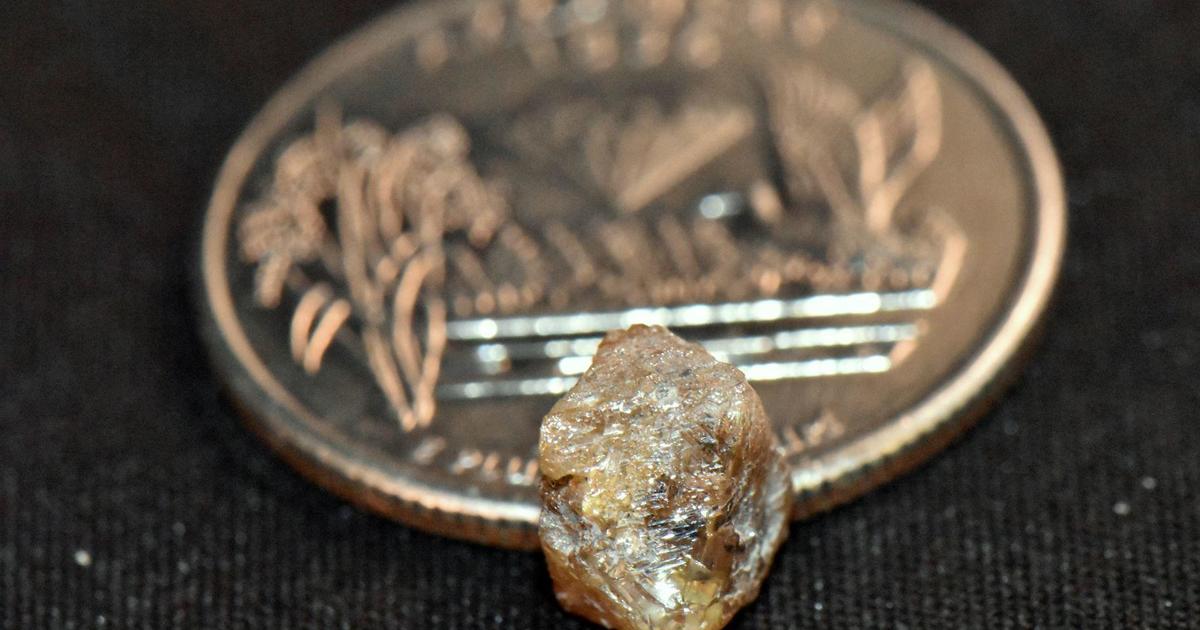
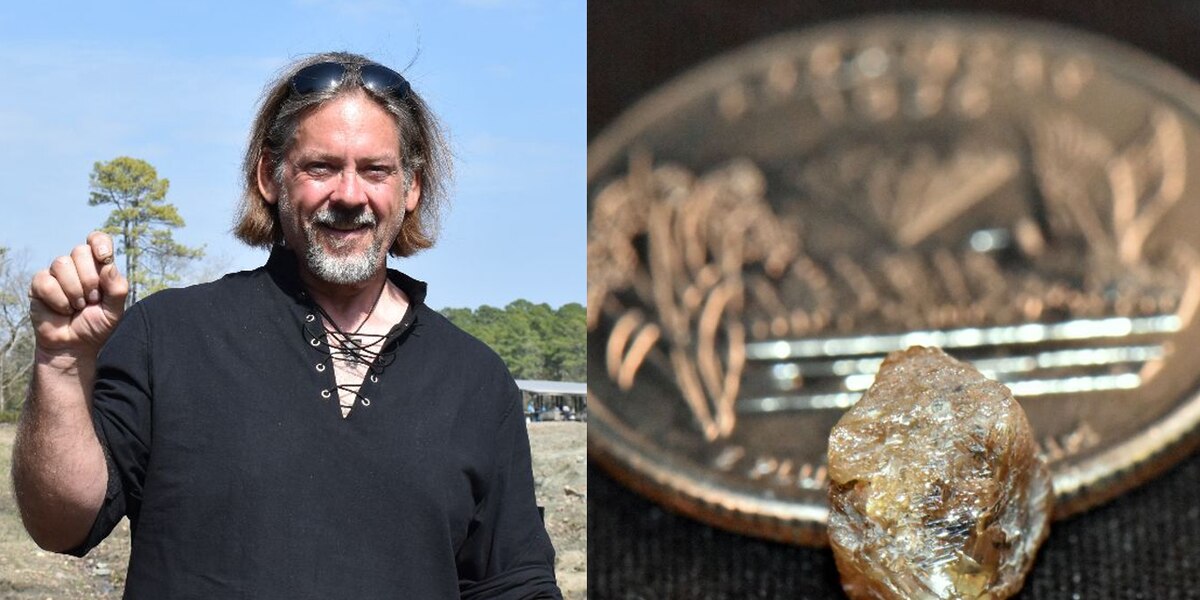
A man named David Anderson discovered a 3.29-carat brown diamond at Arkansas' Crater of Diamonds State Park, the largest diamond found at the park since September 2021. Anderson, a regular visitor to the park since 2007, has found over 400 diamonds in the last 16 years, with 15 weighing over one carat. He named the diamond B.U.D. and intends to sell it. The Crater of Diamonds is one of the only places in the world where the public can search for diamonds and keep or sell the ones they find.
An Arkansas man, David Anderson, found a 3.29-carat brown diamond at the Crater of Diamonds State Park, the largest diamond found at the park this year. Anderson has found over 400 diamonds at the park since 2007. He named the diamond B.U.D. and initially thought it was quartz until he inspected it closer. Over 75,000 diamonds have been found at the park since 1906, with the largest one weighing 40.23 carats.
A man visiting Crater of the Diamonds State Park in Arkansas discovered a 3.29 carat brown diamond while sifting through soil, making it the largest diamond found in the park since September 2021. The man, who had been visiting the park since 2007, named the gem "B.U.D." and plans to sell it.
A 3.29-carat diamond has been discovered at the Crater of Diamonds State Park in Arkansas, making it the largest diamond found at the park since 2021. The park is known for being the only diamond-producing site in the world that is open to the public, and visitors are allowed to keep any diamonds they find.
David Anderson, a regular visitor to the Crater of Diamonds State Park in Arkansas, found a 3.29-carat brown diamond on March 4 while searching through soil in the park's diamond search area. Anderson has found more than 400 diamonds since 2007, including a 3.83-carat yellow diamond in 2011 and a 6.19-carat white gem in 2014. The park has yielded over 75,000 diamonds since its discovery in 1906, with an average of one to two diamonds found by visitors each day.
A regular visitor at Arkansas’s Crater of Diamonds State Park recently discovered a 3.29-carat brown diamond, the largest diamond found at the park since September 2021. David Anderson, who has found more than 400 diamonds over the past 16 years, named the diamond "BUD" and plans to sell it. The park has registered 124 diamonds so far this year, with one to two diamonds found on average by visitors daily.