The House is set to vote on a Senate-passed bill to end the longest government shutdown in U.S. history, which includes funding through January 2026 and provisions for various programs. The Senate approved the deal with bipartisan support, and President Trump has indicated he will sign it. The House's vote marks the end of a 54-day shutdown, with ongoing political debates over healthcare and other issues.
Senate Republicans are considering extending government funding through December 2026 to end the ongoing shutdown, with divisions within the party over the length of the extension, amid broader budget debates and political implications.
The US government is on the brink of a shutdown as Congress remains deadlocked over healthcare spending and funding extensions, with a Senate vote expected on proposals to prevent it.
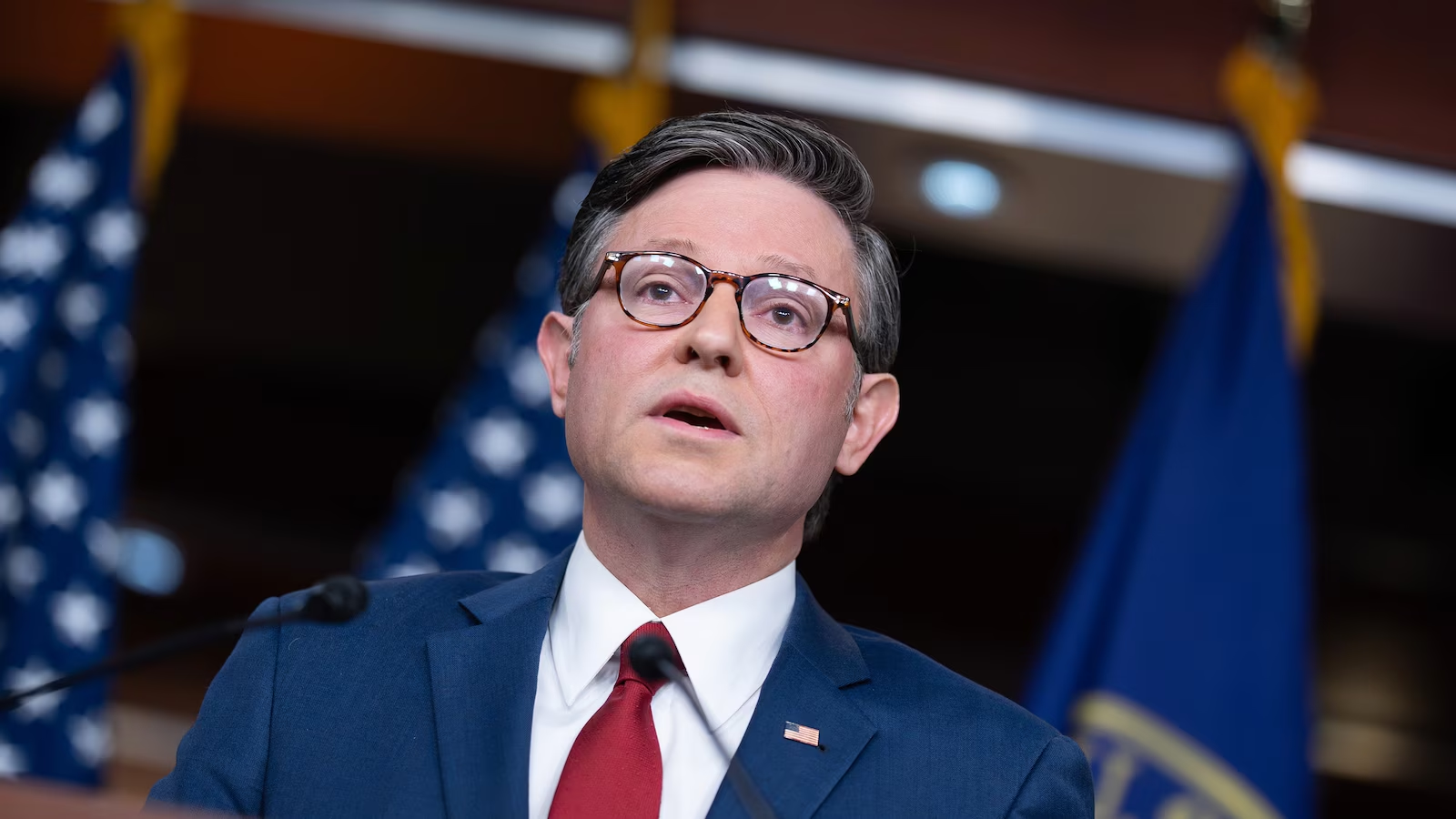
President Biden signed a short-term funding extension, preventing a government shutdown, but setting up new funding deadlines in March. Lawmakers face the challenge of passing full-year spending bills before the new deadlines, with both parties vying for their policy priorities. The Senate and House passed the extension, but House Speaker Mike Johnson has faced pushback from conservatives over the spending deal and extension proposal.
Congress is set to pass a short-term funding extension to avert a government shutdown before the Friday deadline, with the Senate and House expected to approve the measure. This extension will set up new funding deadlines in March, providing more time for full-year appropriations bills to be negotiated and passed. Additionally, Senate negotiators are working on a deal for border security that could unlock aid to Ukraine and Israel, but its fate in the House remains uncertain as some Republicans are skeptical of the potential compromise.
Senate Republicans are seeking another extension of current government funding levels, likely into March, to avoid a shutdown and negotiate spending bills. Lawmakers are racing to meet deadlines on Jan. 19 and Feb. 2 to keep the government open, but negotiations on spending caps and critical legislation remain unresolved. The proposal is likely to put Senate Republicans at odds with their House colleagues, and tensions within the GOP are rising over funding agreements and potential extensions.
House Speaker Mike Johnson's proposal to fund the government is facing pushback from conservative lawmakers who oppose a massive spending package, setting up a potential showdown within the House Republican conference ahead of a potential government shutdown. Johnson's two-step extension of current funding levels has drawn criticism from hard-right GOP members who argue that it fails to address fiscal irresponsibility. However, Johnson must also gain support from Democrats, who refuse to support an extension that includes conservative policy priorities. While the White House and Democrats haven't ruled out the proposal, it is unclear how much Democratic support Johnson will need. The continuing resolution must pass before the Friday deadline to avoid a government shutdown, which would impact essential services and delay benefits and services such as air travel, food assistance, and passport and visa services.
Congress narrowly avoided a government shutdown by extending funding through Nov. 17, providing temporary relief for millions of Americans who rely on government benefits. House Speaker Kevin McCarthy faced criticism from hardline conservatives, including Rep. Matt Gaetz, who threatened to challenge McCarthy's leadership. House Democrats claimed victory for avoiding a shutdown but didn't get everything they wanted, as additional U.S. aid to Ukraine was left out of the funding extension. The lack of aid reflects wavering support for the war effort.