Tag

Frame Generation

All articles tagged with #frame generation

NVIDIA Unveils DLSS 4.5 Enhancements and Software Updates at CES 2026

Originally Published 4 days ago — by TechPowerUp

Featured image for NVIDIA Unveils DLSS 4.5 Enhancements and Software Updates at CES 2026
Source: TechPowerUp

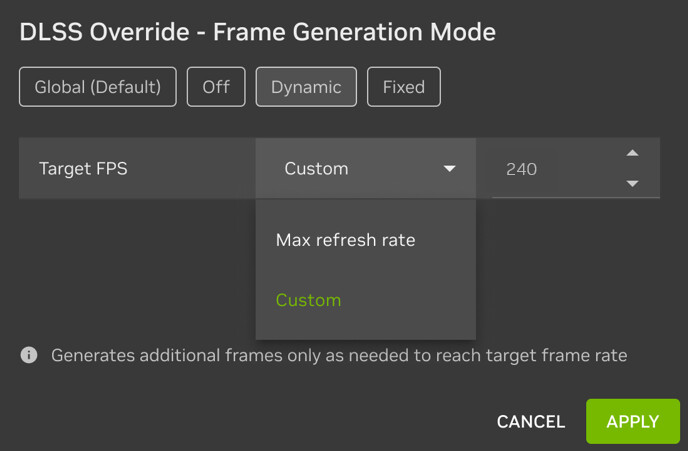
NVIDIA clarified that Dynamic Multi Frame Generation is exclusive to the RTX 50-series, and detailed how the 240 FPS mode and Frame Generation work independently of DLSS Super Resolution, with user-controlled settings for target FPS and no requirement for 2nd Gen Transformer models for 6x Frame Generation.

NVIDIA Unveils DLSS 4.5 with Enhanced Image Quality and Advanced Features at CES 2026

Originally Published 5 days ago — by TechPowerUp

Featured image for NVIDIA Unveils DLSS 4.5 with Enhanced Image Quality and Advanced Features at CES 2026
Source: TechPowerUp

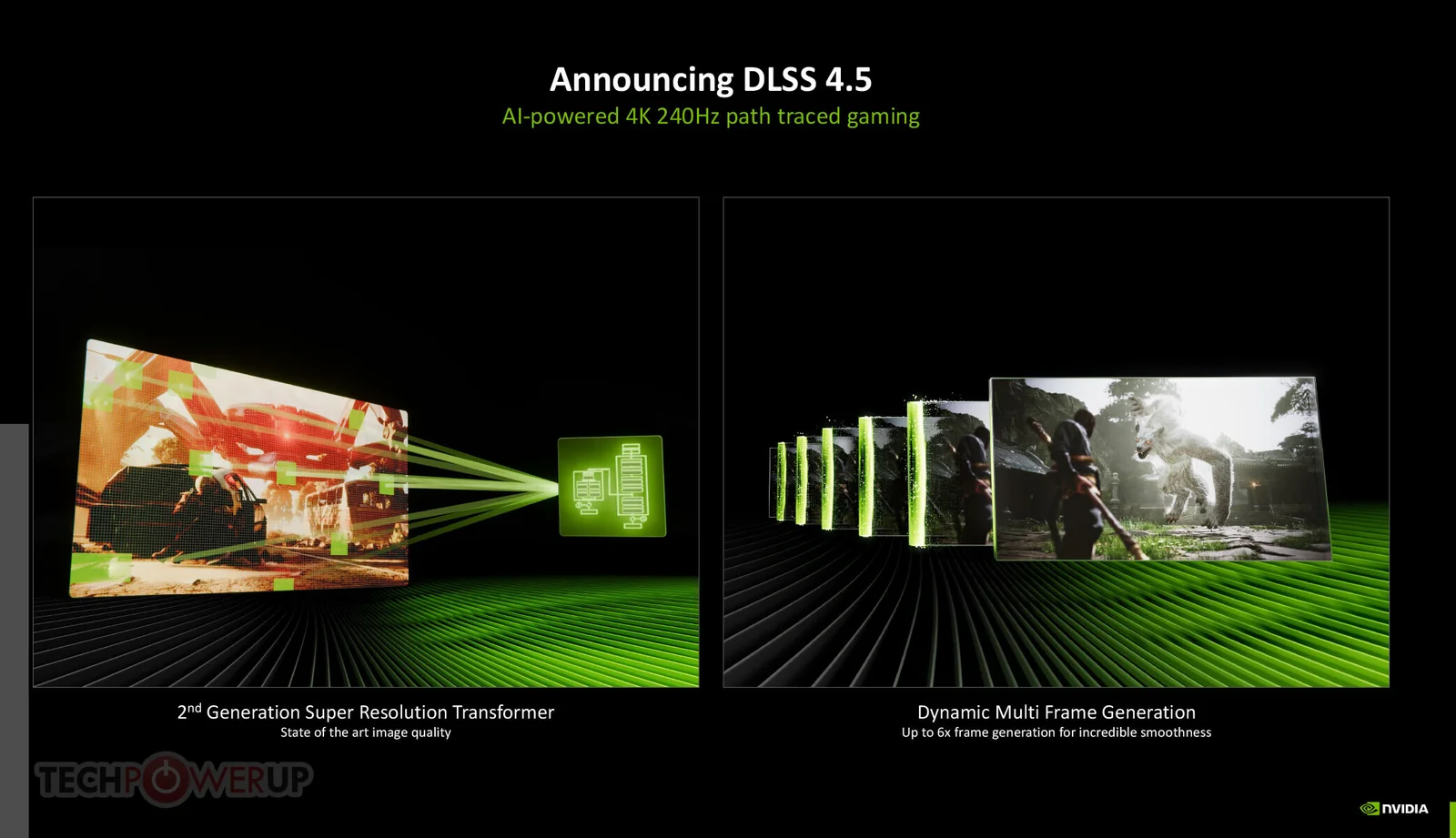
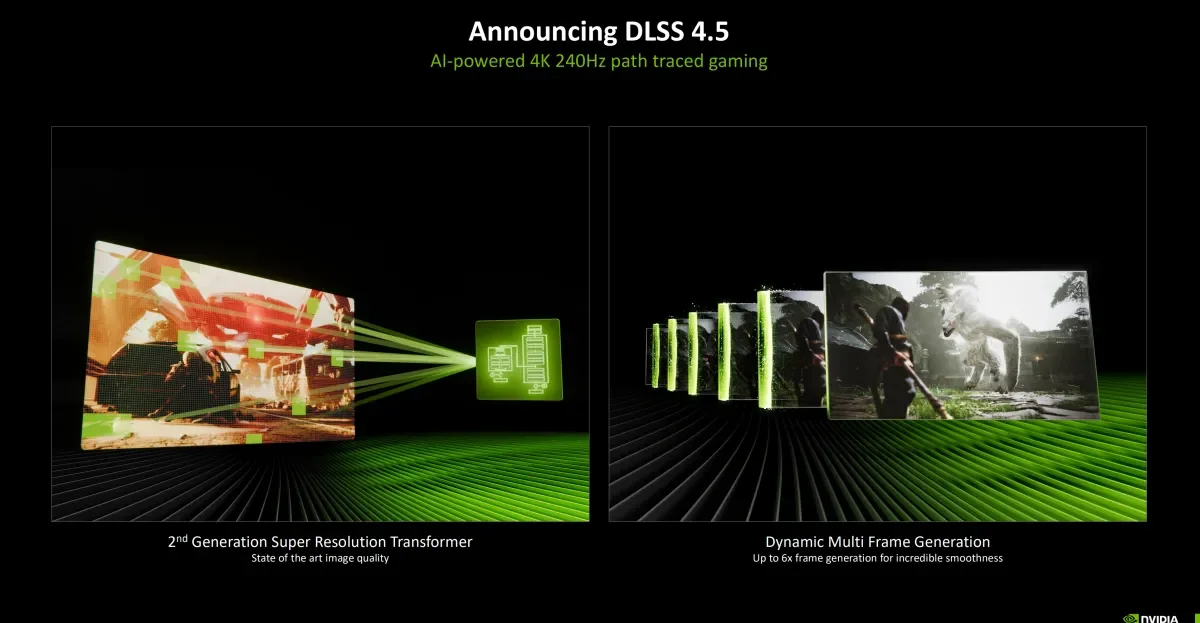
NVIDIA announced DLSS 4.5 at CES 2026, featuring a new Transformer-based upscaler for improved image quality and reduced ghosting, along with enhanced multi-frame generation capabilities that can achieve up to 6x performance uplift, bringing high-resolution, high-refresh-rate gaming closer to mainstream gamers.

Metal Gear Solid Delta: Snake Eater Enhances Graphics and Addresses Bugs

Originally Published 4 months ago — by DSOGaming

Featured image for Metal Gear Solid Delta: Snake Eater Enhances Graphics and Addresses Bugs
Source: DSOGaming

The article explains how to enable advanced graphics features like Hardware Lumen Ray Tracing, Ray Reconstruction, and Frame Generation in Metal Gear Solid Delta: Snake Eater through editing configuration files, enhancing visual quality at the cost of performance, and highlights the need for high-end GPUs and potential future in-game support.

NVIDIA Launches Smooth Motion Frame Generation for RTX 40 Series, Doubling FPS

Originally Published 6 months ago — by Wccftech

Featured image for NVIDIA Launches Smooth Motion Frame Generation for RTX 40 Series, Doubling FPS
Source: Wccftech

NVIDIA has introduced its 'Smooth Motion' technology in the latest preview drivers for RTX 40 series GPUs, which doubles the perceived frame rate in games by generating additional frames at the software level, offering a significant FPS boost especially for older titles and CPU-limited scenarios, though it is still in testing and may have minor artifacts.

Steam's New Performance Overlay Enhances Gaming Insights and bragging rights

Originally Published 6 months ago — by Rock Paper Shotgun

Featured image for Steam's New Performance Overlay Enhances Gaming Insights and bragging rights
Source: Rock Paper Shotgun

Steam has upgraded its PC performance monitor to include detailed metrics like separate counts for real and generated frames, CPU core usage, and VRAM availability, providing gamers with more precise tools for diagnosing performance issues, although it currently has some bugs.

Steam's New Performance Monitor Clearly Shows Real FPS with Frame Generation

Originally Published 6 months ago — by The Verge

Featured image for Steam's New Performance Monitor Clearly Shows Real FPS with Frame Generation
Source: The Verge

Valve has introduced a new performance monitor in Steam that displays detailed frame rate data, including the impact of frame generation techniques like Nvidia's DLSS and AMD's FSR, helping gamers understand how their games are performing and feeling, especially on Windows with common GPU hardware.

"Reviving Older Nvidia Cards: DLSS 3/FSR 3 Mod Boosts Frame Generation"

Originally Published 1 year ago — by Eurogamer.net

Featured image for "Reviving Older Nvidia Cards: DLSS 3/FSR 3 Mod Boosts Frame Generation"
Source: Eurogamer.net

A mod called DLSSG to FSR3 allows Nvidia RTX 20 and 30 series card owners to use FSR 3 frame generation, previously exclusive to AMD GPUs, in place of DLSS 3. While it brings a significant frame-rate increase, there are issues such as handling of HUD elements and shadow reprojection. The mod also allows the use of any input imagery, not just FSR 2, and has potential for smoother gameplay. However, there are reports of erratic frame-times and other visual artifacts, making it a promising but imperfect alternative to DLSS 3.

"AMD Unveils Official Fluid Motion Frames: Up to 97% FPS Boost for All DX11/DX12 Games"

Originally Published 1 year ago — by The Verge

Featured image for "AMD Unveils Official Fluid Motion Frames: Up to 97% FPS Boost for All DX11/DX12 Games"
Source: The Verge

AMD introduces Fluid Motion Frames (AFMF) technology to boost frame rates by up to 97% in DirectX 11/12 games at 1080p resolution and up to 103% at 1440p with FidelityFX Super Resolution 2 enabled for its Radeon RX 6000, RX 7000, and 700M GPUs. This feature, similar to Nvidia's DLSS, may introduce additional latency and is not recommended for competitive shooters. AMD's latest GPU driver also includes support for Video Upscaling to improve web video image quality, and FSR 3, which adds frame generation technology to games where developers enable the support, and works on Nvidia GPUs as well.

AMD FSR 3: Taking on DLSS with Fluid Motion Frames

Originally Published 2 years ago — by Eurogamer.net

Featured image for AMD FSR 3: Taking on DLSS with Fluid Motion Frames
Source: Eurogamer.net

AMD has released FSR 3 frame generation, its answer to Nvidia's DLSS 3, with impressive image quality in terms of generated frames. However, there are some fundamental issues that AMD needs to address, including latency and frame-pacing problems, lack of VRR support, and judder artifacts. While FSR 3 shows promise, it still has a long way to go before it can match the performance and smoothness of DLSS 3.

"Controversial GPU Tactics Boost Laptop Performance, but Raise Ethical Concerns"

Originally Published 2 years ago — by Digital Trends

Featured image for "Controversial GPU Tactics Boost Laptop Performance, but Raise Ethical Concerns"
Source: Digital Trends

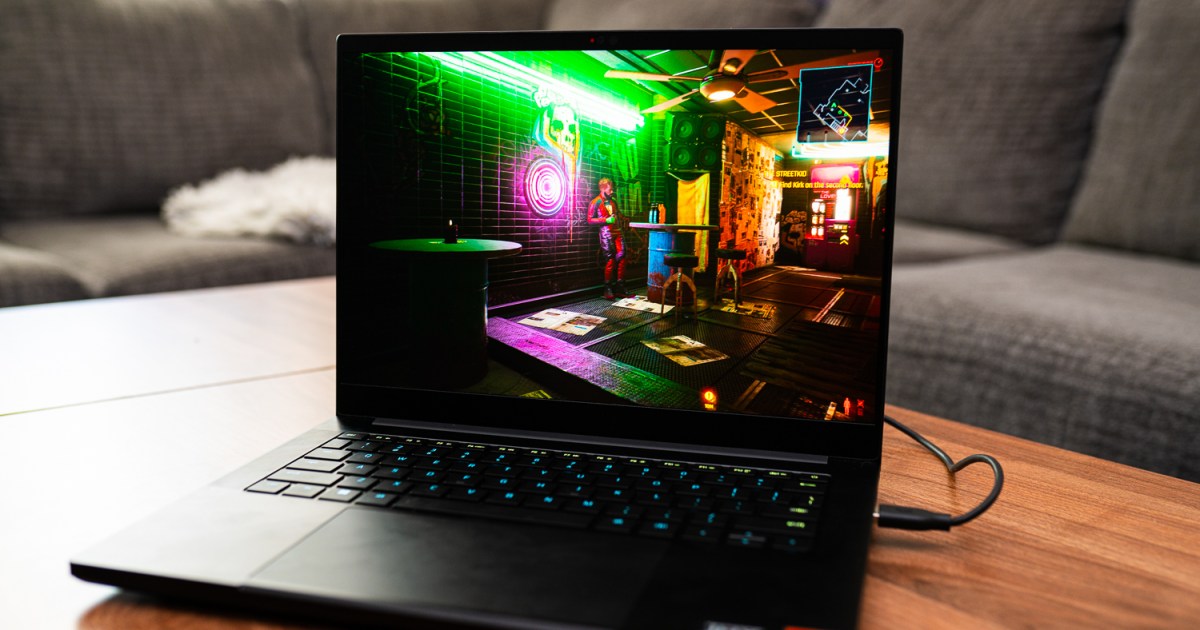
Nvidia's latest RTX 40-series mobile GPUs are utilizing Deep Learning Super Sampling (DLSS) technology, which allows weaker graphics cards to perform faster by upscaling and generating frames using AI. This technology, particularly DLSS Frame Generation, is a game changer for laptops, as it significantly enhances their gaming capabilities. Laptops with lower-end GPUs, such as the RTX 4050 or RTX 4060, can now offer playable frame rates in demanding games, making them more powerful for gaming purposes. While some may consider this "cheating," it ultimately benefits laptops that wouldn't typically be suitable for gaming.

AMD FSR 3: A Game-Changing Frame Generation Technology for All Gamers

Originally Published 2 years ago — by Wccftech

Featured image for AMD FSR 3: A Game-Changing Frame Generation Technology for All Gamers
Source: Wccftech

AMD is introducing two new technologies for gamers: FSR 3 and HYPR-RX. FSR 3, part of the FidelityFX Super Resolution ecosystem, includes Fluid Motion Frames technology for a significant boost in gaming performance. It offers different modes, including a Native Anti-Aliasing Quality mode. FSR 3 also brings improvements such as artifact-free UI processing, faster frame generation, and lower latency with Radeon Anti-Lag+. HYPR-RX, a software part of AMD's Adrenalin drivers, offers a one-switch toggle to boost performance in DX12 and DX11 games. It includes features like AMD Radeon Super Resolution and Fluid Motion Frames technology. Both technologies have shown impressive performance gains in demos and have received positive impressions from Gamescom attendees.

AMD's FSR 3 Brings Nvidia's Exclusive Feature to All Graphics Cards

Originally Published 2 years ago — by GameSpot

Featured image for AMD's FSR 3 Brings Nvidia's Exclusive Feature to All Graphics Cards
Source: GameSpot

AMD has unveiled FSR 3, the next-generation of FidelityFX Super Resolution, which includes its own version of frame generation similar to Nvidia's DLSS 3. Unlike Nvidia's method, AMD's software-based approach allows for frame generation without the need for specific hardware. However, FSR 3 is most effective when applied to games already running at around 60fps, as attempting to use frame generation on struggling games may introduce stutter and latency. FSR 3 also includes upscaling techniques and Native AA, and will be gradually rolled out with support from various game titles and developers.