Verizon experienced widespread service outages in Los Angeles County due to vandalism of fiber optic cables, which was caused by acts of theft and vandalism targeting infrastructure, impacting families, businesses, and safety.
Researchers used fiber optic cables with distributed acoustic sensing near Greenland's glaciers to monitor calving events and discovered that water stirring caused by ice drops may be increasing melting rates, revealing a potential feedback loop that accelerates ice loss and contributes to sea level rise.
The U.S. Transportation Secretary announced that new fiber optic cables are being installed between Long Island and Philadelphia to upgrade Newark Airport's radar system, which has experienced outages due to outdated copper cables, aiming to prevent future disruptions and improve air traffic control reliability.
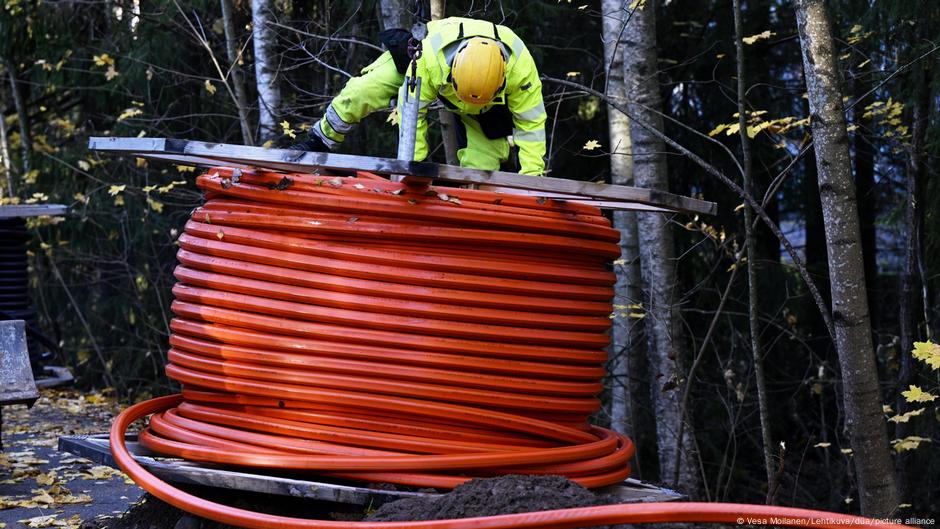
Finland's transport agency reported that fiber-optic cables connecting Finland and Sweden were accidentally cut during construction work, contradicting earlier suspicions of sabotage by Swedish authorities. The cables have since been repaired, and the incident affected around 6,000 households in Finland without impacting Swedish users. This event occurs amid heightened tensions in the Baltic Sea region following Russia's invasion of Ukraine.
Finnish authorities reported damage to fiber-optic cables connecting Finland and Sweden, affecting thousands of customers. Initially suspected as sabotage, Finnish police later found no criminal activity involved. This incident follows recent breaches of undersea cables in the Baltic Sea, which had raised suspicions of sabotage, particularly after a China-flagged vessel was sighted nearby. Both the recent and previous cable damages have been repaired, amidst ongoing geopolitical tensions in the region.
Fiber optic cables equipped with distributed acoustic sensing (DAS) technology have inadvertently picked up the loud sounds of cicadas, offering entomologists a new way to remotely monitor insect populations. DAS, which can track seismic activity, uses fiber optic cables to analyze light disturbances caused by vibrations. The researchers in Princeton noticed a distinct buzzing frequency in the DAS data, which they suspected was the sound of the emerging Brood X cicadas. By monitoring the volume of cicada noise, entomologists can estimate population sizes and study the effects of temperature on their mating behavior. This technology could complement other monitoring techniques and provide valuable data on insect populations, especially in remote areas.
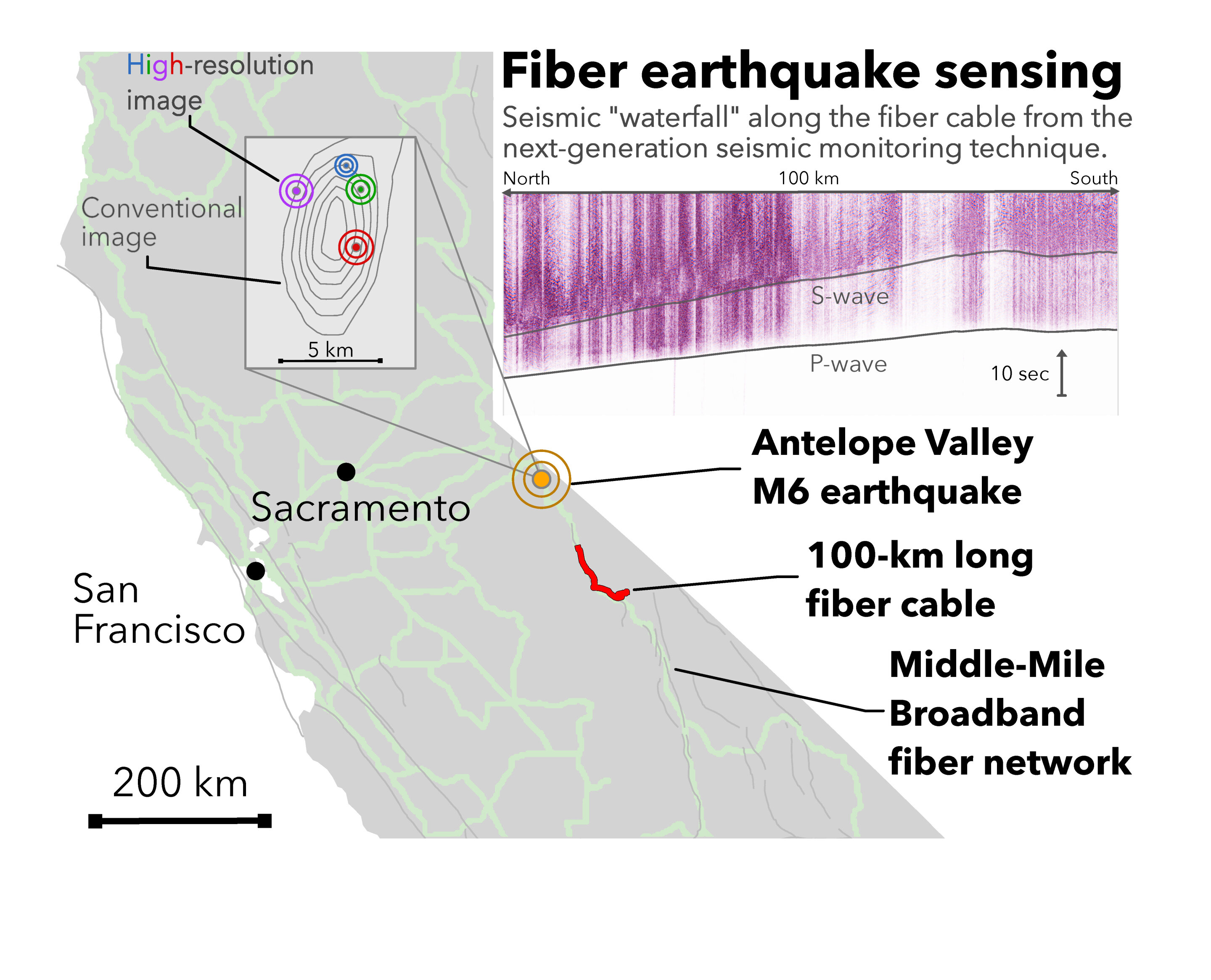
Fiber optic cables in California, originally used for internet connectivity, have been repurposed to detect and measure earthquakes. In a recent study, scientists used a section of fiber optic cable to precisely understand the mechanics of a magnitude 6 earthquake, identifying four individual "stuck" areas of the fault that led to the rupture. This method, called distributed acoustic sensing, could revolutionize earthquake studies and improve early-warning systems by creating a dense network of makeshift seismometers. Access to more fiber optic cables would enable better understanding of earthquake physics and provide advanced warning.
Two individuals from North Carolina have been charged with cutting over 2,000 fiber optic cables in Connecticut, resulting in over 40,000 homes and businesses losing internet service. The suspects were charged with larceny, criminal mischief, and interfering with police. The outages have since been restored.
Two individuals from North Carolina have been arrested and charged with cutting over 2,000 fiber optic cables in Connecticut, causing internet outages for over 40,000 homes and businesses. They have been charged with larceny, criminal mischief, and interfering with police. The suspects were identified and arrested during a surveillance operation, and have been detained on $200,000 bail. The outages have since been restored.
Two individuals from North Carolina have been charged with cutting over 2,000 fiber optic cables in Connecticut, resulting in over 40,000 homes and businesses losing internet service. The suspects were charged with larceny, criminal mischief, and interfering with police. The outages have since been restored, and the suspects are scheduled to appear in court on April 11.
Two individuals from North Carolina have been charged with cutting over 2,000 fiber optic cables in Connecticut, resulting in over 40,000 homes and businesses losing internet service. The suspects were charged with larceny, criminal mischief, and interfering with police. The outages have since been restored, and the suspects are scheduled to appear in court on April 11.
Two people from North Carolina have been charged with cutting over 2,000 fiber optic cables in Connecticut, causing an internet outage for over 40,000 homes and businesses. The suspects were arrested during a surveillance operation and charged with larceny, criminal mischief, and interfering with police. The outages have since been restored.
Two individuals from North Carolina have been charged with cutting over 2,000 fiber optic cables in Connecticut, resulting in over 40,000 homes and businesses losing internet service. The suspects were charged with larceny, criminal mischief, and interfering with police, with one also accused of giving a false statement. The outages have since been restored.
Two individuals from North Carolina have been charged with cutting over 2,000 fiber optic cables in Connecticut, resulting in over 40,000 homes and businesses losing internet service. The suspects were charged with larceny, criminal mischief, and interfering with police. The outages have since been restored.