Despite the Supreme Court ruling against President Biden's proposal to forgive student loan debt, student loan forgiveness is not entirely dead. The U.S. Education Department is exploring other legal avenues to cancel student debts, albeit on a smaller scale. Additionally, the Biden administration has introduced new repayment plans, such as the Saving on a Valuable Education (SAVE) program, which offers more generous terms and multiple windows for loan forgiveness. However, the implementation of these changes is hindered by budget cuts and a lack of funding, leading to challenges in assisting borrowers and implementing other initiatives, such as overhauling the Free Application for Federal Student Aid (FAFSA).
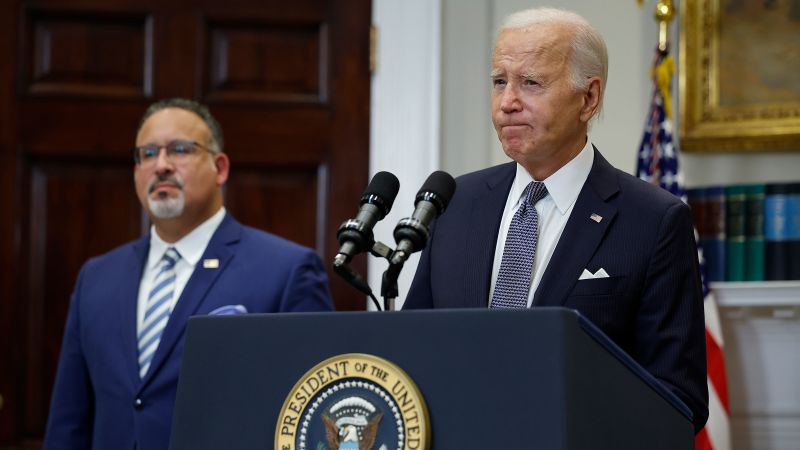
The Biden administration has approved the cancellation of nearly $5 billion more in federal student loan debt, bringing the total amount of student debt relief provided to $132 billion for over 3.6 million borrowers. Despite the Supreme Court striking down President Biden's signature student loan forgiveness program, the administration has continued to find alternative ways to provide debt relief through existing federal student loan forgiveness programs. Eligible borrowers include those under the Public Service Loan Forgiveness program and those who have made at least 20 years of qualifying payments in an income-driven repayment program. The administration has also been granting student loan forgiveness through these programs on a rolling basis, correcting past administrative errors and expanding debt relief programs temporarily.
Borrowers with outstanding federal student debt may be able to use any remaining funds in their 529 college savings plan to pay down up to $10,000 of what they owe, thanks to a law passed in 2019. This option may be particularly appealing as federal student loan payments are set to restart in October. While most college students with student debt won't have money left in their 529 plans, those with siblings who have remaining funds may be able to change the account's beneficiary and use it to pay off some or all of their debt. Additionally, parents can potentially pay off their Parent Plus loans by changing the beneficiary of a 529 plan. However, borrowers should consider comparing their loan interest rates with the earnings in their investment account before withdrawing from the 529 plan.
As federal student loan payments are set to restart in less than two months, borrowers are seeking ways to ease the burden. The Biden administration's new plan, called SAVE, aims to cap monthly payments at 5% of discretionary income and offers loan forgiveness after a certain number of years. Some companies, such as Google, Aetna, and Adidas, are also stepping up to help employees with their student loans by offering matching contributions. Borrowers are advised to take inventory of their debt, consider income-driven repayment plans, pay off what they can before interest resumes, automate payments, and stay informed about their options. Refinancing may not be beneficial for those eligible for income-driven plans or loan forgiveness.
As college tuition costs continue to rise, student loans have become a necessity for many students. It is important to understand the basics of student loans, including the application process, important dates, the difference between federal and private loans, and managing loan repayment. Filling out the FAFSA is the first step in applying for federal student loans, while private loans can be applied for at any time. Federal loans generally offer lower interest rates and more repayment options. It is recommended to calculate the amount needed and return any excess loan money. Understanding interest rates and loan details is crucial before signing any loan agreement. Resources are available for students with questions about their loans, and it is advised to keep track of borrowing and consider making interest payments while in school.
Families should be aware of the risks associated with private student loans as college bills come due. It is recommended to exhaust federal student loan options first before considering private loans. Private loans should be approached with caution, as they may indicate overborrowing. Scrutinizing repayment terms and protections is crucial, as private lenders often lack the forgiveness programs and forbearances offered by federal loans. Interest rates on private loans can be high, with some reaching as high as 18%, compared to the current 5.5% interest rate on federal student loans for undergraduates.
The Biden administration is launching a beta website for its new income-driven student loan repayment plan, called the SAVE plan, allowing borrowers to begin submitting applications as federal student loan payments are set to resume in October. The plan aims to lower monthly loan payments for some borrowers and reduce the amount they pay back over the lifetime of their loans. Borrowers can access the beta website and complete the enrollment process, which is estimated to take 10 minutes. The plan determines payments based on income and family size, with some payments as low as $0. The income threshold to qualify for $0 payments has been increased, and more than 1 million additional borrowers are expected to qualify. The full website launch will occur in August, and the plan is expected to cost the federal government between $138 billion and $361 billion over 10 years.
The Biden administration is launching a beta website for its new income-driven student loan repayment plan, called the SAVE (Saving on a Valuable Education) plan, allowing borrowers to begin submitting applications for the program as federal student loan payments are set to resume in October. The plan, which applies to current and future federal student loan borrowers, will determine payments based on income and family size, with some monthly payments as low as $0. The income threshold to qualify for $0 payments has been increased, and more than 1 million additional borrowers are expected to qualify. The full website launch will occur in August, and the program is estimated to cost between $138 billion and $361 billion over 10 years.
Federal student loan interest rates will resume in September, and payments will be due starting in October, according to the Department of Education. The student loan pause has been extended multiple times by the Biden administration since March 2020. President Biden has proposed forgiving up to $10,000 in federal student loan debt and up to $20,000 for those who received Pell Grants, a plan that is currently being challenged in court.
The Biden administration will resume interest on federal student loans starting September 1, 2023, and monthly payments will be due in October. The Consumer Financial Protection Bureau warns that about 20% of student loan borrowers may struggle when scheduled payments resume. Education Department officials are looking at ways to ease borrowers back into repayment, including offering a grace period for the first several months in which borrowers wouldn’t be penalized for missing required payments, though interest would continue to add up. Education Secretary Miguel Cardona canceled his planned commencement address at the University of Washington on Saturday amid a strike by hundreds of university researchers. The Supreme Court is set to announce major decisions affecting education in the coming weeks.
The student loan forgiveness pause will end on August 30, as the White House and Congress reached a deal to create a new debt ceiling for the nation while seeking to waive $10,000 to $20,000 in student loan debt for all borrowers. However, Congress must decide whether to approve the spending deal or not, and the Supreme Court must decide on the legal implications of the forgiveness plan.
The Education Department is preparing to restart federal student loan debt repayments after a three-year pause now that the COVID-19 pandemic emergency has ended, according to Education Secretary Miguel Cardona. The Biden administration has controversially argued that the HEROES Act empowers the secretary of education to reduce or eliminate federal student loan debt obligations. The administration has proposed forgiving up to $10,000 in federal student loan debt and up to $20,000 for those who received Pell Grants, a plan that is currently being challenged in court.
The interest rates on new federal student loans will increase by about half a percentage point from their current levels starting July 1, with undergraduate student loans facing the highest level since 2013. The changes affect only new federal student loans, not existing loans. Loan relief ongoing: The interest rate on all federally-held student loans has been set to zero since March 2020 under the freeze on student loan payments, which the Biden administration has extended repeatedly.