
Research suggests that tiny genetic differences in the 'dark' regions of our DNA, specifically in an enhancer region called EC 1.45, may explain why Neanderthals had distinct facial features like larger jaws and noses compared to modern humans, with these differences linked to variations in gene regulation during development.
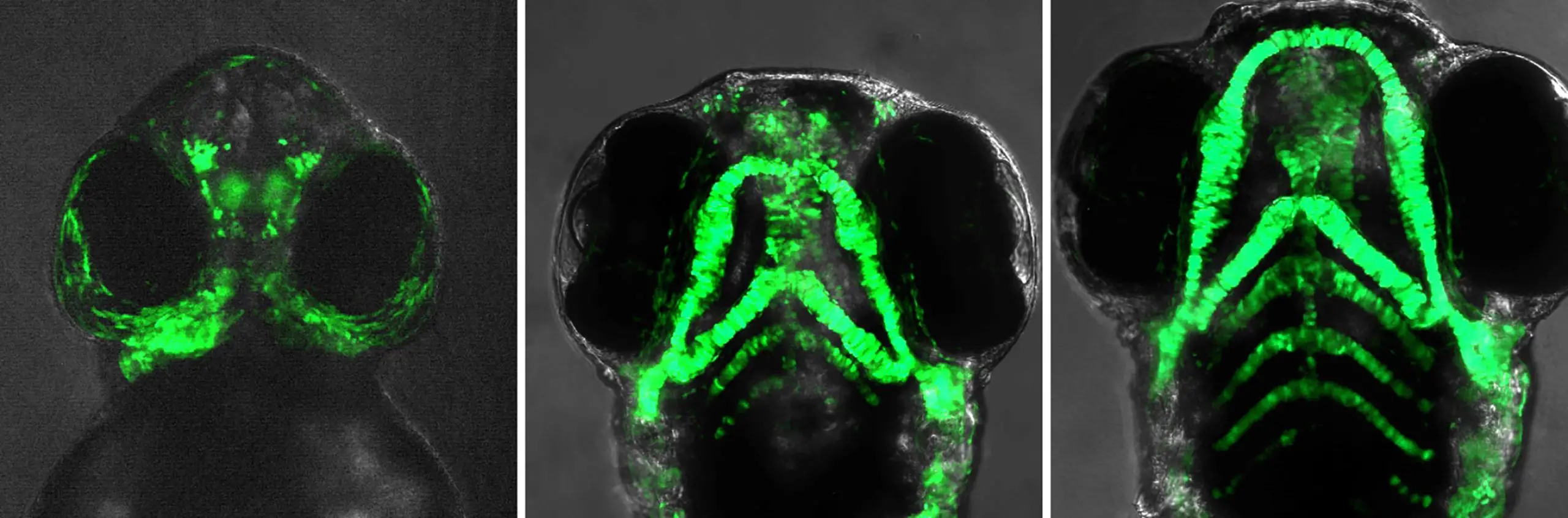
A study using zebrafish embryos has found that substances such as caffeine and the blood thinner warfarin can impair the migration of bone-forming cells, leading to facial malformation. Zebrafish embryos are transparent and develop outside of the parent's body, making them ideal for studying early development. Researchers suggest that a zebrafish-based system could be used to screen for potentially harmful substances, reducing the need for animal testing and supporting parents-to-be in making choices for their baby's health. The study highlights the potential for a general mechanism by which teratogenic chemicals limit the movement of cells involved in facial development, leading to craniofacial anomalies.