The Biden administration is concerned about the alarming trend of increasing rates of alcohol-related liver disease among women, with recent data showing that women will account for nearly half of the associated costs in the U.S. by 2040. Factors contributing to this trend include targeted marketing of alcoholic beverages to women, the emergence of "mommy wine culture," and the use of alcohol to cope with stress, particularly during the covid-19 pandemic. Public health experts fear the escalating costs and are calling for potential policy changes, while the USDA and HHS are set to review national dietary guidelines next year, including the relationship between alcohol consumption and cancer risks.

Angela Nicole Killian, a banker, was arrested for public intoxication at Dallas-Fort Worth Airport after being barred from a flight. She has a history of heavy drinking on work trips and was fired from Capital One after the incident. Colleagues described her as a heavy drinker and a bully at work. Killian frequently drank heavily on overseas business trips and was known for her unprofessional behavior during client events. She was charged with resisting arrest and public intoxication and is involved in renewed divorce proceedings. Another American Airlines passenger, Tiffany Gomas, also had a meltdown on a flight two months earlier.
CDC data reveals a 29% surge in alcohol-related deaths during the COVID-19 pandemic, with an annual average of 178,000 deaths compared to 138,000 between 2016-2017 and 2020-2021. The increase in alcohol abuse during the pandemic resulted in about 488 deaths per day, with two-thirds of fatalities linked to long-term conditions and the remaining third stemming from incidents related to excessive drinking. Excessive drinking remains the leading cause of preventable death in the US, with more than 8,050 New Yorkers dying from alcohol abuse each year.
Alcohol-related liver disease is the leading cause of death from excessive drinking, with annual deaths on the rise, particularly among younger adults and women. The disease progresses through stages, starting with fatty liver disease and potentially leading to cirrhosis. Heavy alcohol consumption and inflammation are key factors in liver damage, and the condition often goes undetected until it's too late for effective treatment.
A report from the CDC reveals a 29% increase in average annual deaths from excessive alcohol use in the United States from 2016–2017 to 2020–2021, with a rise in both fully and partially alcohol-attributable conditions. Deaths among males increased by 27% and among females by 35%. Evidence-based alcohol policies, such as reducing the availability and accessibility of alcohol and increasing alcohol taxes, are recommended to reverse this trend and reduce alcohol-related deaths.
Excessive drinking during the COVID-19 pandemic has led to a surge in alcohol-associated liver disease, resulting in an increased need for liver transplants. Transplant centers across the United States are reporting a higher number of patients requiring liver transplants due to alcohol-related liver disease compared to pre-pandemic levels. The demographics of patients needing transplants have also shifted, with younger individuals in their 20s and 30s, as well as more women, now requiring transplants. Doctors attribute the increase in alcohol use to pandemic-related stress, isolation, and changes in drinking culture. However, the stigma surrounding alcohol-associated liver disease remains a barrier to seeking help, and doctors emphasize the importance of reducing stigma and providing support for patients in need.
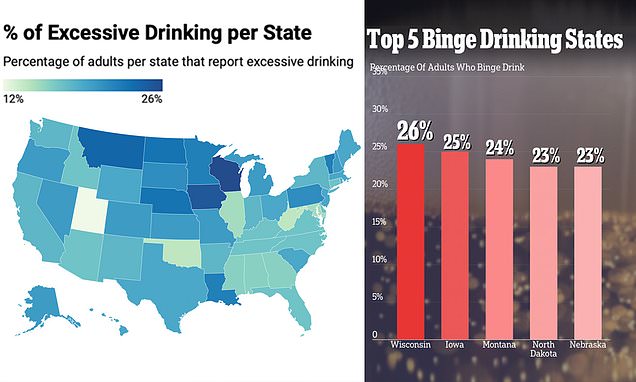
A study conducted by the University of Wisconsin has identified the states and counties in the U.S. with the highest rates of binge drinking. Wisconsin tops the list with 26% of residents drinking excessively, followed by Iowa, Montana, North Dakota, and Nebraska. Utah has the lowest percentage of excessive drinkers at 12%. The research also examined alcohol-impaired driving deaths, with California having the highest number of such fatalities despite an 18% excessive drinking rate. The study highlights the importance of addressing the harmful effects of alcohol on individuals and communities, as alcohol-related deaths in the U.S. have been increasing.
A recent study by the University of Wisconsin Population Health Institute reveals that Wisconsin has the highest rate of excessive drinkers in the United States, with 26% of adults self-reporting excessive drinking. The states with the most excessive drinkers are primarily located in the north-central region, including Iowa, Montana, Nebraska, and North Dakota. County-level data shows that nine out of the ten counties with the highest rates of excessive drinking are in Wisconsin. The study also highlights the correlation between excessive drinking and alcohol-impaired driving deaths, with Montana having the highest rate of driving deaths involving alcohol.
A recent report by the University of Wisconsin Population Health Institute reveals the states and counties in the U.S. with the highest rates of excessive drinking. Wisconsin tops the list with 26% of adults self-reporting excessive drinking, followed by Iowa, Montana, Nebraska, and North Dakota. Utah has the lowest rate at 12%. County-level data shows that nine out of the ten counties with the highest rates of excessive drinking are in Wisconsin. The report also highlights the number of alcohol-impaired driving deaths, with California having the highest number of fatalities and Montana having the highest rate of driving deaths involving alcohol. Researchers emphasize the harmful effects of excessive alcohol consumption on individuals and communities.
A study by the University of Wisconsin Population Health Institute found that Wisconsin has the highest rate of excessive drinkers in the United States, with 26% of adults self-reporting excessive drinking. The study also revealed that California has a lower rate of excessive drinking at 18%. County-level data showed that nine out of the ten counties with the highest rates of excessive drinking were in Wisconsin. In California, the northeastern part of the state, including Sierra and Amador counties, had the highest concentration of excessive drinkers. Additionally, California had the highest number of alcohol-impaired driving deaths, despite its lower rate of excessive drinking.
A new study has revealed a concerning increase in alcohol-related deaths, particularly among women. The research found that men were 2.88 times more likely to die from alcohol-related causes, but the rate of death among women increased more rapidly. Physiological differences make women less able to metabolize alcohol, leading to various negative long-term effects. Warning signs of excessive drinking include being unable to limit drinking, continuing to drink despite problems, increased tolerance, craving alcohol, and irritability when not drinking. Resources such as healthcare providers and helplines are available for those seeking assistance with alcohol problems.