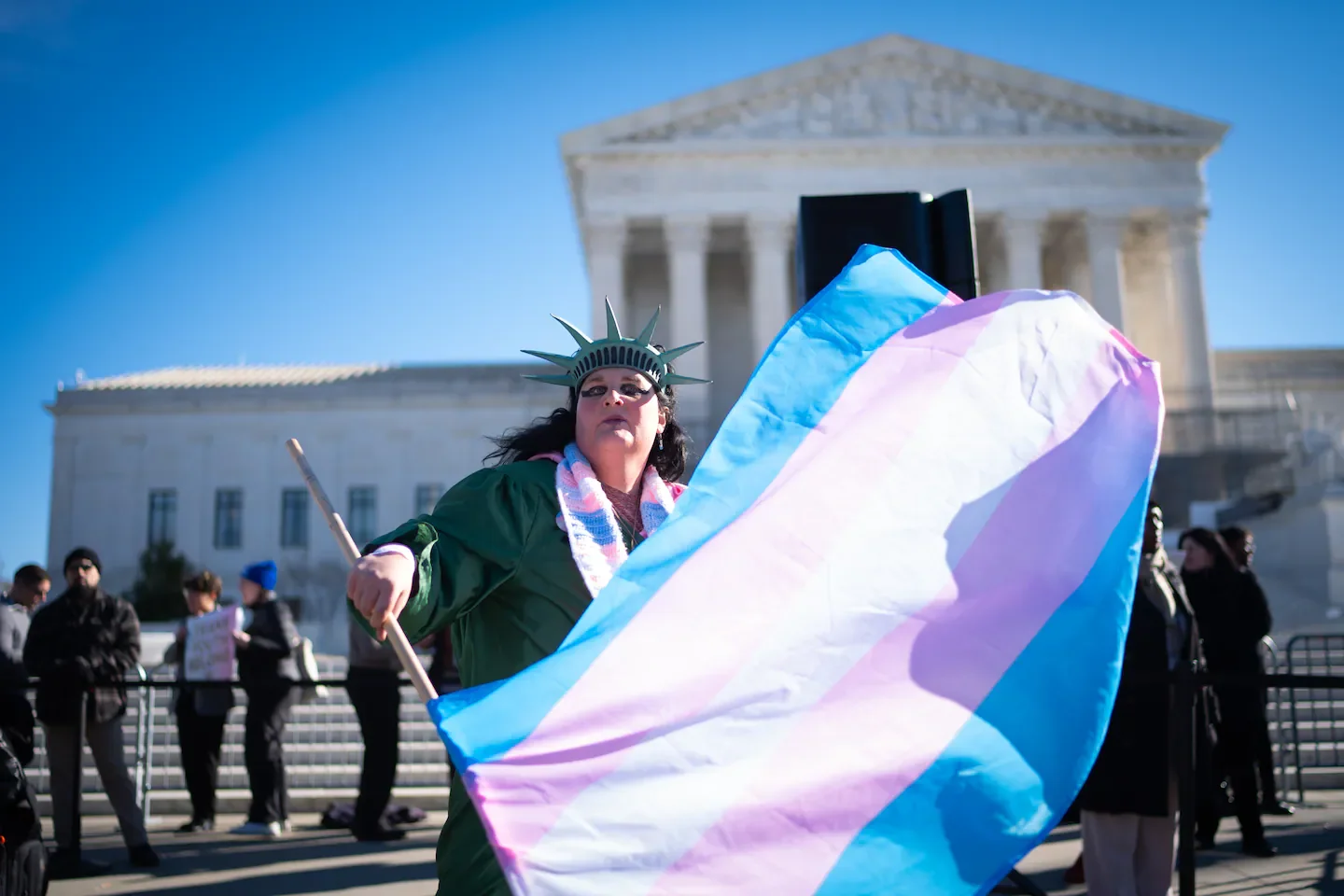
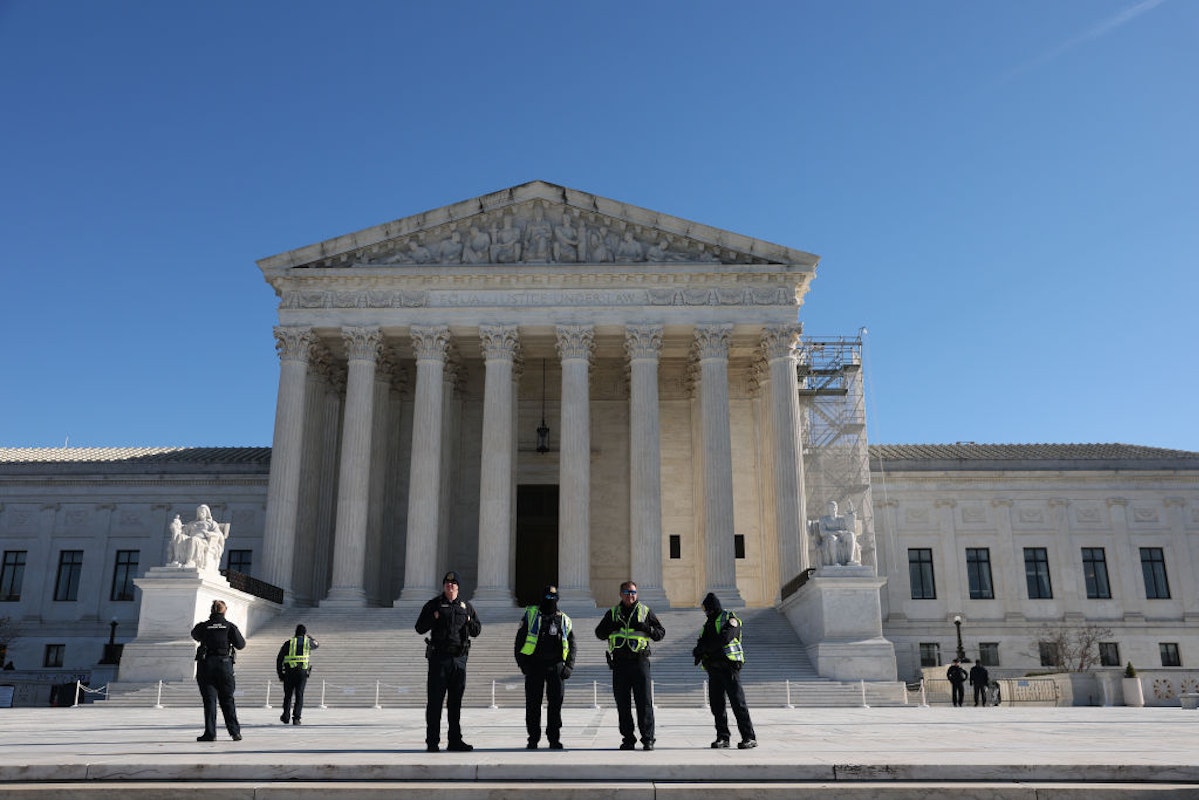
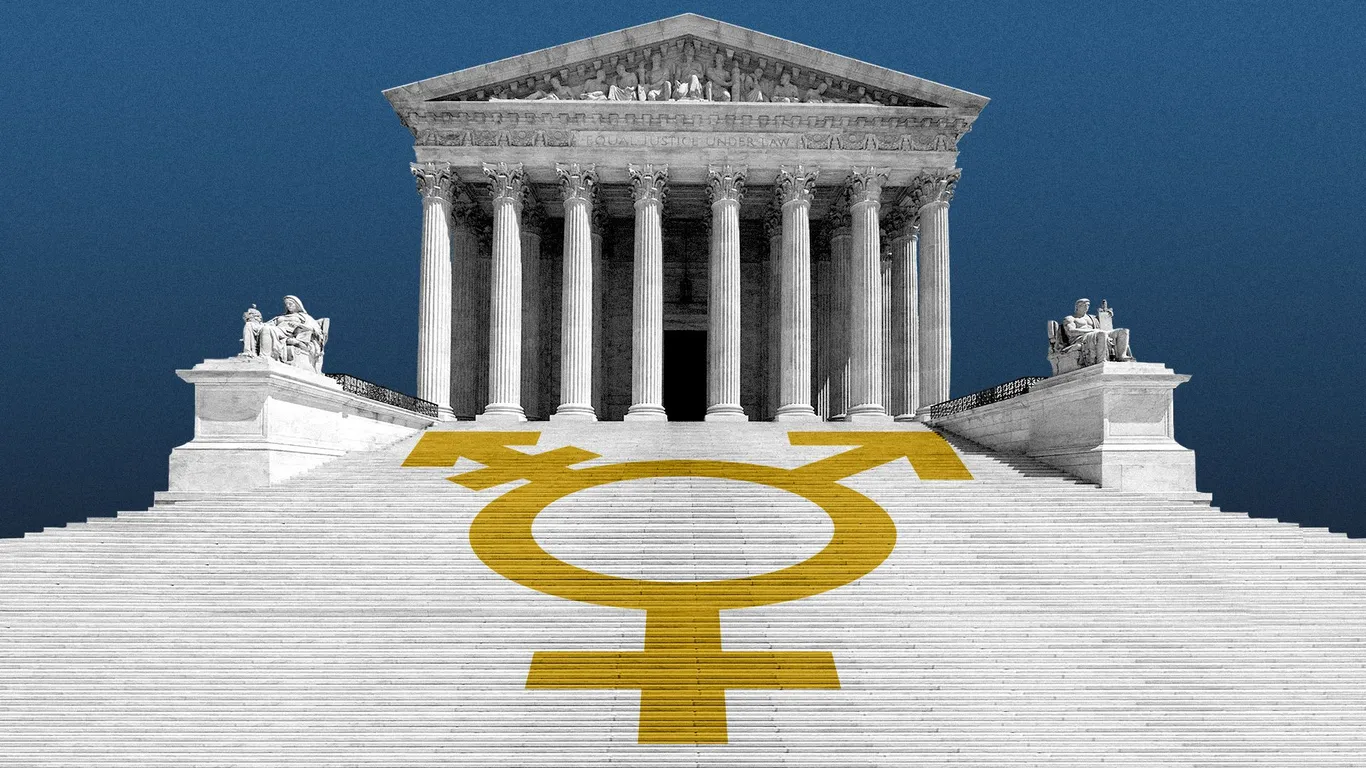
The Supreme Court's conservative majority signaled skepticism toward arguments that state bans on transgender athletes competing in women's sports violate the Equal Protection Clause.
The U.S. Supreme Court heard oral arguments in United States V. Skrmetti, a case challenging a Tennessee law that bans puberty blockers and hormone therapy for minors seeking gender transition. The case, brought by three transgender teens, a physician, and the Biden administration, argues the law is discriminatory under the Equal Protection Clause. The state defends the law as a measure to protect minors from unproven medical procedures. The decision, expected by June 2025, could impact similar laws in other states and the broader legal landscape of transgender rights.
The U.S. Supreme Court is set to hear a significant case on whether Tennessee's ban on gender-affirming care for minors is unconstitutional, a decision that could influence similar laws in 26 other states. The case, supported by medical groups like the American Medical Association, challenges the law under the Constitution's Equal Protection Clause. The outcome could either uphold a patchwork of state laws or lead to further legal battles over transgender rights and healthcare access. A ruling is expected by June.
A federal court has upheld a ban on an Idaho law that prohibits biological males from competing on girls' and women's sports teams. The Ninth Circuit Court of Appeals ruled that the law is likely to be deemed unconstitutional, keeping in place a temporary injunction until the lawsuit is resolved. The law, which was passed in 2020, has faced legal challenges from the American Civil Liberties Union (ACLU) on behalf of a transgender track athlete. Supporters of the law argue that it ensures fairness and safety for women in sports, while opponents claim it stigmatizes transgender individuals. The case, Hecox v. Little, may potentially reach the Supreme Court.
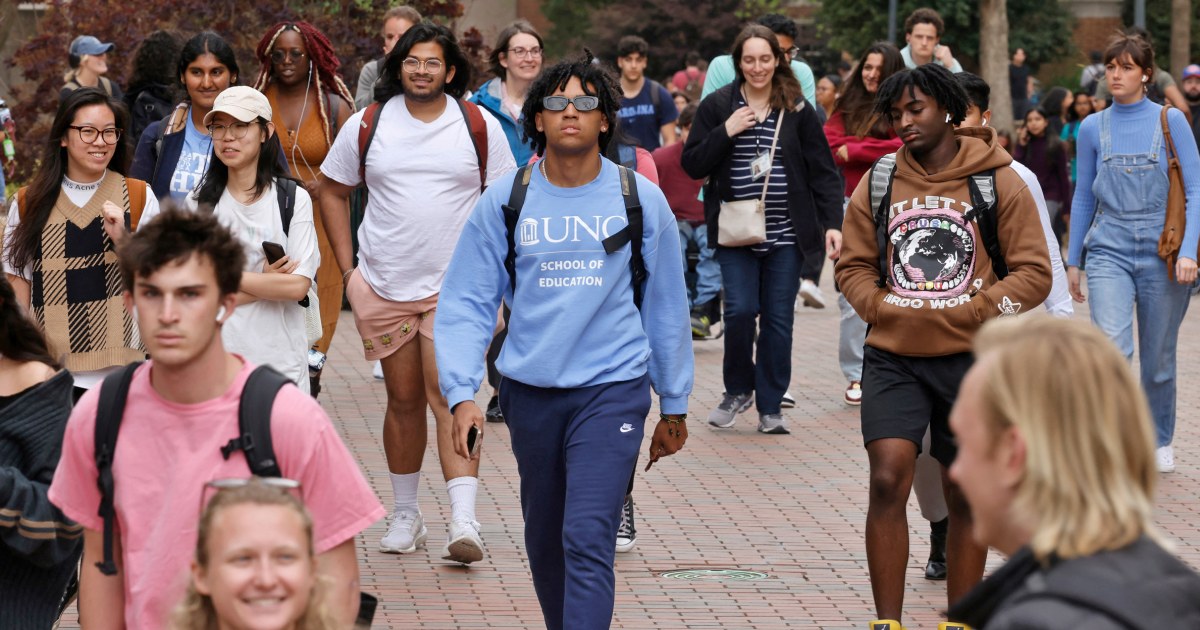
The Supreme Court has ruled that affirmative action programs at the University of North Carolina and Harvard are unconstitutional, violating the Equal Protection Clause. The decision, with a 6-3 vote in the UNC case and 6-2 in the Harvard case, marks a major victory for conservative activists and overturns decades of precedent. Conservatives argue that the Constitution should be "colorblind," while liberals view affirmative action as a necessary tool to address historic race discrimination. President Joe Biden expressed disappointment and pledged to provide guidance on maintaining diversity without violating the ruling. The ruling is expected to have far-reaching implications for higher education and may impact K-12 schools and employment practices.
The California Reparations Task Force has approved a set of recommendations for how the state can make amends to its Black residents for slavery and the decades of racial discrimination that followed. However, the recommendations may never come to fruition due to legal issues. The task force's final report includes a set of mathematical formulas used to figure out how much is owed to residents based on certain factors, including their age, how long they've lived in California, and the specific type of harm they've suffered. Legal experts have raised concerns about the legal viability of reparations, particularly the ancestry requirement, which would apply to about 80% of all Black residents in California.
The Supreme Court rejected West Virginia's request to enforce a law banning transgender athletes from competing on female sports teams against a 12-year-old transgender girl. The state law, known as the Save Women's Sports Act, was blocked by a lower court after the American Civil Liberties Union sued to block enforcement of the law on behalf of the transgender girl. The case marks the first time the Supreme Court has been asked to wade into debates over participation by transgender athletes in girls sports.