The article discusses how the rise of large language models (LLMs) is shifting enterprise software interfaces from traditional APIs and SDKs to natural language-based interactions, enabled by the Model Context Protocol (MCP). This transition allows users to specify outcomes rather than functions, simplifying integration, reducing onboarding time, and increasing productivity, while also requiring new architectural, security, and organizational considerations.
AI agents are increasingly integrated into business workflows, transforming operations by automating routine tasks, enhancing accuracy, and enabling new roles and organizational structures. Microsoft emphasizes the shift towards autonomous agents working alongside humans, which will reshape how work is structured and lead to more scalable, secure, and efficient enterprises. Leaders are encouraged to democratize AI access, start with simple processes, and evolve towards complex orchestration, all while maintaining a focus on responsible and secure deployment. The agentic era is expected to grow rapidly, requiring organizations to develop comprehensive AI strategies.
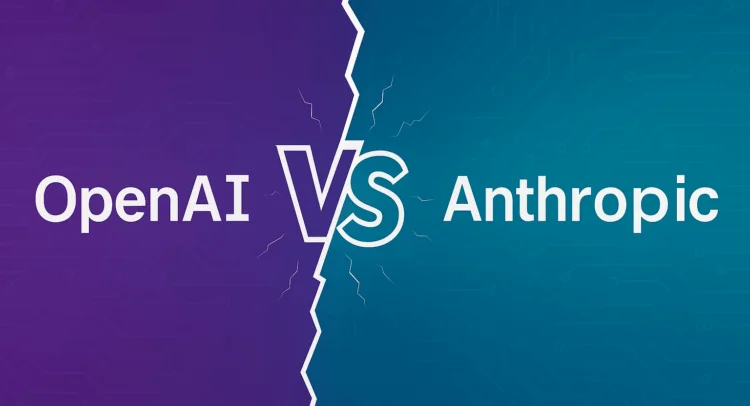
OpenAI and Anthropic are two leading AI companies with different strategies: OpenAI targets the mass consumer market with ChatGPT and aims for scale and potential advertising revenue, while Anthropic focuses on enterprise clients with specialized AI tools, leading to steadier income. Both rely heavily on cloud providers like Google, Amazon, and Nvidia to power their models, but their approaches reflect contrasting paths to profitability—volume versus value.
Deloitte has announced its largest-ever enterprise deployment of Anthropic's AI assistant Claude, integrating it across its global workforce of over 470,000 employees to enhance productivity and client service, marking a significant expansion of Anthropic's international presence and AI offerings.
AI engineers are being paid up to $900 per hour as consultants to help large companies adopt and integrate AI, reflecting high demand and technical expertise needed in the rapidly evolving field. This premium pay is driven by the scarcity of qualified professionals and the strategic importance of AI in enterprise settings, with companies seeking hands-on experts to execute AI projects and bridge the gap between strategy and implementation.
A recent MIT study reveals that 95% of enterprise generative AI pilots have no measurable impact, highlighting a 'learning gap' in organizations, which has led to a decline in AI stocks like Palantir and Nvidia, amid concerns over AI's ROI and potential market bubble.
A report from MIT’s Project NANDA reveals a significant 'shadow AI economy' where employees widely use personal AI tools for work, often bypassing official enterprise AI initiatives, which are struggling to deliver impact. Despite heavy investments, most companies see little return from formal AI projects, while employee-driven AI use is more flexible, immediate, and effective for simple tasks, creating a divide in AI adoption and perception in the workplace.
A MIT report reveals that 95% of enterprise generative AI pilots are failing to deliver significant revenue impact, mainly due to flawed integration and resource misallocation, with successful projects often led by startups and well-chosen partnerships.
Microsoft is integrating OpenAI's GPT-5 into its products, including Microsoft 365 Copilot, Microsoft Copilot, GitHub Copilot, and Azure AI Foundry, enhancing reasoning, coding, and chat capabilities across consumer, developer, and enterprise platforms, with a focus on safety and efficiency.
The article emphasizes that enterprise AI should focus on solving well-defined, closed-world problems with reliable, structured, and testable systems, rather than chasing the hype of open-world general intelligence. It advocates for using event-driven microservices and deterministic infrastructure to build dependable AI agents that deliver real value today, highlighting the importance of good software engineering principles over the pursuit of AI magic.
Rubrik, a data cybersecurity company, announced its acquisition of Predibase, a startup specializing in training and customizing open source AI models, to accelerate the adoption of AI agents in enterprises. The deal, estimated between $100 million and $500 million, aims to enhance AI development through integrations with major cloud platforms, reflecting a broader industry trend of companies acquiring AI-focused startups to strengthen their AI capabilities.
AI agents are increasingly integrated into business workflows, performing tasks like managing data, customer support, and automation across industries, with leading examples from Google, IBM, Microsoft, and others, signaling a shift towards AI-driven operational layers in companies by 2025.
Windsurf CEO Varun Mohan discussed the rapid adoption of their AI-powered IDE, which now surpasses one million developers and writes over half of the code, emphasizing security, personalization, and rapid iteration as key to its enterprise success, while also addressing industry competition and future adaptability.
Google has announced the general availability of its advanced Gemini 2.5 AI models, including a new cost-efficient variant, aiming to challenge OpenAI's dominance in enterprise AI by offering scalable, reasoning-capable solutions tailored for mission-critical business applications and diverse industry needs.
OpenAI has announced new features for ChatGPT, including a 'record mode' for note-taking and the ability to connect to cloud storage services like Google Drive and Dropbox, primarily targeting enterprise users with plans like ChatGPT Team and Enterprise, as part of its strategy to capture the growing enterprise AI market.