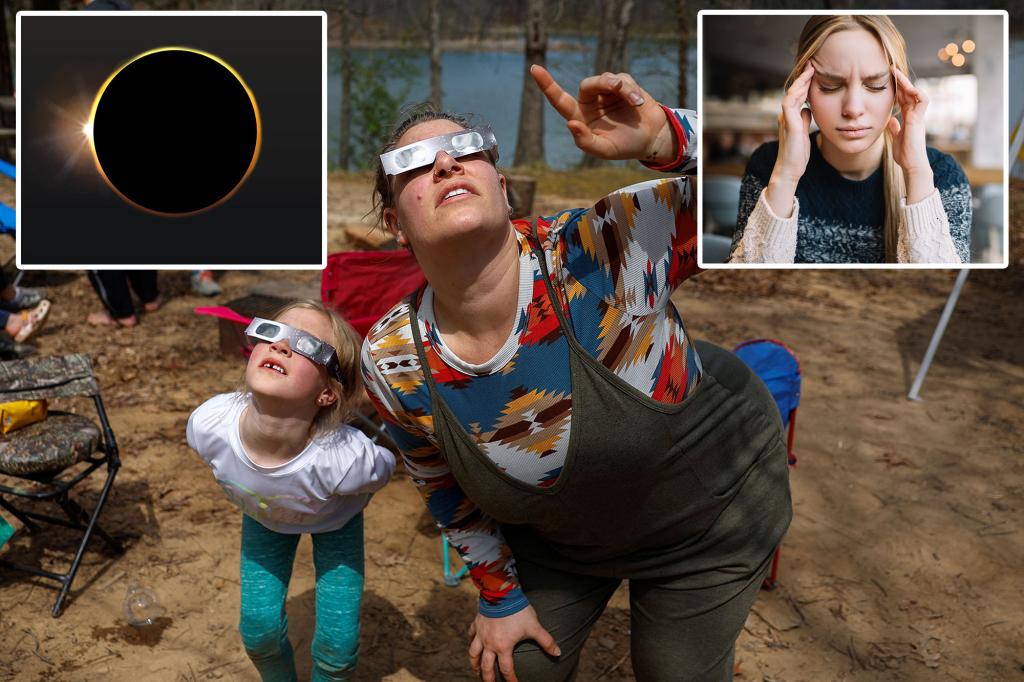
Following the recent total solar eclipse, some Americans reported experiencing nausea, headaches, eye pain, and even changes in menstrual cycles, leading to discussions about "eclipse sickness." While some experts attribute these symptoms to superstition, others, such as Dr. Marc Siegel, suggest that flicker vertigo caused by sudden light shifts during the eclipse may be a medical basis for these adverse health effects. NASA maintains that as long as proper eye protection is worn while viewing an eclipse, there is no direct physical relationship between the eclipse and health.
Americans experienced "eclipse sickness" with symptoms like headaches, fatigue, and changes in menstrual cycles during Monday's solar eclipse, although NASA denies any physical link between the eclipse and human health. Pets also exhibited unusual behaviors, possibly due to disruptions in their circadian rhythm caused by the eclipse. Additionally, a study found a significant increase in road deaths around the 2017 eclipse, comparable to major holidays, due to increased traffic as people traveled to view the event.
As the solar eclipse approaches, many social media users claim to be experiencing "eclipse sickness" with symptoms like headaches, insomnia, and wonky menstrual cycles, but scientists have found no correlation between the eclipse and human health. The eclipse can be harmful to eyes, and fake eclipse glasses from China pose a risk of retinal damage. Proper eyewear is necessary to view the event safely, and the next total solar eclipse will occur on August 12, 2026.