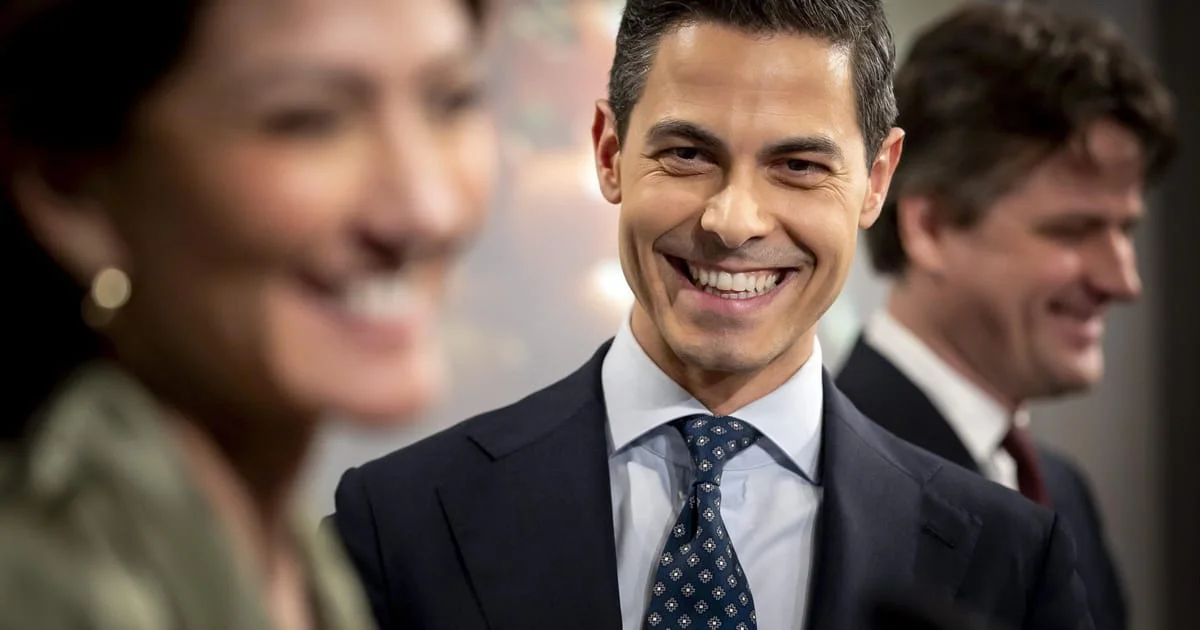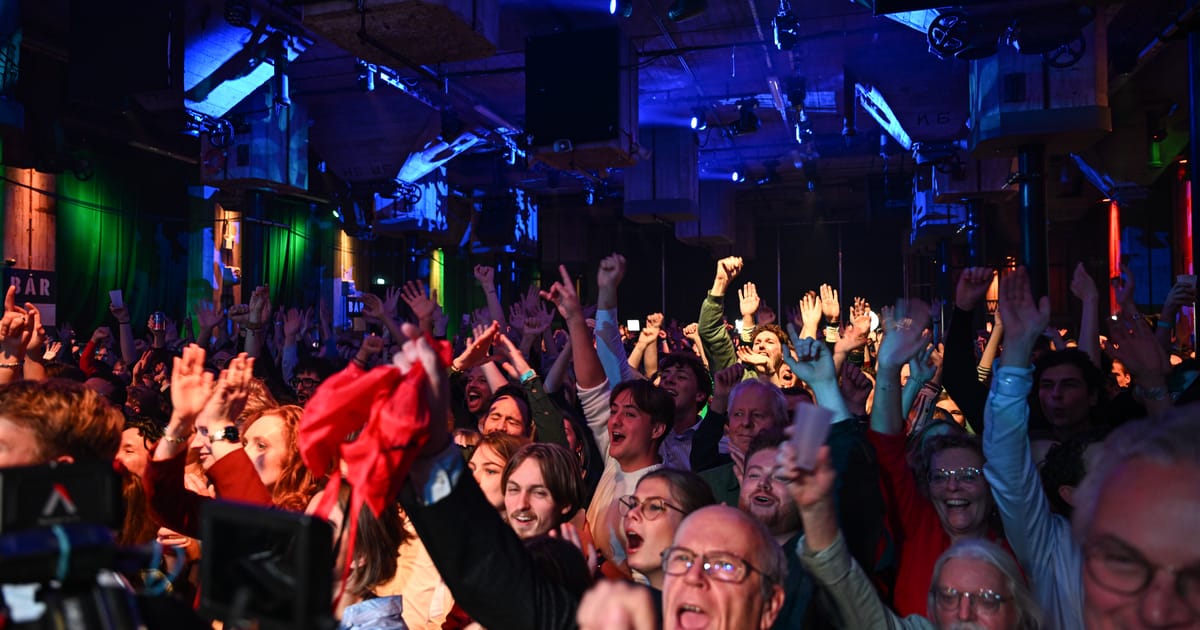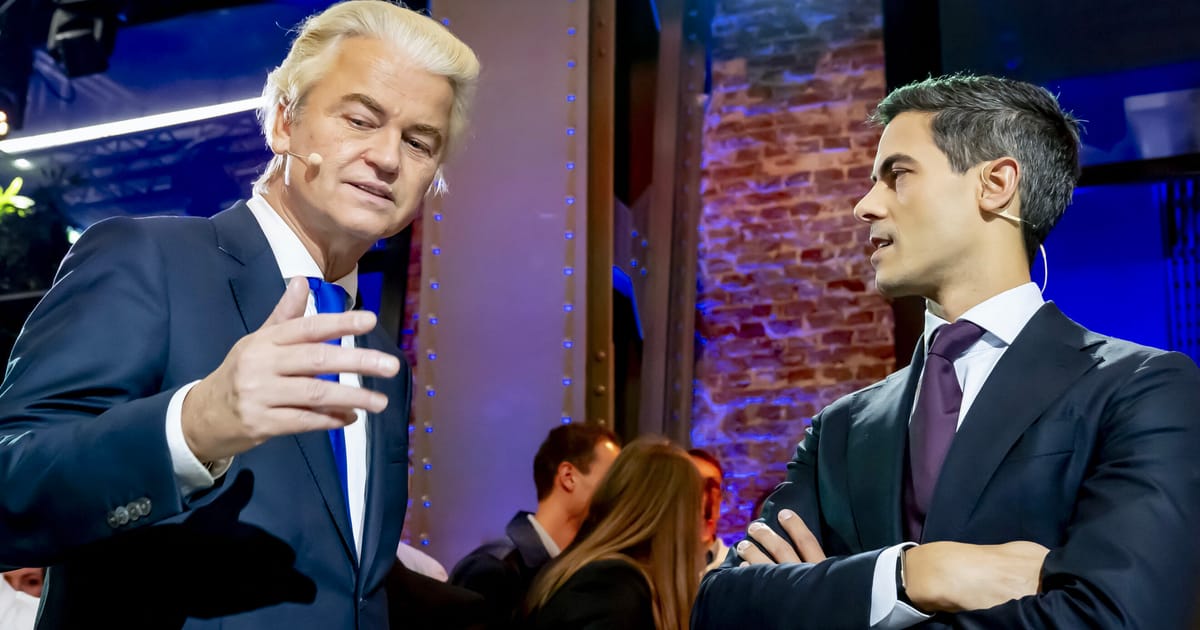
In the 2025 Dutch election, centrist Rob Jetten is on track to become the next prime minister, with the election closely contested between his party and far-right leader Geert Wilders' Party for Freedom, marking a significant political development in the Netherlands.
Rob Jetten's liberals and Geert Wilders' far-right party are competing in the Dutch election, highlighting a political battle between progressive and far-right forces in the Netherlands.
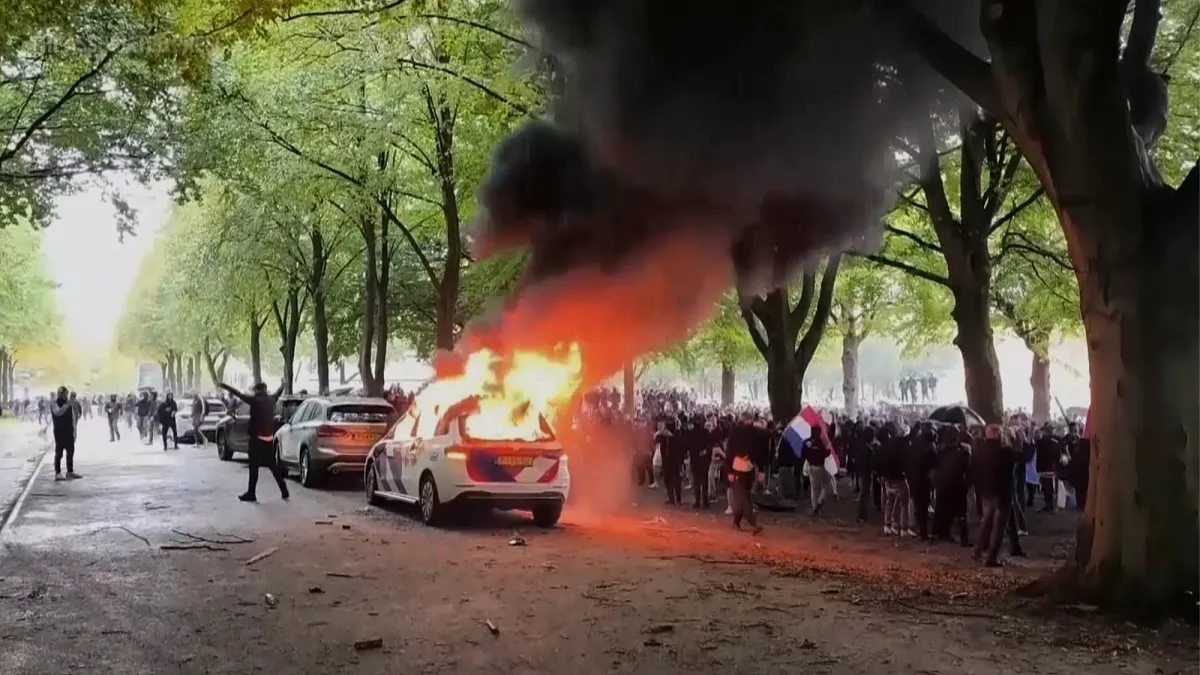
A peaceful anti-immigration protest in The Hague turned violent as protesters clashed with police, throwing stones and setting a police vehicle on fire, amid rising tensions ahead of the Dutch general election. The demonstration was organized by a social media call from 'Els Rechts' and coincided with political instability following the collapse of the ruling government over migration policies. Dutch officials condemned the violence, emphasizing the importance of peaceful demonstrations.
Dutch lawmakers rejected a motion to recognize Palestinian state and impose sanctions on Israel, amid ongoing Gaza conflict and political resignations, with upcoming elections scheduled for October.
Far-right leader Geert Wilders withdrew his party from the Dutch ruling coalition over disagreements on migration policies, leading to a caretaker government and delaying new elections, amid ongoing political instability in the Netherlands.
The Dutch government has collapsed after far-right leader Geert Wilders' Party for Freedom (PVV) withdrew over disagreements on asylum policies, leading to the resignation of the cabinet and potential early elections amid political instability.
The Dutch coalition government has managed to maintain its stability despite recent turmoil instigated by the controversial far-right politician Geert Wilders. Wilders, known for his provocative rhetoric, has been a significant source of political tension, but the coalition has so far withstood the challenges posed by his influence.
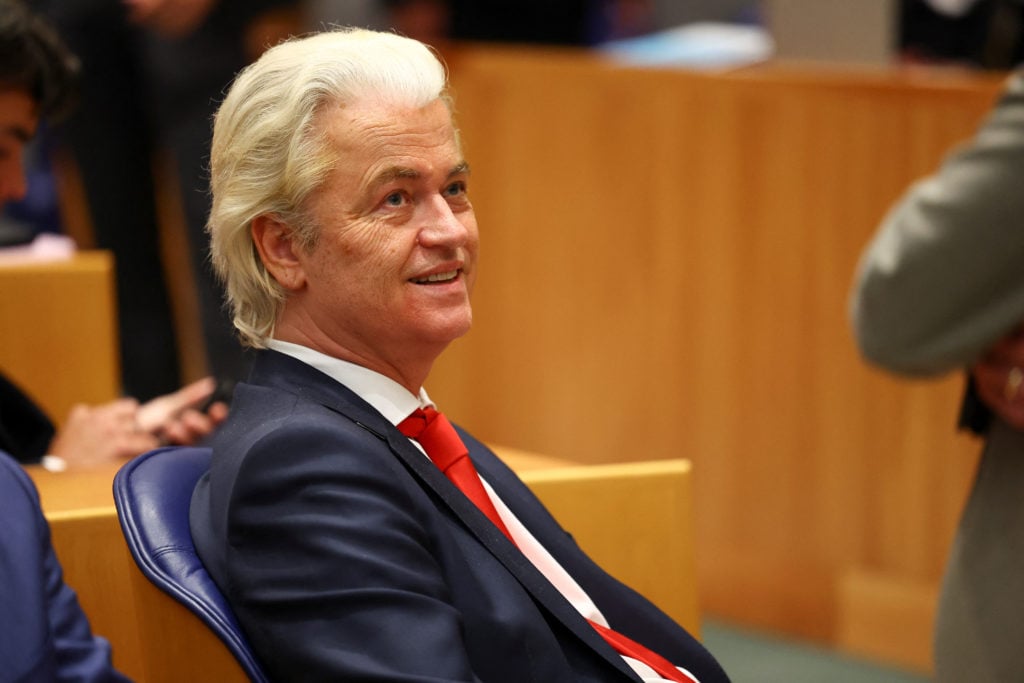
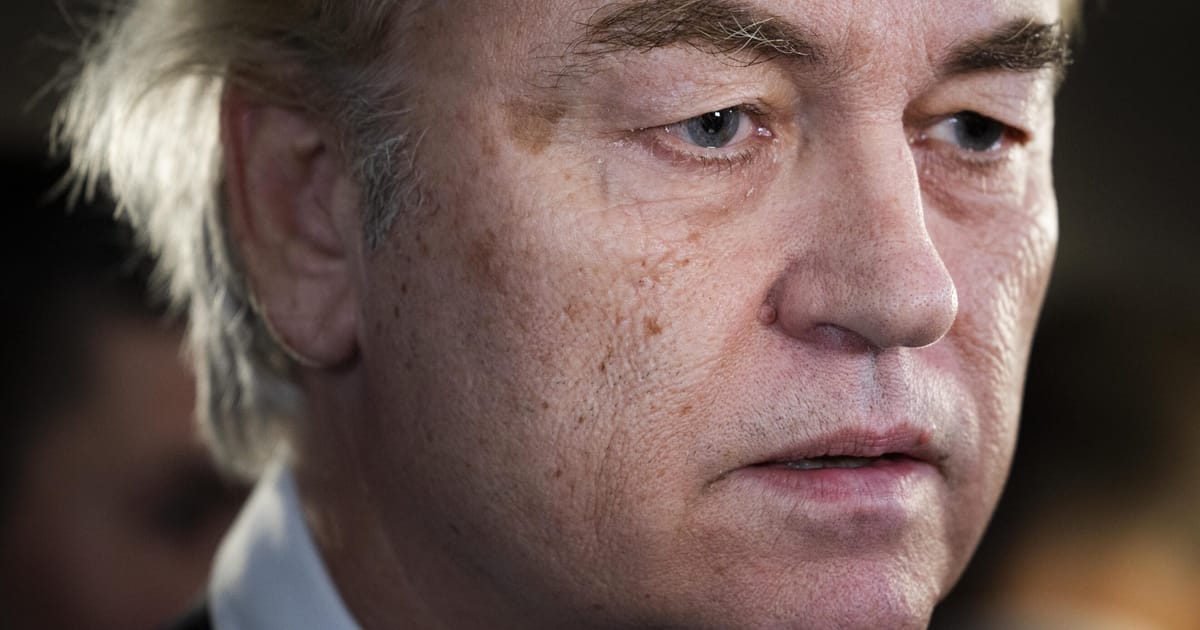
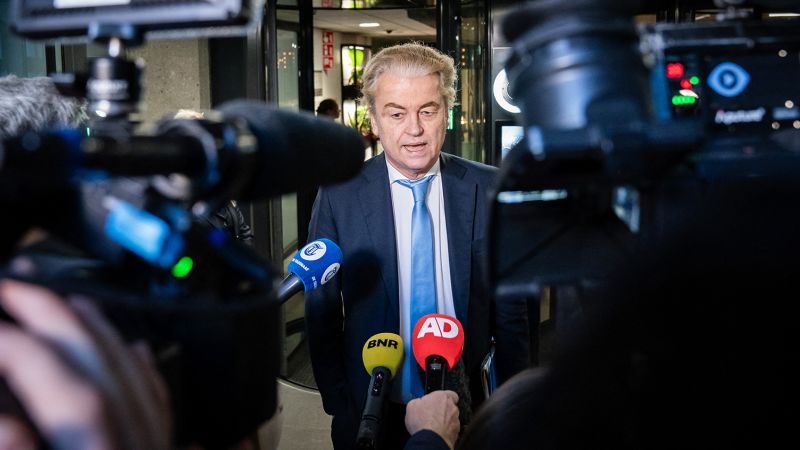
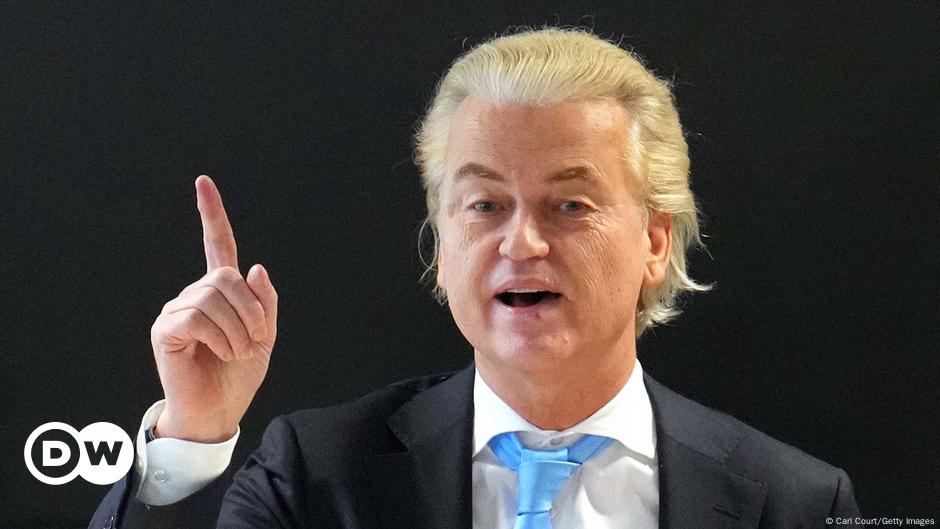
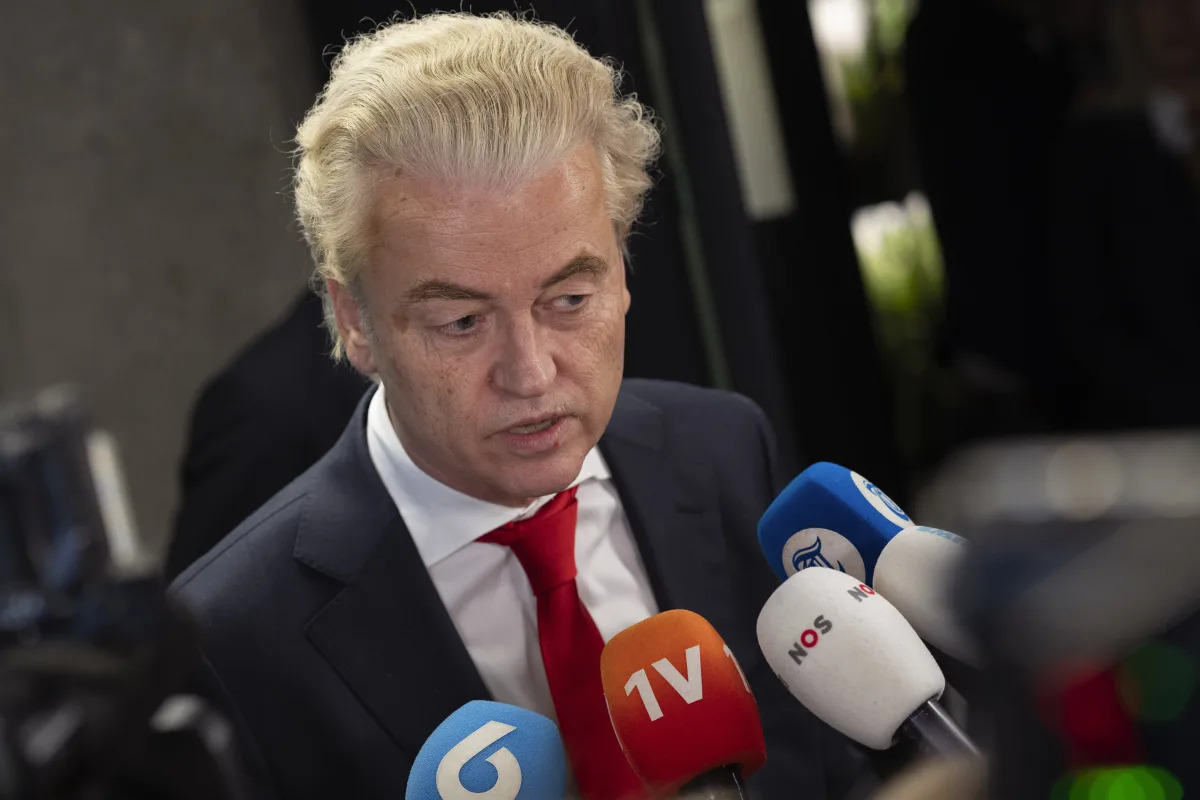
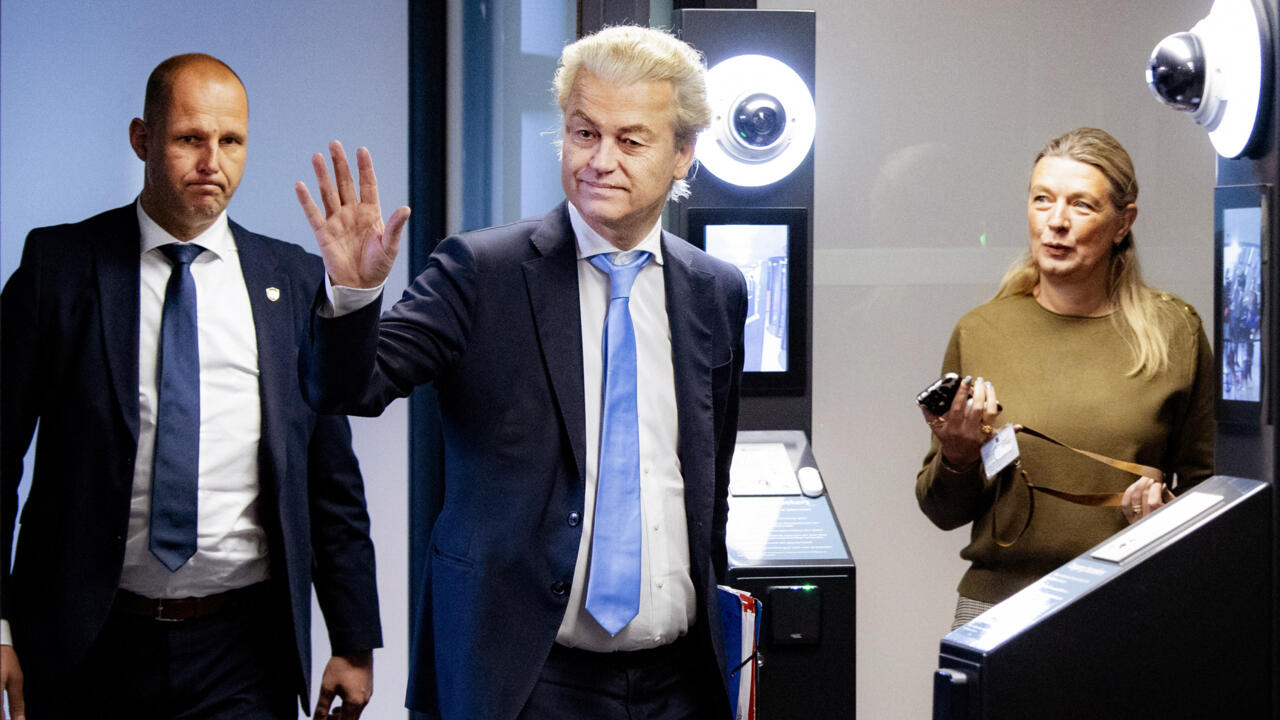
Far-right leader Geert Wilders, whose party won the most seats in the Dutch parliamentary elections, has abandoned his bid to become the next prime minister after failing to secure coalition support. Despite his party's strong showing, potential coalition partners refused to back him, citing his inflammatory anti-Islam, anti-immigration, anti-European Union, and Ukraine-skeptic platform as beyond the pale. This represents a reassertion of the "cordon sanitaire," a principle where mainstream parties refuse to cooperate with certain populist parties, and reflects a broader trend in Europe where center-right parties have been willing to build coalitions with more extremist groups. Wilders, however, remains determined to become prime minister in the future.
Dutch far-right leader Geert Wilders has announced that he will not seek the role of the Netherlands' next prime minister, despite his party winning the most votes in national elections last year. Wilders, known for his anti-immigration and Euroskeptic views, was unable to secure coalition support for the top job. Instead, a right-wing coalition is being considered, with Wilders and his Party for Freedom expected to remain a significant force behind the administration.
Geert Wilders, the leader of the Party for Freedom, announced that he does not have the support of his likely coalition partners to become the next Dutch prime minister. This comes after a breakthrough in coalition talks, setting up the likelihood of a technical Cabinet made up of experts. Wilders, known for his anti-Islam stance, has stepped aside in the interests of pushing through his agenda, and the exact contours of a new coalition Cabinet remain unclear. The rise of the populist far right in Europe is evident, with far-right parties expected to make significant gains in upcoming elections.
Dutch far-right leader Geert Wilders's hopes of forming a majority government are in jeopardy as a key negotiating party, The New Social Contract (NSC), abruptly withdraws from coalition talks over a dispute about public finances. Without the NSC's 20 seats in the 150-seat parliament, Wilders has no chance of forming a majority cabinet. The NSC indicated it could offer constructive support for a minority cabinet, while Wilders hinted at the possibility of new elections if the talks fail.
Dilan Yeşilgöz, leader of the Dutch center-right People's Party for Freedom and Democracy (VVD), has ruled out joining a potential coalition led by Geert Wilders' far-right Party for Freedom (PVV). However, she stated that her party could support such a government from the sidelines. This decision opens the possibility of an alliance between the PVV and Pieter Omtzigt's center-right New Social Contract (NSC). The move puts pressure on NSC and the farmers' party BBB to decide whether they are open to working with Wilders. The PVV emerged as the election's big winner, while the VVD suffered losses. Coalition negotiations are expected to be lengthy, as parties are cautious about aligning with the far-right PVV.
Pieter Omtzigt, former CDA parliamentarian, has announced the launch of his own party called Nieuw Sociaal Contract for the upcoming November general election in the Netherlands. Opinion polls suggest Omtzigt could win the most seats in parliament if he decides to participate. The party aims to bring about a new culture of governance, including regional representation and a constitutional court. Omtzigt also wants to address issues such as the shortage of homes and food insecurity. Despite potential success, Omtzigt stated that he does not aspire to be prime minister and intends to lead the party from within parliament.
Dutch Prime Minister Mark Rutte has announced that he will quit politics after his coalition government collapsed due to disagreements over asylum policies. Rutte, one of Europe's longest-serving leaders, will lead a caretaker administration until fresh elections in November. He stated that he will not run for a fifth term and will leave politics following the elections. A no-confidence motion has been filed by opposition parties, but it requires the support of at least one party from Rutte's collapsed coalition to pass. Rutte's resignation marks the end of his nearly 13-year tenure as prime minister.
Dutch Prime Minister Mark Rutte has announced that he will leave politics after the next election following the collapse of his government. Rutte, who has been in power since 2010, will remain as caretaker prime minister until the elections in November. He stated that he is not interested in an international top job and will focus on urgent issues such as the war in Ukraine and supporting earthquake victims. Rutte's resignation has garnered mixed reactions from allies and opponents, with some praising his commitment and others criticizing his handling of certain matters.