Roblox has launched its first Parent and Caregiver Council to involve parents in shaping platform policies, promoting safety, civility, and digital well-being, with applications open until October 26, 2025, for a program running from January to December 2026.
Carlos Aparicio, a 24-year-old remote worker from El Paso, Texas, has successfully managed to balance his work and personal life, becoming highly productive and present with his loved ones while also enjoying outdoor activities. He overcame a previous struggle with tech addiction, where he found himself unable to engage in simple activities like walking his dog without using his iPhone. The article suggests that there are technological solutions available to help individuals beat their tech addictions and achieve a similar balance in their lives.
An individual experimented with using only the small 3.2-inch front screen of the Galaxy Z Flip 5 to reduce mindless scrolling and make smartphone use more intentional. Despite needing full smartphone functionality for apps like Gmail or Slack, the experiment aimed to limit distractions by not having social media apps readily accessible. The result was a significant reduction in screen time, proving that a less accessible screen can lead to more mindful phone usage.
Catherine Price, author of "How to Break Up With Your Phone," shares her personal experience of realizing the negative impact excessive phone use had on her life and relationships. She discusses the deliberate design of apps to hook users for profit, exploiting dopamine triggers similar to slot machines. Price advocates for conscious efforts to reduce phone dependency by minimizing dopamine triggers, setting physical boundaries, and engaging in more fulfilling activities. Her journey led to improved presence, calmness, and connection in her life, urging others to consider what truly deserves their attention.
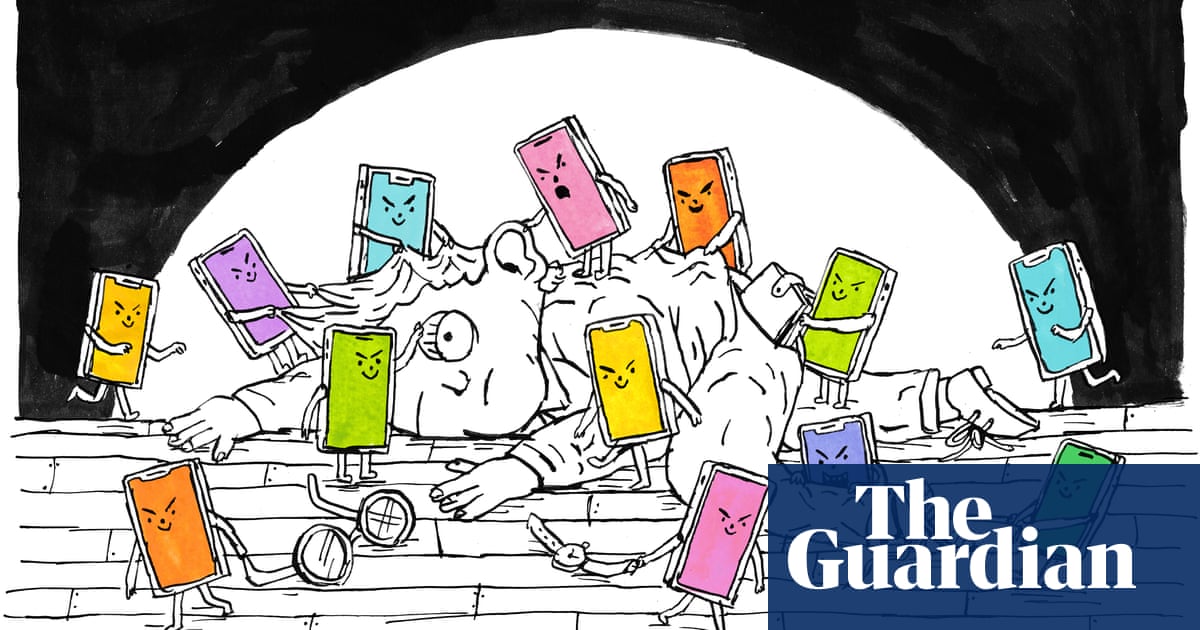
The "Reclaim your brain" series and free coaching program aim to address the widespread concern about excessive phone usage and its impact on concentration, social interaction, and overall happiness. With many people feeling addicted and unable to disconnect, the initiative offers practical advice and a six-week plan to reduce screen time, co-written with Catherine Price, author of "How to Break Up With Your Phone." The program also includes personal experiences from reporter Rhik Samadder, providing a relatable and humorous perspective on the struggle to achieve a healthier balance between digital and physical lives.
A Canadian study involving youth aged 17-24 who were heavy social media users and experiencing emotional distress found that reducing social media use to one hour per day led to significant improvements in body image and mental health. The study, which tracked participants' social media use and assessed their mental health over three weeks, suggests that moderate social media use and engaging in activities that promote mental health can have psychological benefits. This research highlights the potential for simple strategies to improve youth well-being amidst rising demands for mental health services.