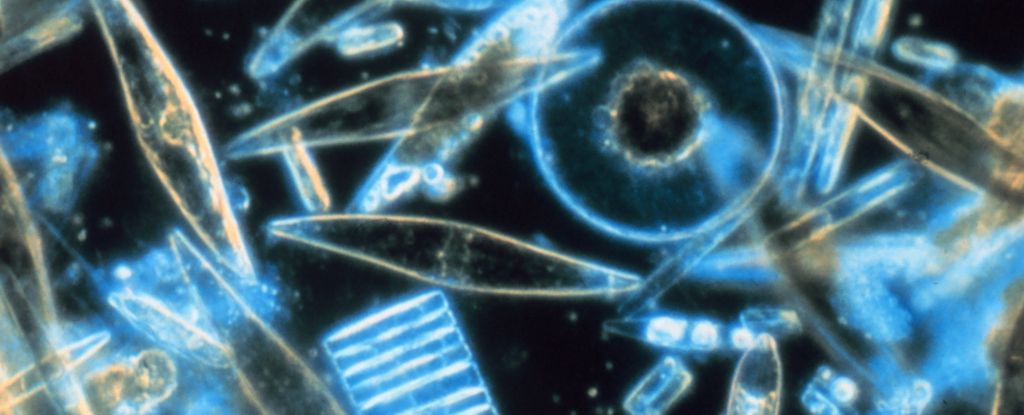
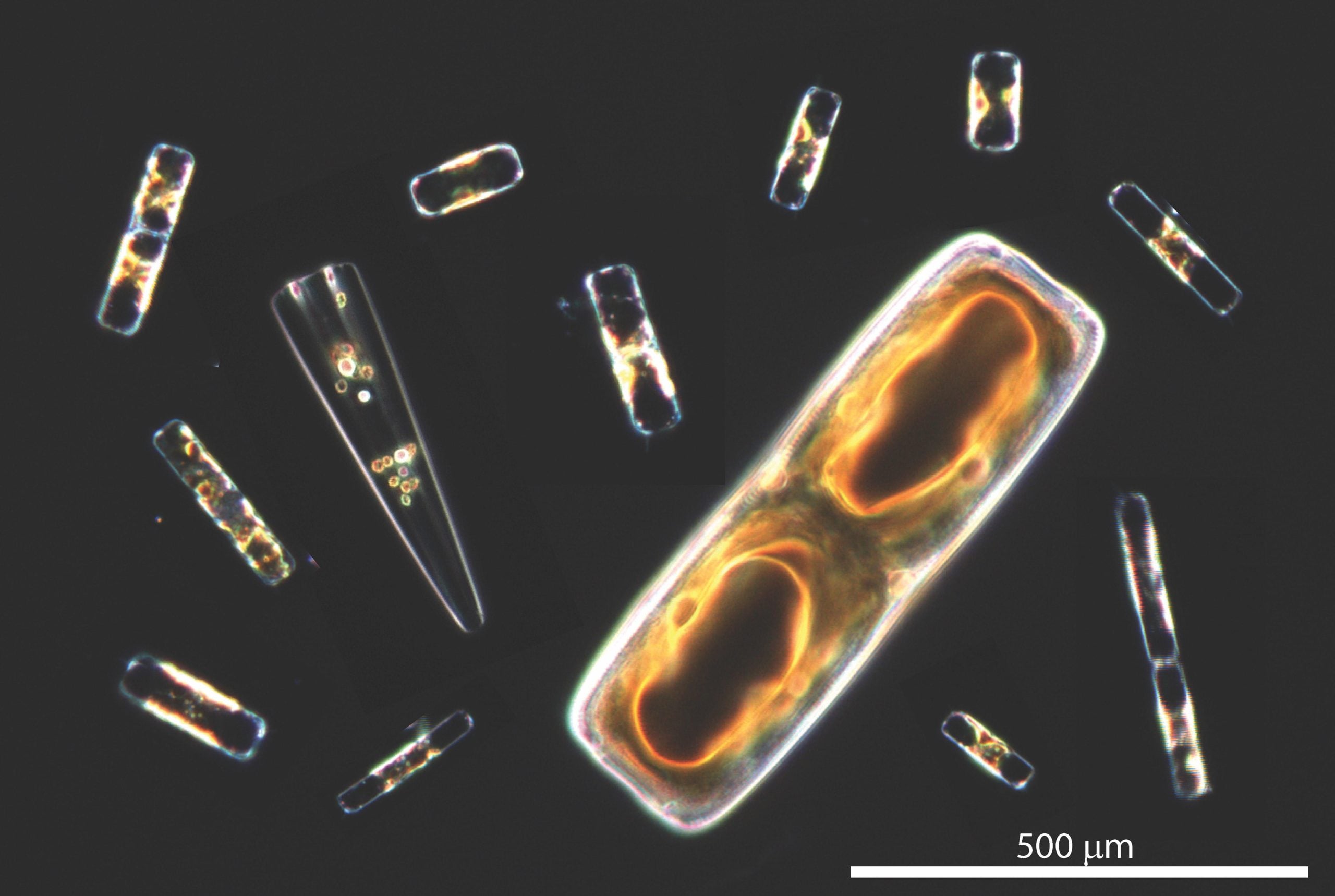
Oceanographers have discovered that the bright turquoise patch in the Southern Ocean, previously thought to be caused by coccolithophores, is actually due to dense populations of diatoms, challenging previous assumptions about microorganism distribution and their role in the carbon cycle in cold waters.
Scientists have identified that the bright, glowing patches of water near Antarctica are caused by blooms of silica-rich diatoms and calcium carbonate–bearing coccolithophores, which play a crucial role in the ocean's carbon cycle and climate regulation. This discovery, made through combined satellite and field research, enhances understanding of polar ecosystems and improves climate models, revealing a more complex and resilient ecosystem than previously thought.
Researchers at UC San Diego's Scripps Institution of Oceanography have discovered a previously unknown cellular mechanism that promotes photosynthesis in marine phytoplankton, which could be responsible for between 7% and 25% of all oxygen production and carbon fixation in the ocean. This process, involving a proton-pumping enzyme called VHA, could contribute up to 12% of the Earth's total oxygen production. The study focused on diatoms, single-celled algae with ornamental cell walls made of silica, and found that the enzyme enhances photosynthesis by delivering more carbon dioxide to chloroplasts, resulting in the production of more oxygen. The findings shed light on the evolution of diatoms and could have implications for biotechnological approaches to improve photosynthesis and carbon sequestration.