Treasury Secretary Scott Bessent defended the $20 billion currency swap with Argentina during the government shutdown, emphasizing its importance for national security and global financial stability, despite questions from Senator Elizabeth Warren about private-sector involvement and the effectiveness of the aid.

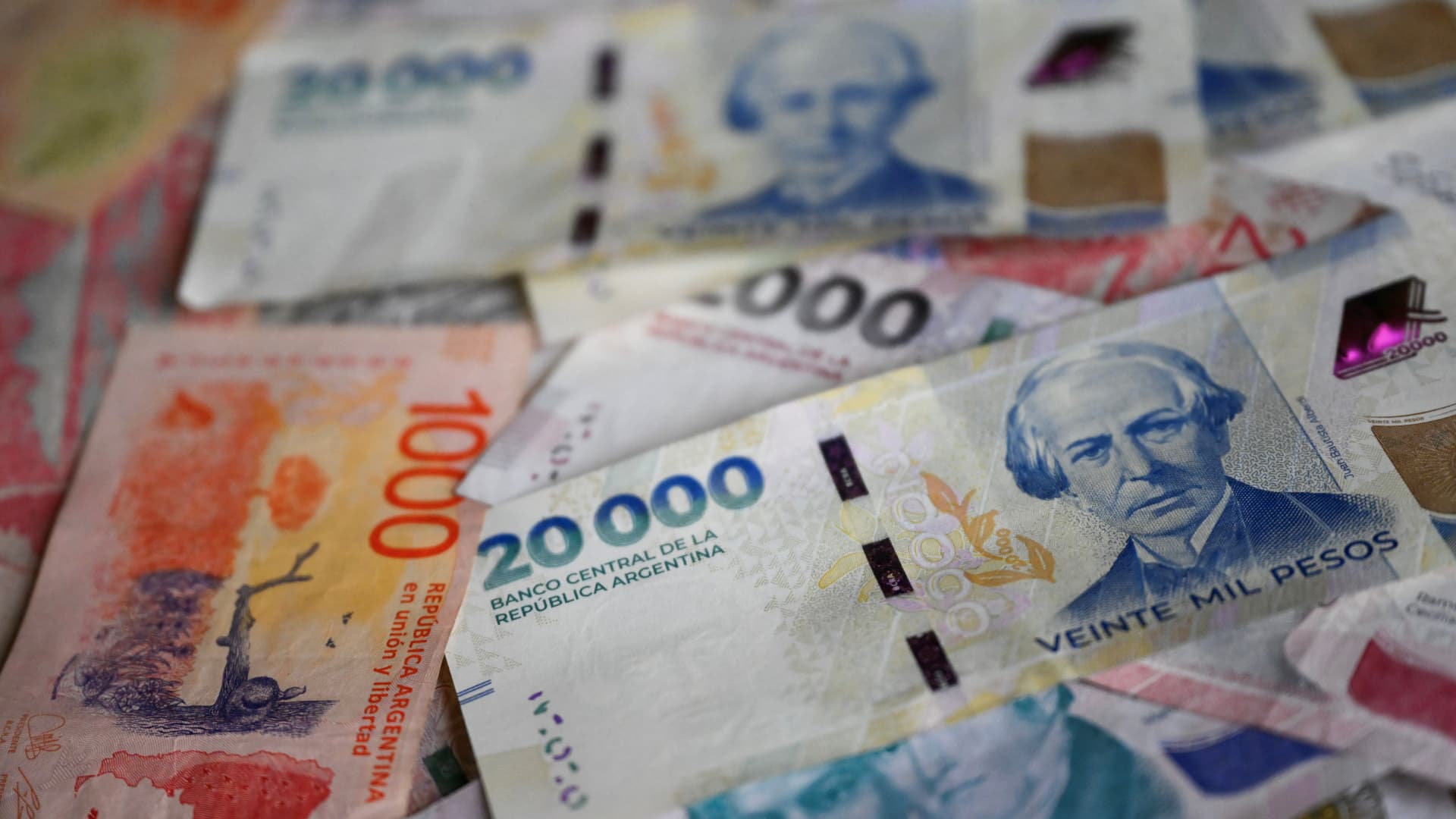
The US Treasury sold dollars through Banco Santander to support the Argentine peso as it neared its trading band limit, amid efforts to stabilize Argentina's economy ahead of midterm elections, including a $20 billion currency swap line and negotiations for additional support.
The US is preparing a $20 billion currency swap to support Argentina's collapsing economy ahead of elections, signaling direct US intervention outside traditional multilateral channels, amid broader geopolitical and economic tensions involving China and reforms at the IMF and World Bank.
The U.S. Treasury has provided Argentina with a $20 billion currency swap line to stabilize its economy amid liquidity concerns and upcoming elections, marking a significant intervention since 1995. While this move aims to prevent a financial crisis and support Argentina's fiscal reforms, it raises questions about its long-term effectiveness and political implications, especially with Argentina's election and potential peso devaluation.
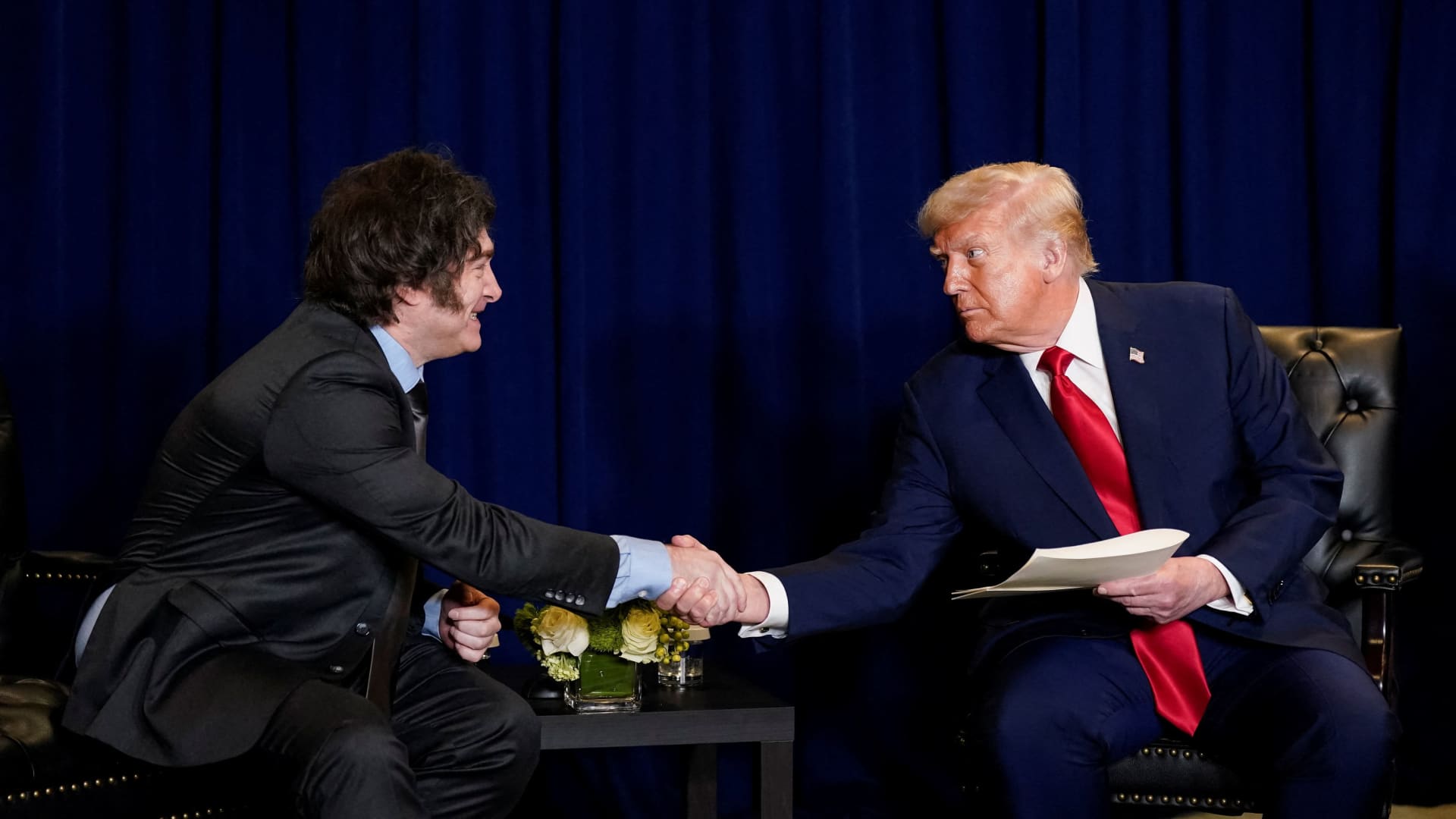
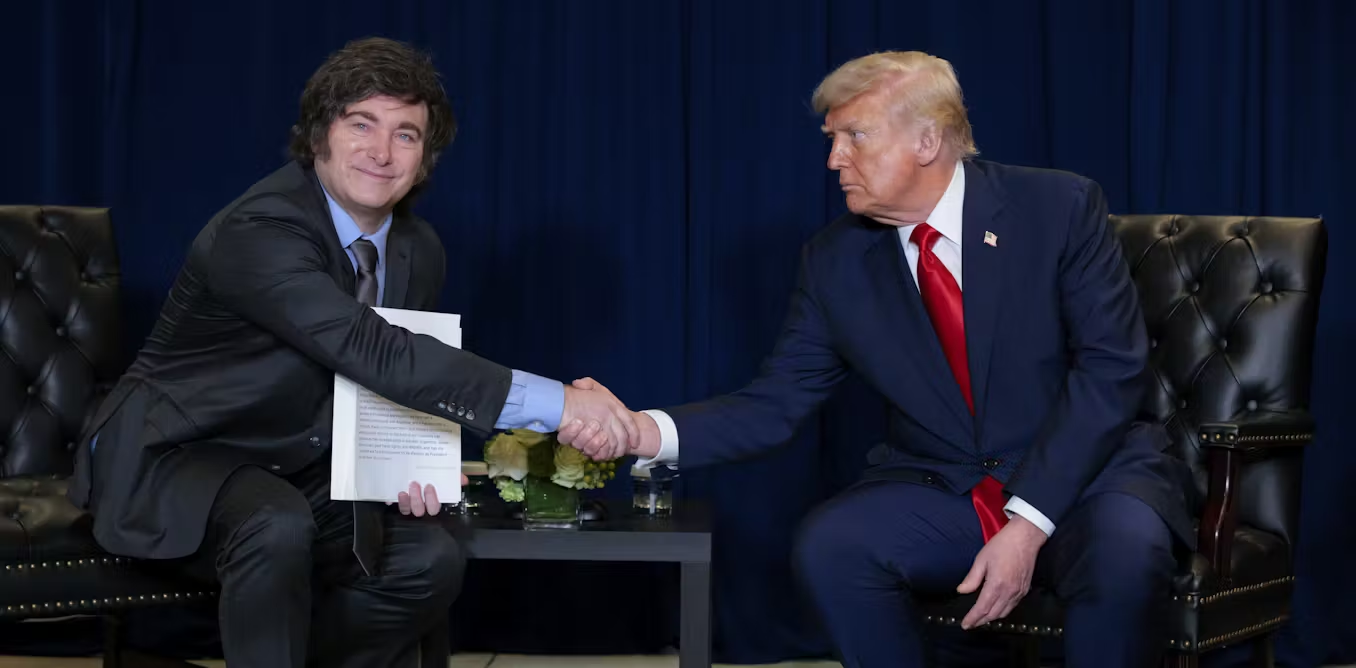
The U.S. Treasury, led by Scott Bessent, has purchased Argentine pesos and agreed on a $20 billion currency swap with Argentina's central bank to support the struggling economy and bolster President Milei's reform efforts, amid ongoing currency and market pressures.
The US has made a rare move by directly purchasing Argentine pesos and establishing a $20 billion currency swap line with Argentina's central bank to stabilize its turbulent economy, a decision praised by Argentine President Milei but criticized by US lawmakers as a potential bailout and misaligned with 'America First' policies. The intervention has boosted Argentine markets but faces political and economic scrutiny amid ongoing economic struggles and upcoming elections.
The US government purchased Argentine pesos and established a $20 billion currency swap line with Argentina's central bank, signaling support amid Argentina's recent IMF loan agreement and efforts to stabilize its economy.
The US has purchased Argentine pesos and finalized a $20 billion currency swap with Argentina's central bank to help stabilize the country's economy amid ongoing turmoil, though officials emphasize it is not a bailout. The move follows meetings in Washington and is part of broader efforts to support Argentina's financial stability, amid political and economic tensions.
Argentina is seeking a US$20 billion bailout from the US Treasury to stabilize its economy amid currency devaluation and political challenges, with potential market confidence boost if political support improves, and the US considering direct lending due to Argentina's systemic importance.
Argentina plans to use a $7.5 billion disbursement from the International Monetary Fund (IMF) to repay part of the money it borrowed through a currency swap line with China. The country recently used yuan equivalent to cover repayments from an IMF loan to avoid default. With negative foreign exchange reserves, Argentina is expected to repay $1.7 billion to the People's Bank of China this week. The details of the currency swap line between China and Argentina have remained largely secret. The IMF disbursement will also be used to repay loans from the Development Bank of Latin America and Qatar. Argentina's ability to make future IMF payments and tap the swap line again remains uncertain.