Joel Mokyr was awarded the 2025 Nobel Prize in Economics for his research on how science, technology, and the willingness of society to adopt and implement innovations—especially in Britain—sparked the Industrial Revolution and sustained economic growth through creative destruction, emphasizing the importance of technological progress and adaptable institutions for future growth.
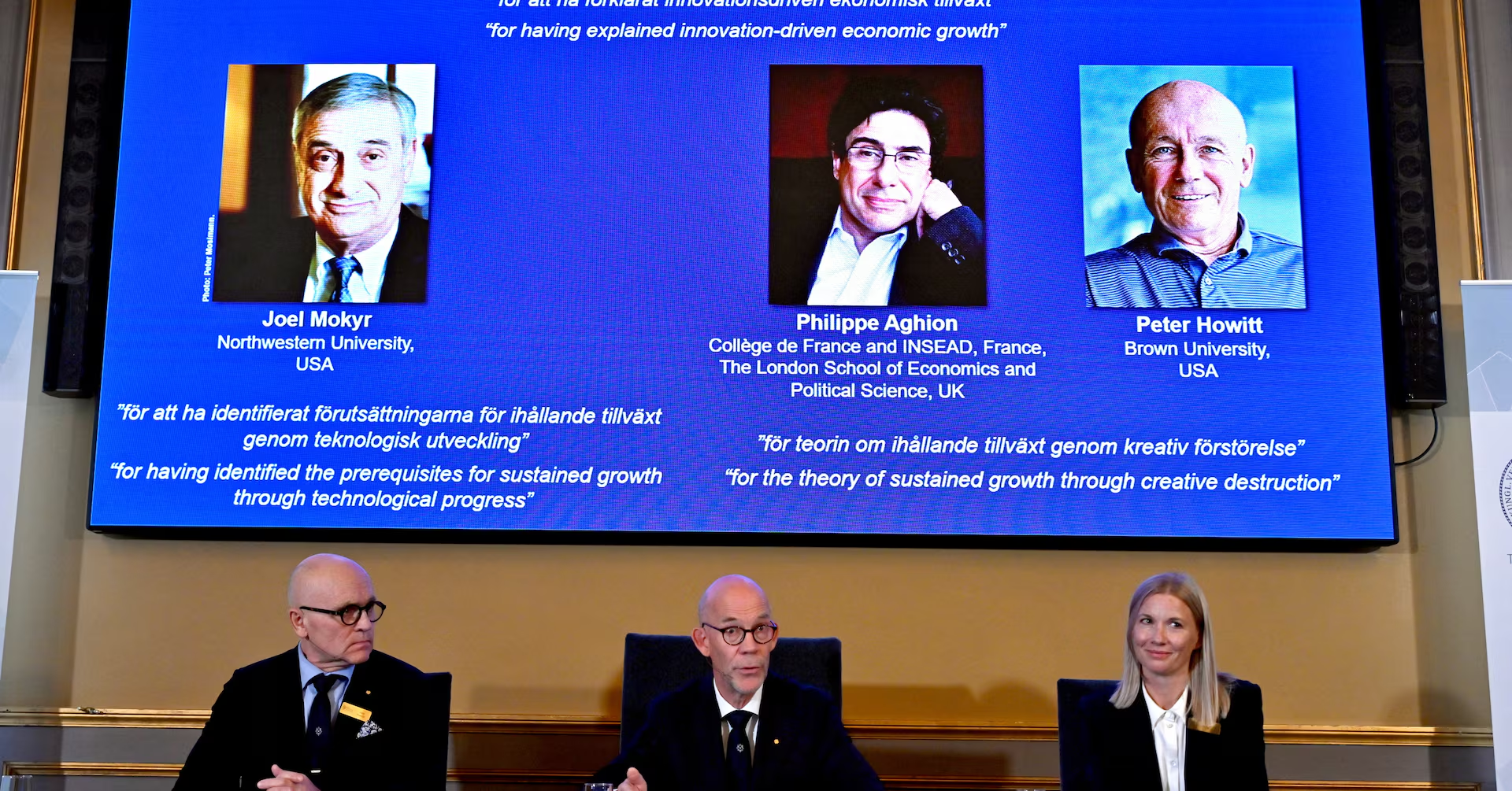
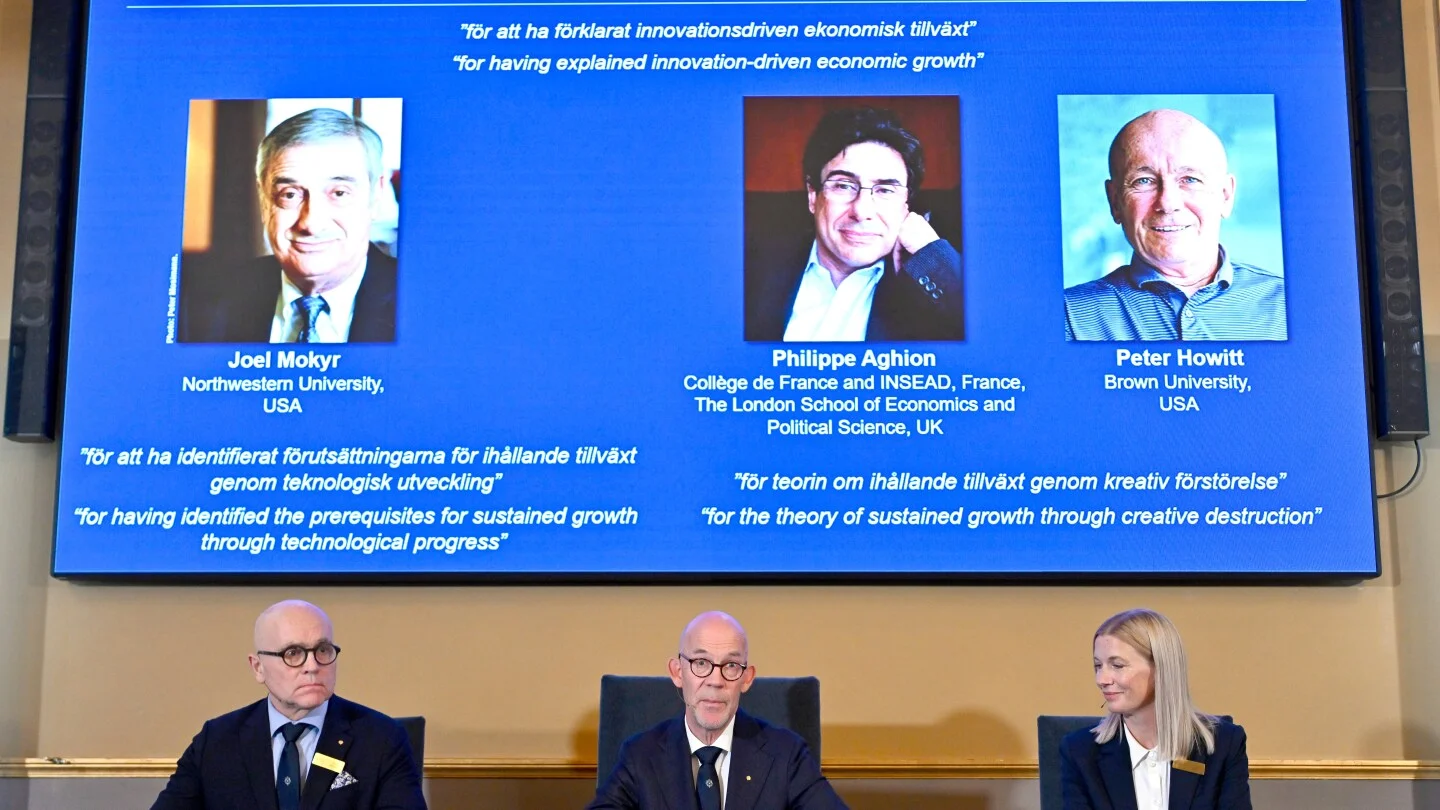
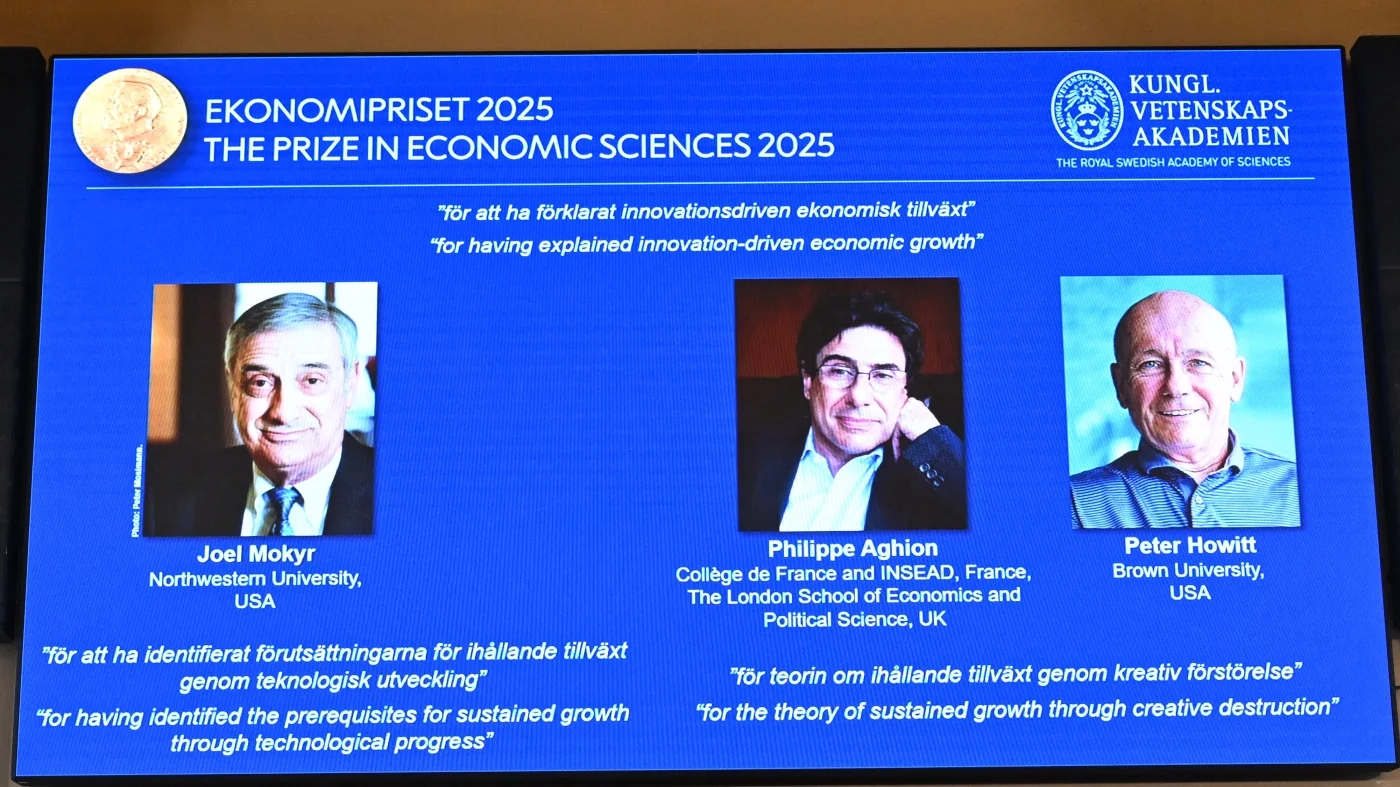
The 2025 Nobel Economics Prize was awarded to Joel Mokyr, Philippe Aghion, and Peter Howitt for their work on how innovation and 'creative destruction' drive economic growth, emphasizing the importance of technological progress and the need for policies that support sustained growth, with Aghion urging Europe to learn from the U.S. and China.
Joel Mokyr, Philippe Aghion, and Peter Howitt received the Nobel Memorial Prize in Economics for their work explaining how innovation drives economic growth through mechanisms like creative destruction, emphasizing the importance of understanding and maintaining these processes to prevent stagnation.
The 2025 Nobel Prize in Economic Sciences was awarded to Joel Mokyr, Philippe Aghion, and Peter Howitt for their work explaining how technological innovation and creative destruction drive sustained economic growth, emphasizing the importance of useful knowledge, societal openness to change, and the dynamic process of innovation and competition.
Three researchers, Joel Mokyr, Peter Howitt, and Philippe Aghion, received the Nobel Prize in Economics for their work on how technological innovation drives economic growth and the importance of managing change through safety nets and policies promoting openness and environmental sustainability.
The Nobel economics prize was awarded to Joel Mokyr, Philippe Aghion, and Peter Howitt for their work explaining innovation-driven economic growth and the concept of creative destruction, emphasizing the importance of scientific explanations for successful innovation and sustained economic growth.